

Wildlife in the Philippines: Where to find whale sharks, tarsiers and hawksbill turtles
As wildlife-watching standards steadily improve on these remarkably biodiverse islands, it is still up to travellers to set the tone by choosing ethical tours and respecting the world around them, writes Mark Stratton
What do you get when you cross thousands of tropical islands with rainforest, coral-rich seas, volcanoes, mangroves and Pacific Ocean currents? The answer is one of the most biodiverse countries on Earth. It may come as a surprise, as the Philippines barely registers as a hotspot for wildlife watching, but the stats don’t lie. As one of the planet’s 18 megadiverse countries, it hosts 5% of the world’s flora, high endemism (especially among birds) and over 200 mammal species. Its waters also shelter more than 3,000 fish species, a reflection of its location within the Coral Triangle, which hosts our oceans’ finest reefs.
Yet, unless you’re coming here especially to dive the world-class reefs, wildlife-watching tends to be rather serendipitous. Most encounters are via a few popular wildlife-based activities, such as swimming with shoals of sardines off Cebu; looking for a tarsier, one of the world’s smallest prosimians, on Bohol; or snorkelling with whale sharks off Palawan.
However, the question for visitors is whether or not they should seek out local wildlife. The Philippines has more than 700 threatened species, and some popular encounters haven’t caught up with the standards you’d find elsewhere when it comes to respecting wildlife, so travellers must do their due diligence on whether their experience is ethical.
I had some thrilling encounters recently, not least seeing hatchling hawksbill turtles being released and swimming with giant trevally fish at Miniloc Island Resort. I also saw a few unedifying spectacles. In Southern Cebu, whale sharks are being fed, which has turned them into a resident species for the sake of a longer tourism season. With some research, ethical operators who respect these creatures’ migration patterns can be found elsewhere, such as in Sogod Bay in Southern Leyte.
Travellers have a role to play in helping to achieve better standards. I witnessed snorkellers standing on corals and a couple handling a green turtle for a selfie. Encouraging high standards of welfare by our actions and choices will ensure the Philippines’s biodiversity flourishes sustainably.
7 top spots to see wildlife in the Philippines
Cebu Island
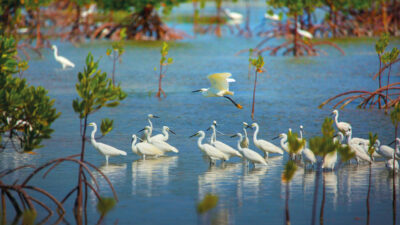
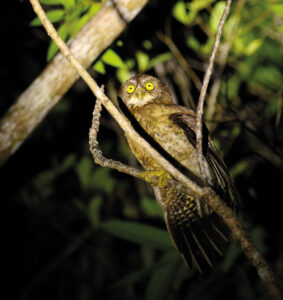
Cebu presents a mosaic of beaches, mangroves, forested mountains and crystalline waterfalls. The forests are home to critically endangered birds such as the Cebu flowerpecker and the threatened Cebu hawk owl. The island also sees great influxes of migratory birds. Visit October to November for the East Asian to Australasian migration, or February to March for the reverse journey. Off Moalboal, snorkellers can swim with shoals of sardines in the Tañon Strait, and green turtles can be sighted close to Panagsama Beach.
Best for: The bird-friendly utopia of Olango Island Wildlife Sanctuary, off eastern Cebu. This RAMSAR site is a low-lying sanctuary for thousands of migratory waterbirds and shorebirds, including the Asiatic dowitcher and Chinese egret. Travel at low tide to see this avian spectacle unfold across the sandflats.
Read next: 5 reasons you must visit Cebu, Philippines
Bohol Island
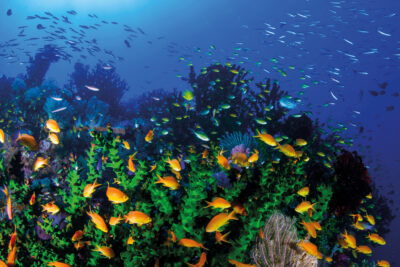
The island is famous for the 1,700-plus uplifted coral deposits known as the Chocolate Hills. Birdwatching in the limestone molave forest at Rajah Sikatuna National Park reveals island and regional endemics such as black-crowned babblers and Mindanao bleeding-heart pittas. The waters are rich around Panglao, Balicasag and Pamilacan islands. Pods of spinner dolphins are commonly sighted, as are seasonally migrating sperm whales. The authorities have also ended the practice of feeding whale sharks.
Best for: Spotting elusive tarsiers. It’s very hard to see these rare bug-eyed nocturnes in the wild. The best option is the 134-hectare secondary forest of the Philippine Tarsier and Wildlife Sanctuary in Corella. It has a 15km trail that can be walked with an expert spotter during daylight hours when these creatures are sedentary.
Read next: 6 under-the-radar places to visit in the Philippines
Palawan Island
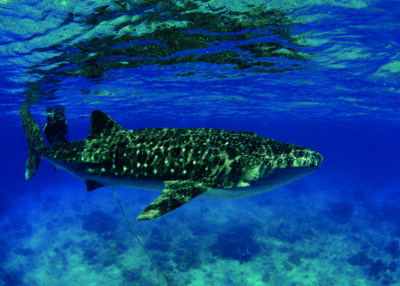
Palawan is the country’s natural jewel. Highlights include the seascape of limestone karst islands and pinnacles around El Nido, where you’ll find incredible diving and snorkelling, effervescent corals, and dugongs offshore. Listen out too for the wingbeat of the impressively huge endemic Palawan hornbill. Elsewhere, the vast cave system within the UNESCO-listed Puerto Princesa Subterranean River National Park is also a gem. Boats can take you along part of the 8.2km-long underground river, while the forests outside hide glimpses of the rare Philippine cockatoo.
Best for: Ethical whale shark viewing. Off Puerto Princesa, local operators don’t feed these gentle leviathans to maintain a year-round presence for commercial reasons. Instead, these giant fish arrive according to their natural cycle to feed on plankton from November to April.
Tubbataha Reefs Natural Park
This remote park (open from March to June) in the Sulu Sea features pristine coral atolls. Visitors can spot some 700 fish species, hundreds of coral types, turtles and rays, and apex predator sharks such as hammerheads. Visiting liveaboard dive boats come especially for the 100m drop-off wall adorned with corals. The sandy islets and lagoons are important for nesting seabirds.
Malapascua Island
Thresher sharks are sublimely beautiful creatures. Their upper caudal fin is so extended that it resembles a waving streamer, and these otherwise passive 3m-long sharks are known to use their tails like a whip to stun their prey. Malapascua Island is one of the few places in the world where you can dive with the pelagic thresher. Monad Shoal is a key site for seeing them and is less than half an hour by boat from Malapascua.
Busuanga Island
They are not easy to spot but the Philippines’ main population of dugongs, or sea cows, are located north of Palawan, around Busuanga Island. A handful of operators can offer access to these shy animals, which are capable of living up to 70 years. There is a reported 80% success rate when it comes to spotting them here.
Need to know
When to go
The drier season (Nov–Apr) is ideal for travel, while the wet season (May–Oct) is subject to typhoons between June and September. You can see migrating whale sharks between November and May. The peak time for birdwatching is February to April, yet Olango is spectacular from September to May. You can see critically endangered Philippine eagles around Mount Kitanglad on Mindanao Island from December to May. Lastly, sperm whales pass by Panglao Island between March and June.
Getting there & around
There are no direct flights from the UK to the Philippines. Cathay Pacific flies from London Heathrow to Manila and Cebu via Hong Kong. Flights take about 16 hours (cathaypacific.com).
Bamboo Travel offers a 22-day Wildlife Adventure in the Philippines tour featuring whale sharks, snorkelling and birdwatching including international flights (bambootravel.co.uk).
Further reading & information
Seek out Diving & Snorkelling Philippines (Lonely Planet, 2010) by Tim Rock or Birds of the Philippines by Desmond Allen (Lynx Edicions, 2020).


