

“The Pulhapanzak Waterfalls inspired Walt Disney when he was adapting The Jungle Book in the 1960s.” I felt a quake of anticipation at my guide René Rodríguez’s words. After all, it’s not every day that you can step into a cartoon landscape. I was already basking in the lush vegetation engulfing me on the banks of Lake Yojoa (the only natural freshwater lake in Honduras); now that René had revealed an unexpected movie connection at my next stop, I was even more excited to be heading deeper into the highlands. When we arrived, the sheer force of the gushing waters stopped me in my tracks. Much like a child mesmerised by the screening of a Disney film, my eyes remained glued to the sight.
“The others have gone up. Do you want to go too?” asked Mitty Sabillon, owner of the land encompassing the waterfalls. I realised that she was asking if I wanted to try out the zipline above us that was shepherding fly-sized human specks over the powerful falls. This was not a time for hesitation, so I said yes and walked up to where people were being kitted out with helmets and harnesses.

This was not just a quick there-and-back zipline; it had several parts to it. I giddily criss-crossed the falls, legs flailing around while gazing in awe at the views around me. The thrill of soaring above the tumbling waters was only outdone by the clearly pigmented rainbow that was arcing over the falls, stealing the limelight from the thunderous scene below.
This sense of awe was indicative of my time in Honduras. I was constantly surprised by the sheer beauty and number of its natural wonders. From malachite-green mountains to flitting hummingbirds and bountiful farms, Honduras feels like one of the most abundant places on Earth. It was a far cry from the reputation the country had 15 years ago as a dangerous place to visit. Not only that, every Honduran I met emanated warmth, wisdom and enthusiasm at being able to share their lands and experiences.
Highlights
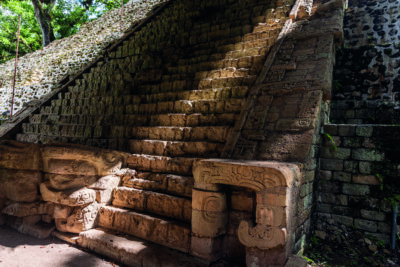
One of the places that had drawn me to Honduras was Copán, a grand archaeological site that tells the story of the Maya civilization. Its sprawling complex includes public squares, temples, statues and an intricate staircase textured with graphic symbols that is known as the Hieroglyphic Stairway Plaza. With more than 1,800 individual glyphs carved into the steps my guide, Óscar Lara, revealed that this was the longest Maya inscription discovered anywhere. Declared a UNESCO World Heritage site in 1980, Copán (300-900 AD) was a significant city within the Maya civilisation. Its ruins, first excavated in the 19th century, tell the story of in the 19th century, tell the story of political, civil and religious life at the centre of the capital of a powerful kingdom. The stelae and altars in the public squares also showcase expert craftsmanship, offering insights into the complexity of the Maya worldview. The surrounding park is so large (about 84 hectares) that I didn’t always know where to look or walk next. Luckily, Óscar’s explanations and invaluable knowledge guided me through.
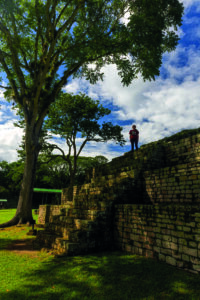
I particularly enjoyed learning about the game of pok-ta-pok, an ancient Maya ballgame that’s known as one of the oldest team sports in the world. It was likely played at Copán’s Great Ballcourt, the last major construction project of 18-Rabbit, the 13th ruler of Copán, who was known for commissioning ambitious designs. The imposing structures of Copán sat patiently amid the extreme heat, humidity and vegetation, lending the site a cinematic feel that wouldn’t be out of place in an Indiana Jones film. What was revealed was layer upon layer of stories about a civilisation that didn’t just disappear in the 10th century AD, as is often assumed. The Indigenous Ch’ortí people, descendants of the Maya who once inhabited this kingdom, are still spread across the modern-day departments of Copán and Ocotepeque. The nearby town of Copán Ruinas was another highlight of my visit.
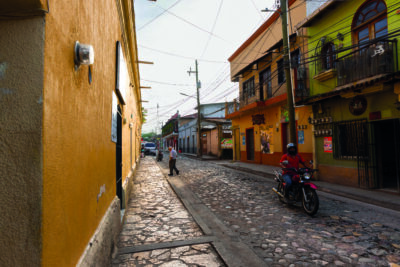
I stayed at the picturesque Marina Copán Hotel, a great base for visiting the nearby archaeological site as well as for wandering the town’s cobblestone streets and exploring the municipal market to admire the colours and textures of the local produce. Another favourite spot was El Lugar del Té y Chocolate (The Tea and Chocolate Place), owned and run by archaeologist and impressive polyglot David Sedat and his family. Sitting on the edge of Copán Ruinas town, this calming café and boutique is a haven. Its shop displayed everything from cardamom-infused chocolate to cocoa tea and natural beauty products made from locally grown herbs such as bergamot. It felt like a sanctuary, and one worthy of lingering in far longer.
Must Dos
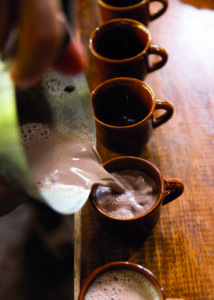
Community tourism is alive and well in Honduras. It’s also a great way to explore the country, learning about its past and present from the local people who know it best. The Luna del Puente Nature Reserve, a family-owned and -run farm and bird sanctuary home to more than 300 bird species, lies in Cortés, near Lake Yojoa. The land was originally bought by Fanny Suazo Lang and her husband; they immediately devoted it to conservation. When I arrived, three generations of impressive women were there to greet me.
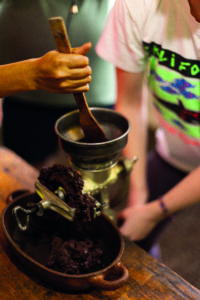
Fanny, her daughter Cecilia Ramos and her granddaughters Mariana Chiriboga Ramos and Itchell Ramos all showed me around the lush reserve, its forests peppered with coffee and cacao trees. After a sip of freshly made hot cocoa, for which I’d earned my keep by grinding down the cacao beans into a thick, rich paste, I determined that Luna del Puente was a slice of paradise.
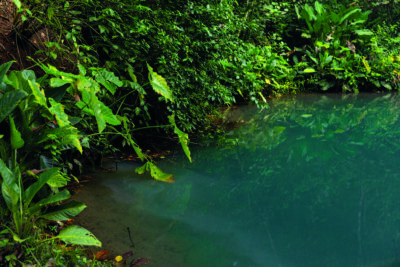
Another community-focused natural haven is Paradise Biopark in Los Naranjos, owned and run by Miguel López Bendeck. He and his team are working to conserve the land, a habitat for 200 bird species. He shared with me that the income generated from tourism is helping to fund these efforts. The jewel in the park’s crown is the Pozo Azul (Blue Well), a gleaming natural pool of turquoise water hidden beneath the canopy. Said to have been used by the Indigenous Lenca community (the largest Indigenous group in Honduras today), no one knows much about exactly what it was used for, but the current theory is that it was a site for sacred ceremonies. Nearby, archaeologists are conducting studies to find out more about the historic Lenca community that lived here, as very little is known about the history of the area. Hopefully, more light will be shed on the Pozo Azul’s story one day; for now, it remains a powerful sight and a worthy reward for a damp but swift jungle hike.
Hacienda San Lucas is another place that left me wanting to extend my stay. This 100-year-old family-owned farm is now an inviting boutique hotel ensconced in a valley near Copán Ruinas town. Norma Cueva and her husband, José Adán Cueva, run the show, employing talented young women from the local village to prepare meals in the historic farmhouse kitchen. The dish I had of chicken in a creamy sauce of loroco, an edible flower native to Central America, was delicious. Norma was proud of her team’s effort. It’s a feeling echoed by the many Hondurans I met, who are now able to savour the fruits of their blossoming country.
Top tip

Make sure to withdraw money while in larger towns and cities such as Tegucigalpa, San Pedro Sula or Copán Ruinas, because smaller businesses often only take cash. The national currency is the Lempira, named after a Chieftain of the Indigenous Lenca people in western Honduras. He led resistance efforts against conquistador Francisco de Montejo in Honduras in the 1530s.
I sadly missed out on…
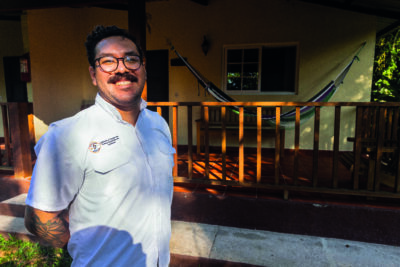
The capital city Tegucigalpa. In particular, I was sad that I didn’t get to dine at secret restaurant Malportado, helmed by innovative Honduran chef Eduardo Guerrero. He runs it from his house, and the dishes are all inspired by native ingredients. A meal there constitutes a history, geography and anthropology lesson, diving into Honduras’ Indigenous heritage and Mesoamerican foods.
I also didn’t have time to head to the coast. I heard that Utila, an island in the Caribbean Sea, is an idyllic place to learn to dive – a promise I’ve made to myself – while the island of Roatán fringes the Mesoamerican Barrier Reef, offering incredible snorkeling, jungle and powder-white sands.


