
Tracing Ecuador’s pre-Columbian past through its museums
Long before the Inca Empire, and centuries before the Spanish set foot here, the land now known as Ecuador was home to some of the continent’s most enduring civilisations
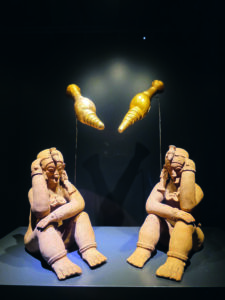
Along the Pacific coast, up in the high Andean valleys and deep within the Amazon basin, Ecuador’s cultures flourished independently for thousands of years, creating sophisticated societies rooted in agriculture, astronomy, trade and spiritual ceremony. Archaeological evidence dates Ecuador’s earliest human settlements to nearly 10,000 years ago. Among the most ancient cultures is the Valdivia (circa 4000–1500 BC), considered one of the oldest ceramic-producing civilisations in the Americas. They left behind enigmatic female figurines, often referred to as the ‘Venuses of Valdivia’, symbols of fertility and reverence for the Earth.
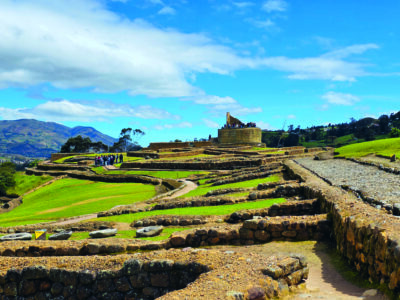
Later, coastal cultures such as the Machalilla, Chorrera and Jama-Coaque (flourishing from 1500 BC to 500 AD) developed elaborate artistry, maritime trade routes and religious practices that celebrated the natural world. In the highlands, cultures such as the Cañari, who occupied the area around what is now Cuenca and Ingapirca, built ceremonial centres aligned with celestial events. Meanwhile, Amazonian groups cultivated diverse crops and developed spiritual traditions centred around the forest and the moon. Many of these civilisations exchanged goods such as cacao, obsidian and the prized spondylus shell, which served as both currency and a symbol of divine connection.
By the time the Inca began expanding into Ecuadorian territory around the late 15th century, they encountered a mosaic of well-established peoples. The conquest, however, was relatively brief, lasting only about 80 years before the arrival of the Spanish in the 1530s. Yet in that short time, the Inca built stone roads, temples and fortresses, incorporating local knowledge and infrastructure into their imperial framework. Today, Ecuador’s pre-Columbian story is being told not only through archaeological digs at its famed sites of Ingapirca, Cochasquí and Pumapungo, but also through its revitalised museums. These dynamic spaces are giving the artefacts in their collections new life and meaning. During a recent journey through Ecuador, I visited three such institutions and met the visionaries working to reclaim and reframe the country’s ancestral heritage: the Vice Minister of Culture, the director of Quito’s Alabado Museum and the custodian of a remarkable private collection of Indigenous pieces in Cuenca.
A new chapter at MUNA
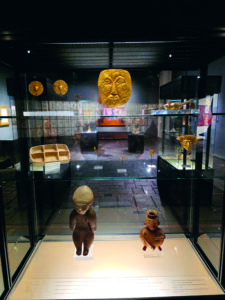
“My mission,” said Romina Muñoz Procel, Ecuador’s Vice Minister of Culture, “is to bring the traditions of our people back into the centre of our national identity, and to make them something Ecuadorians can feel proud of.” When we met inside the newly revived National Museum of Ecuador (MUNA) in Quito, she walked me past archival photographs of its 1969 inauguration (when it was part of the Central Bank’s collection of museums) and MUNA’s later move into a space humming with fresh intent. “This is the first time in years that a president even mentioned culture in an inaugural speech,” Muñoz Procel noted, pointing to the sweeping reforms her ministry has undertaken since the pandemic forced the museum’s closure.
Muñoz Procel, formerly MUNA’s director, reopened the museum with a bold move: abandoning the old thematic structure for a chronological journey through the country’s 10,000 years of human history. She also initiated the repatriation and reorganisation of Ecuador’s vast national collection – 2.4 million items, of which less than 1% is currently on display. “We are cataloguing everything properly for the first time,” she said. “It’s painstaking, but it will become the foundation of a cultural system built to last.” The museum’s most significant holdings include 66,000 archaeological pieces. Standouts such as the Jama-Coaque ‘tongue of the priest’ (an artefact that links Ecuador to Mesoamerican ritual practices) and a collection of 5,400 Kichwa artworks are now safeguarded after a 1979 law restricted their sale.
Efforts are also underway to establish a new public-private partnership for a world-class museum site near La Carolina Park, adjacent to Quito’s commercial heart. “It will be like the Met for Ecuador,” Muñoz Procel said with a smile, pointing to the encyclopaedic approach to its collections and exhibitions. “It’s time Ecuador told its own story, on its own terms.”
The Alabado: an artistic, not archaeological, vision
In the San Roque neighbourhood of Quito’s historic centre, housed in one of the city’s oldest colonial homes, sits the Casa del Alabado, an impressive museum of pre-Columbian art. This elegant institution has a resolutely thematic and artistic approach to its pre-Columbian heritage. “We are an art museum, not only an archaeological one,” said director Lucía Durán as she guided me through a luminous courtyard framed by pre-Hispanic statuary. Only 700 works are on display from a collection of 7,000 and these are shown in a minimal, understated way. The journey begins with the Valdivia (one of the oldest cultures in the Americas) and includes rare figurines known as the ‘Venuses of Valdivia’.
Further along, visitors encounter a ceramic pot bearing the world’s oldest known cacao residues, a subtle reminder that chocolate’s spiritual and culinary journey began here. Durán described to me the museum’s 15th anniversary exhibition, which united two once-private collections: “We want to show how Ecuador’s Indigenous cultures – coastal, highland and Amazonian – each expressed identity in unique ways. But also, how they’re all connected.” That circularity is a theme that the Alabado returns to often. “In these cultures,” Durán added, “the past isn’t linear. It’s something you carry with you, like a thread that doesn’t break.”
Cuenca’s Indigenous legacy
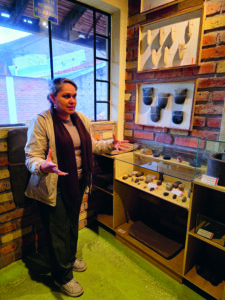
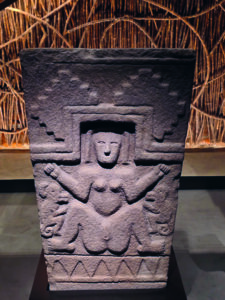
In the southern city of Cuenca, where the terraces of Pumapungo rise from the highlands, Carmen Lucía Cordero is preserving a different kind of inheritance. Her grandfather founded the Museo de Arte Indígena, a private institution that now displays 5,000 pieces from across Ecuador’s Indigenous cultures, with another 10,000 in reserve. “Everyone talks about the Inca,” said Cordero as we stood before a case of ceremonial axes and carved pestle and mortar sets. “But they were only here for about 80 years. The real story is what came before.” Here, that story unfolds across millennia. From 5,000-year-old cacao pots to the statuary of the Jama-Coaque, the museum is a trove of pre-Inca civilisation artefacts. Standouts in the collection include Pachamama figures and spondylus shell jewellery. Cordero emphasised the museum’s educational role. “People forget how advanced these societies were. We had 29 varieties of corn, complex cosmologies and trade networks that stretched into northern Perú and beyond. This is not ‘primitive’ history; it’s sophisticated, and it’s ours.”
Rewriting the narrative
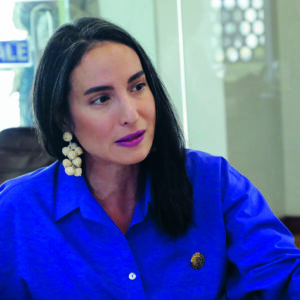
Across these conversations, one theme emerged consistently: Ecuador’s pre-Columbian heritage is not just a matter of archaeology or museum preservation; it’s a living cultural and political act. Whether through digitisation efforts that will give Ecuadorians access to 200,000 works online, or by ensuring exhibitions remain accessible to the public, leaders like Muñoz Procel, Durán and Cordero are redefining what heritage means. “Culture is not a luxury,” Vice Minister Muñoz Procel told me as we wrapped up our tour. “It’s a right. And it’s time the world, and Ecuadorians themselves, saw just how rich our story really is.”


