
A wildlife lover’s guide to the Ecuadorian Amazon
Pink dolphins, monkeys, macaws, marmosets and more inhabit the depths of the Amazon, which you can observe on rainforest adventures
Beyond the riverside town of Nuevo Rocafuerte, two forms appeared, arching from the sediment-cloyed flow of the murky Napo River. Both were a vivid bubblegum pink. “Look, pink river dolphins,” I heard our guide say, precipitating a flurry of camera-grabbing that rocked our small launch. “They’re very pink in the mating season to attract females,” said Avel, our Kichwa guide, as we watched three of the dolphin splash around us. In Kichwa, they call them boto. “In the past they would’ve been hunted because old beliefs said they turn into men and seduce the women. But not now,” said Avel with a smile. “They bring visitors, which helps local communities.” Ecuador has stellar biodiversity across a dazzling array of ecosystems.
It’s better known to wildlife-watchers for the Galápagos, yet its sector of the Amazon rainforest – some 40% of Ecuador’s territory – receives only a fraction of rainforest ecotourism by comparison with Brazil. Ecuador’s small size, however, makes its Amazon adventures far more accessible. Immersion into the 900,000-hectare Yasuní National Park, a UNESCO Biosphere Reserve with some 600 bird species, takes just a few hours from the capital Quito. Here, travellers will find secluded lodges and river- boat trips to encounter its fabulous nature and traditional Indigenous communities. This brief guide lists its cornerstone species, and where and how to see them…
Jaguars
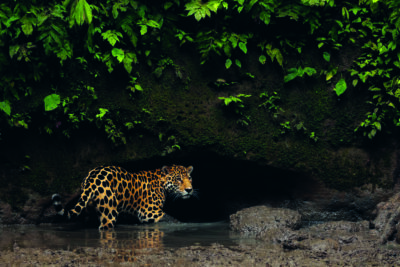
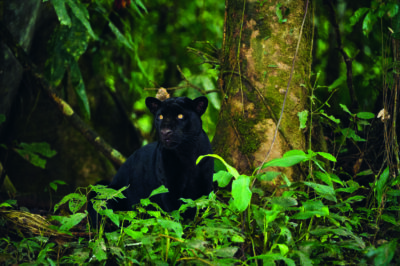
These phantom cats are shy and reclusive. The third-largest feline on Earth, jaguars are adapted to rainforest life, being great climbers and swimmers who move through the tangled rainforest camouflaged by pale yellow fur and black rosettes. The likeliest location to see them is Yasuní National Park in Ecuador’s eastern Amazon, where camera traps suggest they are part of one of the densest jaguar populations in South America. Estimates suggest Ecuador has around 2,000 jaguars. The best opportunities to see them require immersive stays at local eco-lodges. Travellers to Caiman Eco-Lodge, which is located within the species-rich Cuyabeno Wildlife Reserve, can join tracking tours on foot through the jungle with Indigenous guides to find signs of the jaguars’ solitary progress, or perhaps have a chance encounter with one in the flesh.
Monkeys
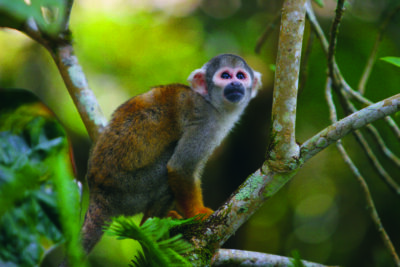
‘Monkeys’ is a bit of a catch-all category because the Ecuadorian Amazon feature many types, including five very special variations. Brown-mantled tamarins are tiny little critters who will pilfer human food. Common squirrel monkeys are little lightweight primates with large brown eyes, who live in large groups. Black-headed spider monkeys are shaggy-coated and long-limbed but hard to see. They’re classified as critically endangered – as are pale-furred Ecuadorian capuchins. Noisiest of all are hefty Ecuadorian mantled howlers, who make themselves known with huge booming howls. Eyeball encounters are possible by ascending the 40m-high canopy tower at the community-run Napo Wildlife Center.
Macaws
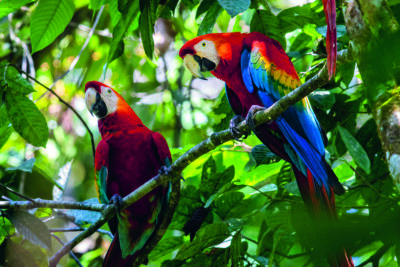
I once saw a kaleidoscopic flurry of dazzling plumage around a tall tree near Sani Lodge, as three different species of macaws clung to the bark of a tall mora tree. From a rustic hide, where Kichwa villagers charged $10 to watch, we saw red-bellied, blue-and-yellow and chestnut-fronted macaws appear to focus on extracting tree sap which counteracts toxins from forest fruits in their diet. The same self-medication occurs with macaws obtaining minerals at clay licks. The Saladero de Pericos lick on the lands of the Napo Wildlife Center hosts the remarkable spectacle of not only macaws, but thousands of cobalt-winged parakeets and orange-cheeked parrots.
Pink river dolphins
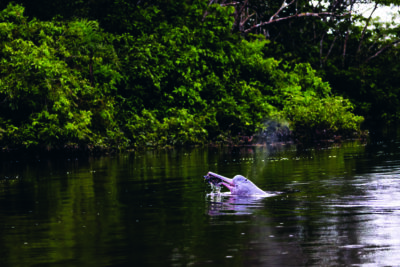
Spend long enough cruising the Napo River between Orellana province and the border with Perú and these extraordinary dolphins will make an appearance. Sightings are hardly commonplace for a species spread thinly throughout the great Amazon River basin. The most likely encounters with these lithe cetaceans, which can reach 3m in length, occur on river trips with the likes of Anakonda Amazon Cruises, who regularly sight them heading upriver. They work with local communities to protect these endangered creatures, helping the Martinica community in the Cocaya region to create a protected area free of hunting. Accordingly, this community has benefited from tourism as their numbers have increased. One glorious by-product of such river journeys is encountering giant river otters and freshwater turtles.
Pygmy marmosets
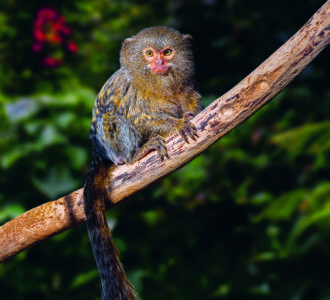
When a pygmy marmoset was first pointed out to me in Yasuní, I told my Kichwa guide that I couldn’t see anything. It was partly obscured by a small leaf and I eventually spotted its wide-eyed stare and grasped the true meaning of pygmy. These diminutive pocket rockets are the world’s smallest monkeys, at just 8-16cm tall. Endearingly, they’re locally nicknamed leoncito – literally small lion – on account of their furry manes. Specialist guides will know how to find them as they’re not averse to living cheek by jowl with humans. On a voyage with Anakonda Amazon Cruises, our guide took us to a riverside Kichwa family who had marmosets living outside in the gallery forest. They weren’t as mischievous, or tipsy, however, as the black tamarin monkeys sipping yuca-fermented chicha beer from the family’s kitchen.
Sloths
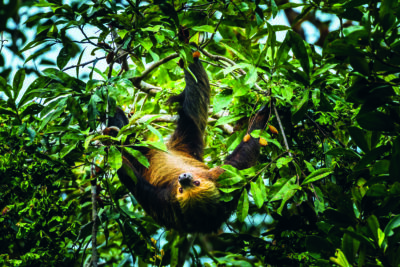
In the torpor of a hot Amazon day, there is a mammal so inactively drowsy, it’s liable to put oneself to sleep. Sloths are very much a random sighting, often seen when on a river voyage, as these motionless primates dwell high up their favoured tree. With curved claws and muscular limbs, they live an entirely arboreal existence. Ecuador has three sloth species, including both the two-toed and three-toed varieties. Lodges within Cuyabeno Wildlife Reserve and Yasuní NationalPark will have known locations for seeing them, with success rates highest during June to September’s dry season, when vegetation is less dense.
Yellow-billed jacamars
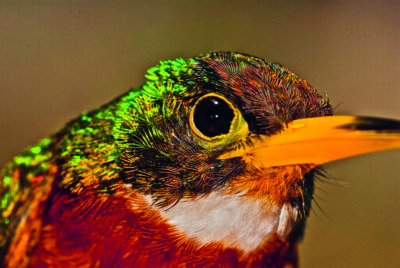
This lovely little rainforest denizen has a hint of king- fisher about it. Its gorgeous crimson underbody is shielded by an emerald-green plumage and an exaggeratedly pointed yellow bill as sharp as the cone of an Apollo space rocket. One for any twitcher’s checklist, the jacamar can be found deep in the rainforest interior, along river edges, or even at higher elevations. As insectivores, their nests are constructed by burrowing into earth riverbanks and even termite nests. With a skilled local ornithologist, they are not hard to see. Birdwatchers will need a base to watch them from. North of the Napo River, adjacent to Yasuní National Park, is La Selva Amazon Eco Lodge, which has a checklist of hundreds of bird species and runs four- day birdwatching programmes. Another good base is Sacha Lodge, which has an aerial canopy walkway.
Tapirs
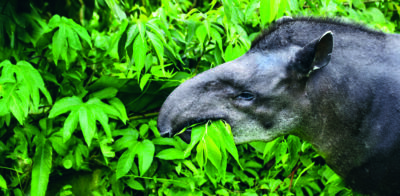
Tapirs are big beasts. Sporting a porcine physique, these hairless rainforest herbivores can weigh up to a third of a metric tonne. Evolution has also bestowed them with flexible proboscis snouts to wrap around low-hanging leaves that might otherwise be out of reach. South American tapirs will always be around water, but being nocturnal, they’re difficult to see within their thick forest habitat. Thus, sightings are entirely random. A good place to start looking is within Cuyabeno Wildlife Reserve, where the eco-friendly Tapir Lodge, built in tandem with the local Siona community, is set in pristine flooded forest. Local guides lead forest hikes and from twin 15m observation towers, it’s possible at first light or dusk to see a tapir, snout wiggling, on the move.


