

Lakeside life in West Sweden’s Heartland
Slow down in the waterfront cities of Trollhättan and Vänersborg, home to wilderness, legends and one of Europe’s largest lakes

Lining the southern end of Lake Vänern is a pair of small cities that capture the imagination. The first, Vänersborg, lies right on the water’s edge, and its mix of sandy shores and elegant buildings makes for a tranquil escape. Next, head 11km down the Göta River to energetic Trollhättan, where you’ll find museums set in former factory buildings, ships climbing through locks and a longstanding gift for innovation.
Both make an ideal base for adventures, thanks to the handy proximity of waterfalls, ravines, boat tours and forest trails steeped in legends. This is West Sweden at its most beguiling.
Immerse yourself in natural Sweden
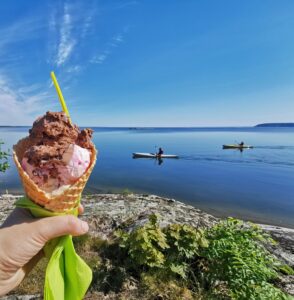
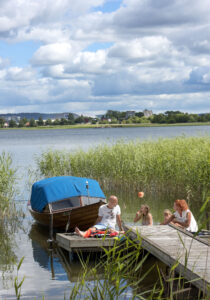
At 5,650 sq km, Vänern is Europe’s third-largest lake and more than earns its reputation as the ‘Pacific Ocean of Sweden’. There’s plenty to do on and around the lake throughout the year, from natural ice skating and exploring in canoes and kayaks to pedalling along the bank-hugging Vänerleden national cycle route. It’s also possible to hire motorboats in Vänersborg and putter off to a series of sandy beaches whose shallow waters quickly heat up come summer.
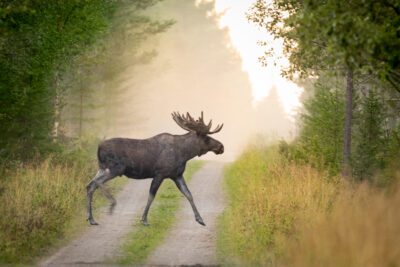
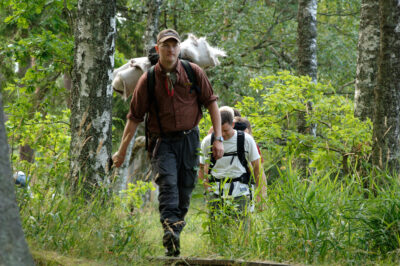
Just east of Vänersborg loom Halleberg and Hunneberg, a pair of table mountains that are part of the Platåbergens (Sweden’s first UNESCO Global Geopark). An Ecopark in their own right, these two serve up steep-sided ravines, crashing waterfalls, fine views of Lake Vänern and 15 hiking trails. There’s bouldering and downhill biking on offer too. And look out for moose and mighty oak trees, plus the remains of an ancient hill fort. Legend even has it that Halleberg’s plateau moonlights as Valhalla, the Viking paradise where warriors slain honourably in battle may feast forever.
From Vänersborg, you can follow the Göta River past a series of spectacular waterfalls to Trollhättan, from where it carries on in dramatic fashion to Gothenburg. The entire route can be traced on the long distance (137km) Göta River Pilgrim’s Trail, which passes through forested nature reserves and viewpoints over the cascades. Or join summer’s daily Trollhättan Tour aboard the M/S Elfekungen, a small-boat cruise that navigates one of the Trollhätte Canal’s locks and offers wonderful waterfall close-ups.
Discover Trollhättan’s history of innovation
For centuries, the Göta River’s cascades confounded merchants wanting to connect Gothenburg with the industry along Lake Vänern. In 1800, long before the Göta Canal was built, the city of Trollhättan devised a series of navigation locks that allowed ships to bypass the 32m-high Trollhättan Falls. As such, this town became renowned for ingenuity – a reputation that has endured.
Visitors today can still watch timber-laden boats climb the Trollhätte Canal’s ‘lock stairs’ or swot up on the rich car-making history of Saab, founded here in 1937, at a dedicated museum amid the sustainable Innovatum District.
Slightly upstream is Trollhättan’s Waterfall Area, from where footpaths pick their way through wooded reserves to dramatic viewpoints. Try to time your visit for July’s Fallens Dagar festival, when the river’s floodgates open, allowing 300,000 litres per second to surge through.
Peckish? Strandgatan is a street of appealing waterside restaurants that make expert use of salmon roe from Vänern, venison and foraged mushrooms. On the parallel Storgatan, near Trollhättan’s pedestrianised heart, a Walk of Fame lists the film stars to have visited ‘Trollywood’, including Nicole Kidman during the filming of Lars von Trier’s Dogville.
Relax in lakeside Vänersborg
A century after Sweden’s popular writer Birger Sjöberg nicknamed Vänersborg ‘Little Paris’, it still remains easy to see why. It is just as refined today, especially within its designated Culture Axis, a path linking the city’s historical buildings. This includes the 140-year-old mansion that hosts Vänersborg Museum, Sweden’s oldest purpose built museum, which pairs Egyptian sarcophaguses with recollections of 19th-century Swedish society.
Outside, in the city’s old market square, stands a three-headed Neoclassical church. And branching off from the square are Vänersborg’s cobbled shopping lanes, their stylish boutiques selling clothing, antiques or cheeses, while just to the north begins the lakeside promenade.
Make your way to the flower-filled gardens of Skräckle Park, which flanks several bathing areas. Bordering one of these is the popular Skräcklestugan café, which sells waffles and fresh prawn sandwiches. From the park, you can gaze at sailboats and distant islands on the Vänern. It’s a classic slice of life in West Sweden
Make it happen
There are direct flights from London Heathrow, London Stansted, Manchester and Edinburgh to Gothenburg-Landvetter, the nearest commercial airport. Rent a car there to allow for more flexible exploration of the area. It’s a 45-minute drive from the airport to Trollhättan.
Alternatively, you can also rely on public transport. Buses and trains connect Trollhättan and Vänersborg, while train transfers from Gothenburg-Landvetter to Trollhättan via Gothenburg Central station take around one hour. If you’re coming from Stockholm, it’s a five hour drive or just under four hours by train with one change.