Marching on: Where to learn about African American history in the US Capital Region
As America reflects on 250 years, Washington DC and the Capital Region offer a powerful lens on one of the nation’s defining struggles. From the legacy of the March on Washington in 1963 to museums telling long-overlooked stories, DC, Maryland and Virginia explore the ongoing fight for civil rights in ways that feel especially poignant today. We revisit this article from 2023 as part of our “America 25,000” series, which explores the histories, cultures and communities that have forged the United States beyond its founding story.
There’s a meme currently going around the internet that says something along the lines of: ‘If you ever wondered what you’d have done during the Civil Rights Movement, you’re doing it now.’
We’re going through a strange time in the US, a backlash of sorts where threats to voting rights are at an all-time high, police violence against African Americans is common and politicians are questioning the ‘educational value’ of teaching Black history and making strides to ban it from classrooms. For many it seems like the USA is losing ground on the gains made by the Civil Rights Movement in the 1960s.
It was against this backdrop that I visited Washington DC, as the city celebrated the 60th anniversary of the 1963 March on Washington, when around 250,000 people showed up for a peaceful demonstration.
It served to call attention to ongoing racial and economic discrimination against African Americans, and it was here that Martin Luther King Jr (MLK) gave his famous ‘I Have a Dream’ speech. This called for an end to racism in the US and talked about the need for civil rights and economic justice for all Americans. It was a watershed moment in the movement.
The anniversary was celebrated with a new march, led by current activists and members of MLK’s family, focused on the continued threats to civil rights in the US.
“If I could speak to my grandfather today, I would say I’m sorry we still have to be here to rededicate ourselves to finishing your work and ultimately realising your dream,” Yolanda King, the 15-year-old granddaughter of Martin Luther King Jr, told the crowd.
What’s particularly saddening is that the pushback on civil rights seems to be happening alongside a new initiative to really look at and make known to the general public the important moments in African American history.
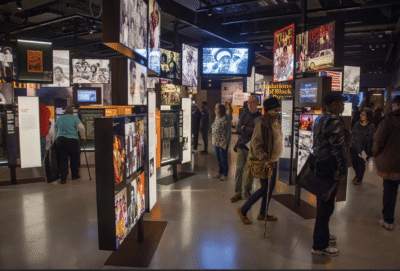
Sadly, I would say that the average American is woefully unaware of the history of African Americans in their own country beyond vague ideas of enslavement and the Civil Rights Movement. But since the Black Lives Matter protests of 2020, there’s been a push to better include this information not only in schools, but also in places like museums, and for public policies and cities to really examine and acknowledge their own legacies of racism and injustice.
For example, in Alexandria, Virginia, just across the river from downtown Washington DC, the city worked together with the non-profit Equal Justice Initiative to create the Alexandria Community Remembrance Project. This acknowledges and honours two young African American men who were lynched in the city in 1897 and 1899. More recently, it also formed an African American History Division, which is committed to the work of ensuring the inclusion of Black history in museums and public programming. While this history is now being integrated across the area, the city also has two museums that offer a valuable resource to everyone.
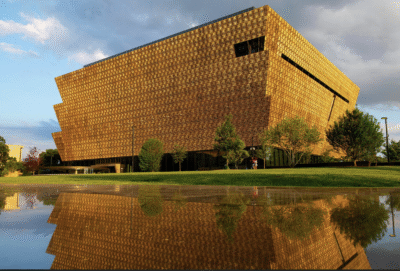
My next stop was Alexandria’s Freedom House Museum, which has an even darker story to tell. This building was once the site of the largest domestic trader of enslaved people in the United States. Countless souls were held against their will here and trafficked to locations across the South. Now the museum stands as a memorial to those who passed through this site, with one of its three exhibition spaces detailing the history of the building and the personal stories of those who were kept here, while another narrates the 400-year African American struggle for equality. A rotating exhibition and a reflection space rounds things off.
For me, one of the most moving aspects of my time in Alexandria was the opportunity to spend time with John Taylor Chapman, the owner of Manumission Tour Company. He offers several walking tours that specifically focus on the city’s African American history, but I took the one discussing the city’s connection to the Underground Railroad, a network of secret routes and safe houses used by those escaping enslavement to places where the practice was abolished.
The tour talked about the city’s history as a major slave port, but also about those who used the secret network to seize their freedom. Their stories, among others, were collected in the work of William Still, a Black abolitionist who published a book of these accounts in 1872 that is still in print.
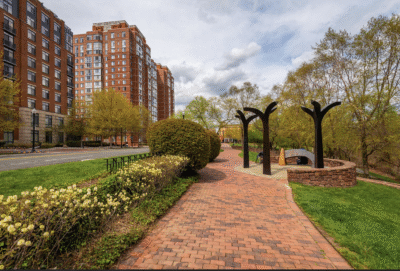
Of course, Washington DC also has a plethora of Black history for visitors and locals to delve into. The city is almost 50% African American, and Howard University, one of the country’s premier Historically Black Colleges and Universities (or HBCUs), is located here. In fact, anyone looking for Black culture in DC should head directly to the area surrounding the university, known as the U Street Corridor.
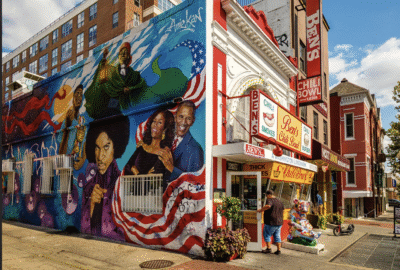
U Street has been the centre of Black life in the city since the beginning of the 20th century, when it became known as ‘Black Broadway’. Though gentrification of the area is a concern today, U Street still retains many of its Black-owned businesses, such as Ben’s Chili Bowl, a local institution in this area since it opened in 1958. The area is also a haven for Black arts: the Lincoln and Howard theatres are both located here, and these were major stops for performers such as Duke Ellington, Billie Holiday, Cab Calloway and others.
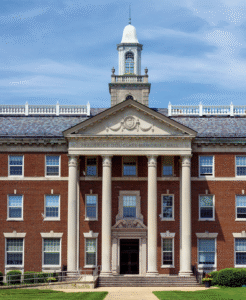
This area has always been one of my favourite neighbourhoods in DC, not only because of its deep history, but also because of its present. To this day, it is not only a haven for African Americans, but also Black immigrants from across the diaspora, including Ethiopia and the Caribbean. Like the nearby university, U Street reminds visitors that the Black experience is not a monolith and that there is space for both diversity of experience and room to honour the neighbourhood’s important history.
U Street isn’t the only place in DC to learn about the African American experience. The wider city has important pockets of Black history as well, including the Frederick Douglass National Historic Site, the Martin Luther King Jr Memorial and many others. There are also several tours of the city that cater specifically to those interested in learning more about its African American history, and you can even soak up a bit of Black history depending on where you stay.
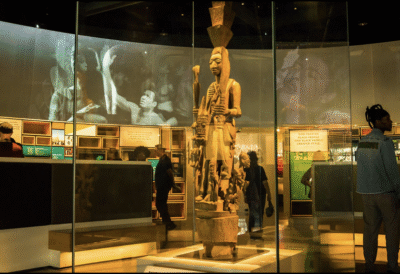
The historic Willard Hotel (now owned by InterContinental), for example, holds the distinction of being where MLK is said to have written his ‘I Have A Dream’ speech. It’s also conveniently just a short walk from the Smithsonian National Museum of African American History & Culture, which is not to be missed and is currently the largest museum in the country dedicated to African American history.
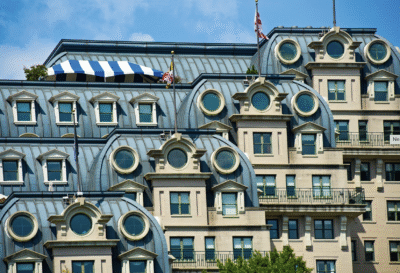
“Freedom House was once the site of the largest domestic trader of enslaved people in the US”
This museum, which opened in 2016, takes visitors on a journey from bondage through civil rights and beyond. Its design is meant to give you a sense of the struggle for equality, starting in the basement with exhibitions on the transatlantic trade in enslaved people, then moving upward and into today and the hope of an even brighter future. It’s an intense experience, and it’s best done when you have some time to both get through the whole of the museum and room to process it afterwards. It took me several visits to get through its entirety, and it has great relevance to the 1963 march.
“The words of [March on Washington] speakers resonate six decades later, and we serve as witnesses to the bravery and dedication of its organisers,” said Kevin Young, the Andrew W Mellon director of the museum. “To be able to show visitors the copy of the ‘I Have a Dream’ speech King read and improvised from while at the podium is an honour and privilege.”
Located about an hour from downtown DC is the Maryland city of Baltimore. I took a room in the Lord Baltimore Hotel, which MLK also called home in 1965 while attending a meeting of the Southern Christian Leadership Conference. There’s lots of African American history in this city, but I was most struck by the effort that is being made today to address the economic injustices that African Americans face. Many people overlook the fact that the purpose of the March on Washington was not just racial equality, but also economic equality. Though strides have been made towards the latter, generations of injustice mean that many African Americans still struggle financially, especially in cities like Baltimore.
In 1968, after the death of MLK, who was assassinated on the balcony of his hotel room in Tennessee, many African American communities in Baltimore were devastated in the resulting protests. Recently however, several initiatives have been put in place in order to bring businesses – particularly small, Black-owned businesses – back to the area. The Boost programme, for example, provides up to $50,000 (£40,700) in grant money and business development support to African American entrepreneurs looking to start small businesses. The city also provides support to help preserve the historic facades of many of the city’s gorgeous buildings.
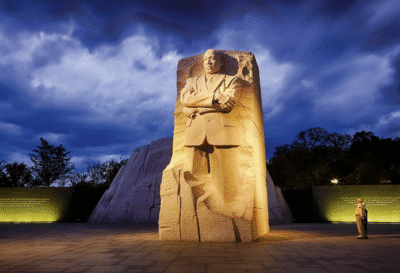
“Generations of injustice mean that many African Americans still struggle financially”
Baltimore is home to several museums that highlight the area’s Black history, much of which is overlooked. The Lillie Carroll Jackson Civil Rights Museum, for example, showcases the life and importance of a lesser-known woman of the movement. Dr Lillie Carroll Jackson served as president of the Baltimore chapter of the NAACP for nearly 35 years. She helped desegregate many of the city’s facilities and was instrumental in getting more African Americans into leadership positions in the city government and beyond. Visiting her home, now a museum, was a reminder of all of the women whose, often unsung, work was so instrumental in pushing forward the Civil Rights Movement.
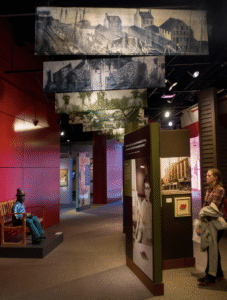
Another important institution I visited here was the Reginald F Lewis Museum of Maryland African American History & Culture. Located right on the waterfront, this museum, founded by businessman and philanthropist Reginald F Lewis, features a permanent collection of more than 11,000 objects, documents, artworks and photographs highlighting the important roles and achievements of African American residents of the state of Maryland.
There’s a new urgency to the legacy of the March on Washington that continues to reverberate around the Capital Region and the rest of the US. Despite continued opposition, many people, organisations and institutions continue the fight for equal rights and continue to tell the stories of those who fought for it. It’s these places that understand that it’s only through learning about and honouring the past that we can create a more equitable future for all.
The Black-owned businesses that you must visit in the Capital Region
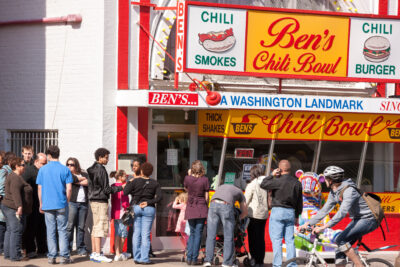
Ben’s Chili Bowl, Washington DC
Ben’s Chili Bowl has been a staple in the U Street neighbourhood for generations, and even provided food to protesters during the March on Washington. In fact, this local institution recently celebrated its 65th anniversary. Be sure to swing by to try its famous half-smoke sausage in a bun with chilli sauce. benschilibowl.com
1799 Prime Steak & Seafood, Alexandria
Restaurant owner Jahmond Quander is a descendant of the oldest documented African American family in the US. The restaurant’s name refers to the year in which the family was freed from bondage by the death of their enslaver, George Washington – the first US president. 1799prime.com
Vinyl and Pages, Baltimore
Also owned by Eric Dodson, Vinyl and Pages combines two of his greatest loves: books and music. This space encourages visitors to lounge a bit and enjoy their finds, while in-store events encourage you to become a part of the community. vinylandpages.com
Cuples Tea House, Baltimore
Owned by Eric and Lynnette Dodson, who utilised the city’s Boost programme to start up, this charming tea house in the Howard St Corridor offers the community alternatives to sugary drinks while providing a creative space in which to chill. cuplesteahouse.com
Need to know
Geography: The Capital Region consists of Washington DC and the states of Virginia, and Maryland.
Getting there: Washington Dulles International Airport (IAD) welcomes daily non-stop flights from London Heathrow with British Airways, American, and Virgin Atlantic.
Flights take eight hours. If you fly in from elsewhere in the US, you’ll likely land at Ronald Reagan Washington National Airport (DCA), which is only four metro stops from Union Station.
Getting around: A SmarTrip Card is a good way of getting about in the Capital Region; this can be used on the Metrorail, Metrobus, DC Circulator and bus networks in Virginia and Maryland. In Baltimore, water taxis are an affordable way to reach waterfront locations. In Alexandria, a free trolley bus links the train station and waterfront.