

24 easygoing (but breathtaking) cycling trips for softies, from around the world
Welcome to life in the slow (cycle) lane.
These gentle cycle trips are proof that you don’t need thighs of steel to see the world on two wheels.
Grab life by the handlebars and pedal these fantastic landscapes around the world, including France, Sri Lanka and the UK.
Véloscénie: France

Why? Explore French icons
How tough? Varied – stages for all abilities
Paris, one of the world’s most romantic cities; Mont St-Michel, one of the world’s most romantic sites; the Véloscénie, a 450km cycle route running between them spanning history-soaked northern France. What’s not to like?
The route traverses country roads, cycle tracks and greenways to get from the capital to the abbey-topped tidal isle. It breaks into seven sections and 25 stages of varying difficulty. Families and novices might like the four stages from castle-dominated Nogent-le-Rotrou (west of Chartres) to Alençon, Normandy. Totalling 77km, this section is almost entirely on greenways, which are reserved for non-motorised traffic – a stress-free way to view the lakes, medieval manors and cutesy villages en route.
The Véloscénie has become one of France’s premier long-distance cycle routes, with improved waymarking, growing numbers of bike-friendly accommodation providers and excellent rail connections at either end.
Need to know: See Véloscénie.
Also try: Loire à Vélo. This 800km cycle trail runs along France’s longest river, via few hills and abundant châteaux.
Lake District: UK
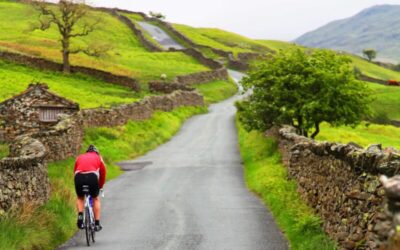
Why? Fells without fuss
How tough? Easy-to-moderate
The notoriously lumpy Lake District doesn’t sound like a haven for cycling softies. But thanks to its increasing network of e-bike hiring stations and charging points (handily located in cosy pubs and cafes), previously tough-to-access parts are opening up to even the most casual riders. For example, it’s a steep, twisting climb from Coniston to Tarn Hows, but slip the bike into ‘sport mode’ and you’ll be good to go; you can recharge your bike (and yourself) at the The Drunken Duck Inn en route.
E-bike hire has expanded across the national park, making routes through Grizedale Forest, Tarn Hows and the quieter western fells accessible to riders of all abilities.
Need to know: Gradients can hit up to 33% on the hillier sections of the Lake District
Also try: Connemara, Ireland. An e-bike will help you contend with the windy West Coast trails.
Utrecht, Netherlands
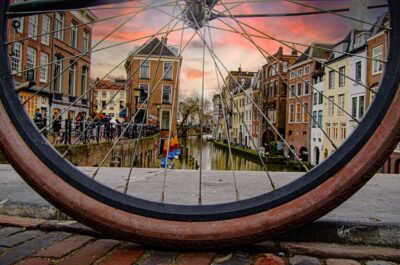
Why? 2025’s most bike-friendly city
How tough? Easy
In a cycle-city upset, the Dutch city of Utrecht claimed the top spot in 2025 as the most cycle-friendly city on the Copenhagenize Index, knocking the namesake city Copenhagen from pole position. Nearly one-third of all trips made in Utrecht are on two wheels, and the city boasts a huge 240 km of dedicated bike paths.
Either explore the city itself by bike or enjoy cycling routes in the environs. Pedal round the 59km Utrechtse Heuvelrug National Park Loop, through heathlands and forests, or for those seeking a shorter cycling adventure, take the Blossom Bike Route. Starting just southeast of the city centre and looping through areas like Wijk bij Duurstede, Bunnik, and Odijk, this route takes visitors on a 39 km path along fruit tree orchards, villages and estates in the province of Utrecht. The 51km Kromme Rijn Castles Tour is also popular with domestic travellers.
Need to know: Most roads have separated and protected cycle lanes, making bike travel easier and safer.
Also try: Valencia, Spain. The Turia River Gardens are a cyclable green artery allowing for easy two-wheeled exploration of the city.
Zealand: Denmark
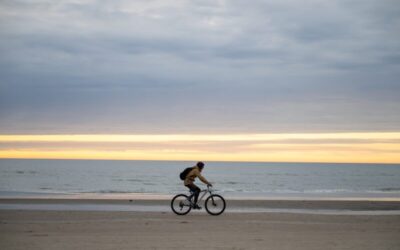
Why? Brilliantly bike-friendly
How tough? Easy – flat, safe
It’s no surprise that Copenhagen, with its 397 km of bike lanes, is one of the world’s most bike-friendly cities.
But such bike bravura isn’t restricted to the capital: all of Denmark, with its lack of hills, superb infrastructure and positive attitude to two-wheeled travel, is ideal for beginner riders.
Focus on north-east Zealand. Leave Copenhagen’s bright harbourside to follow the coast north towards Helsingør (home to ‘Hamlet’s Castle’), via old royal hunting grounds and shifting dunes, then head east to the Viking sites around Roskilde, before returning to the capital via an island-slicing canal. Allow a week to include sightseeing and smørrebrød-eating en route.
Need to know: See Visit Denmark
Also try: Sweden. From Helsingør, it’s a 20-minute ferry hop to Helsingborg.
Vietnam
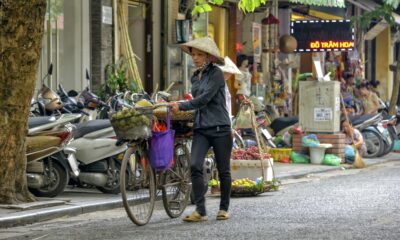
Why? Travel like a local
How tough? Moderate – largely level, largely humid
Vietnam is best viewed by bike. Everyone here seems to own one, and because vehicles here are so used to scooters and bicycles, you’ll also feel safer on busier roads.
A coastal expedition linking Hanoi and Ho Chi Minh City/ Saigon via quiet backroads (with the odd train or bus cheat), is a great choice, offering an unfurling of plantations, beaches, minority villages and historic hotspots. The terrain is mostly flat – with the Hai Van (Sea Cloud) Pass a notable exception; book on a small-group trip so there’s a back-up bus on hand. The most tiring aspect is constantly yelling “Xin chào!” [Hello!] to waving locals.
Need to know: Hybrid or mountain bikes are best.
Also try: Cambodia. Add some cycling around Angkor’s temples to your trip.
Umbria: Italy
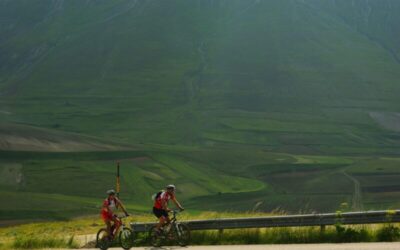
Why? The refuelling is delicious
How tough? Easy–moderate – with some tasty undulations
Umbria is a rolling, ravishing ripple of vines, orchards, olive groves and cypress trees flanking time-warp hilltop towns. And while ‘rolling’ might sound ominous, don’t fear: a modicum of fitness should see you happily wending along its country roads – which are generally quieter than those in neighbouring Tuscany. The region’s growing network of e-bike rental providers makes tackling Umbria’s rolling terrain easier than ever. Try a 150km-ish loop from Perugia, via saintly Assisi, well-preserved Spello and walled Spoleto – you can always get off and push for the short climbs to steeper towns.
That said, you’ll want to work up an appetite; sample regional specialities en route, from umbrici pasta and Norcia prosciutto to glasses of crisp white Orvieto. Stay at a wide array of agriturismo accomodation which has increased across Umbria.
Need to know: Riding on the pavement in Italy is strictly prohibited and can result in heavy fines.
Also try: Emilia-Romagna. This Italian region, encompassing Bologna, Ravenna and some of the Adriatic coast, is famous among foodies and incredibly flat.
Confederation Trail: Prince Edward Island, Canada
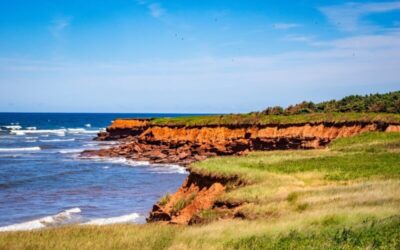
Why? Cross an entire island
How tough? Easy – gradients never exceed 2%
Cycling across Canada is best left to hardcore bikers. Cycling across Canada’s smallest province, however, is open to all, thanks to the Confederation Trail. After Prince Edward Islands’ (PEI) railway network was abandoned in 1989, the tracks were repurposed into 435km of paths, open to cyclists, walkers and snowmobilers.
The going is gentle, the scenery Anne of Green Gables glorious: peaceful rivers, wildlife wetlands, fishing harbours, clapboard villages. The main trail runs for 273km, from north-west Tignish to easterly Elmira, while branches shoot to capital Charlottetown and other seaside spots. Accommodation, food and service options are available a short distance from the trail. Today, many visitors combine cycling with seafood-focused itineraries and e-bike-supported rides along the island’s coastline.
Need to know: See Tourism PEI
Also try: Route Verte, Québec. Explore bite-sized portions of this 5,000km cycle network.
Virginia, USA
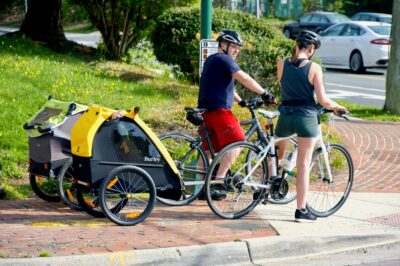
Why? Mountains without muscle power
How tough? Very easy
Thank heavens that hilly Virginia embraced the 1983 US Rails to Trails Act. This allowed abandoned rail lines countrywide to be converted into (largely flat) recreational trails. The state now has 32 rail trails, including the 51km High Bridge Trail, which crosses a spectacular span, 38m above the Appomattox River, and the 92km New River Trail, which negotiates two tunnels, three bridges and 30 trestles alongside a leafy waterway.
On the 55km Virginia Creeper Trail you barely need to pedal: it runs slowly downhill virtually all the way from Whitetop to Damascus, then on to Abingdon, through the Blue Ridge Mountains.
Need to know: See Virginia Bicycling Federation.
Also try: Rails to Trails Conservancy. The USA has more than 48,300km of rail trails.
Danube: Germany, Austria, Slovakia and Hungary
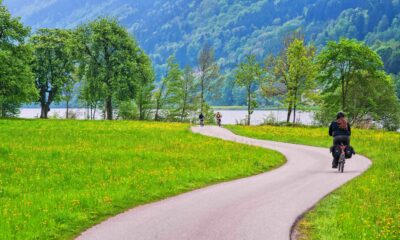
Why? Follow Europe’s second-longest river
How tough? Easy – flat, safe
The Danube river wriggles for 2,860km from Germany to the Black Sea. Cycling its entire length would be quite an undertaking, so opt for the 560km section between Passau and Budapest, where the river is most resplendent – notably at the Schlögener Loop and Danube Bend.
Starting in Bavarian Passau, the pancake-flat path continues via lively Linz, the grand cafés of Vienna and Bratislava’s old town. At a speed of around 50km a day, you’ll be soothing your limbs in a Budapest thermal bath within two weeks.
Need to know: Take a train between Krems and Tulln to avoid a section that moves away from the river and into industrial areas.
Also try: Moselle, Germany. An easy path follows the meandering Moselle river through wine country.
Alps 2 Ocean: New Zealand/ Aotearoa
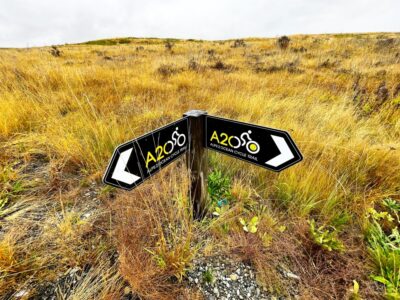
Why? South Island awesomeness, from Mount Cook to vineyards
How tough? Easy–moderate – a few tricksy sections
At just over 300km, the Alps 2 Ocean is New Zealand/Aotearoa’s longest cycling trail, stretching from Aoraki Mount Cook all the way to arty Ōamaru beside the Pacific Ocean. And, unbelievably in a country renowned for people doing crazy outdoor things, it’s graded easy-to-intermediate, which means almost anyone can make this majestic descent from Mount Cook to the Pacific.
The route is broken into nine parts (including one alternative section), each individually graded, so you can opt for only the easiest bits if you like. For example, 42km-long Section 2 (Braemar Road–Twizel) is undemanding yet gives glorious views across Lake Pukaki and the mountains. Likewise, 28km Section 7 (Kurow–Duntroon) navigates smooth shingle via vineyards and Maori rock art. Allow four to six days for the whole ride or more if you want to take your time.
Need to know: See Alps 2 Ocean.
Also try: Timber Trail, New Zealand. The 80km trail on North Island follows an old millers’ tramway through ancient podocarps and feats of rail engineering.
Sri Lanka
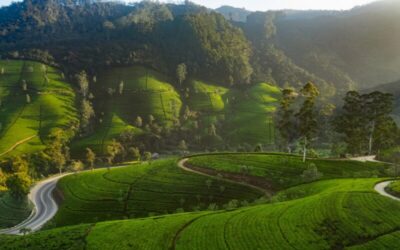
Why? An inspiring intro to off-roading
How tough? Moderate–tricky, with some tough bits
Following a strong tourism recovery, cycling operators once again offer supported itineraries linking the Cultural Triangle, hill country and national parks. Traversing Sri Lanka by bike is a proper adventure, and calls for some adventurous riding. But not too much. There are off-road trails here that require a bit of fitness but no technical mountain-biking skill, making it a good introduction to the sport for road riders.
These trails can take you to Sri Lanka’s best bits too: Kandy’s Buddhist temple, the rock fortress of Sigiriya, Minneriya National Park (look for elephants), the ancient capital of Polonnaruwa. There are climbs – up to the hill station of Nuwara Eliya, for instance – but the cool highland weather helps ease things.
Need to know: Fit in some hilly training rides before travelling.
Also try: Himachal Pradesh, India. A more challenging ride through the Himalayan foothills, but a lot of scenic bang for your buck.
Lake Constance: Austria, Switzerland and Germany
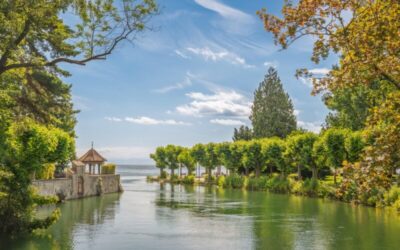
Why? Tick off three countries on two wheels
How tough? Very easy – flat, traffic-free and surprisingly un-Alp-like
The Alps aren’t generally suited to novice cyclists. But circuiting Lake Constance, a great shimmer of turquoise shared by three countries, enables you to look up at those lovely mountains without breaking a sweat.
A 270km-long bike path circumnavigates the lake, hopping borders and passing castles, waterfalls, wildflower meadows, vineyards and historic towns such as medieval Stein am Rhein and Bregenz. The cycling couldn’t be simpler, the views couldn’t be finer, the opportunities for lake swims and wine-tasting couldn’t be better. E-bike rentals are widely available around the lake, making the route accessible to riders of all ages and abilities.
Need to know: Trains run to Bregenz from Zurich airport.
Also try: Lake Balaton, Hungary. Paths run alongside this vast lake, via traditional villages and rolling vineyards.
Croatia
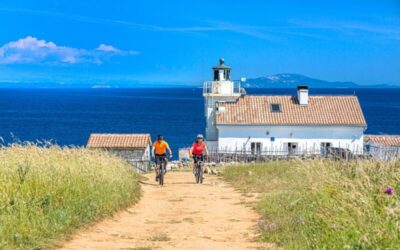
Why? Combine bike and boat
How tough? Easy – short rides with relaxing onboard opt-outs
The spectacularly speckled coast of Croatia is a prime place to island-hop by boat and bike. Travelling by barge allows for scenic sails and sundowners on deck, while having a bike onboard means that when you dock at the next outcrop, you can explore more of its cobbled alleys and countryside.
The islands, such as hip Hvar, vine-streaked Korcula and unspoilt Brac, aren’t huge and there are hills, but there’s no need to rush, and the focus is more on cultural immersion. Many operators now offer e-bikes, making the islands’ steeper roads accessible to less experienced cyclists. If your legs are tired, spend the day lolling onboard.
Need to know: A good family option – expect to share the boat with kids.
Also try: Netherlands. Travel by barge and bike, using Holland’s excellent canal and cycle networks.
Namibia
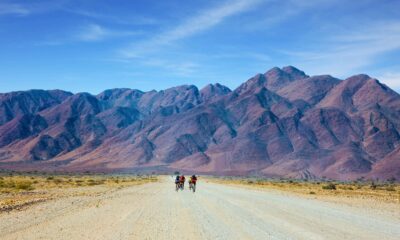
Why? Really wild rides
How tough? Moderate – good tracks
That endless African sky seems even bigger when you travel by bike, and nowhere is it more immense than in sparsely populated Namibia. The country has become one of the world’s leading gravel-cycling destinations, attracting riders seeking big landscapes and quiet roads. Despite the country’s wildness, this is a good option for softies. While the landscapes are extreme – including some of the planet’s largest deserts, highest dunes and biggest canyons, the cycle terrain isn’t: it’s possible to stick to good gravel roads and tracks, with minimal climbing.
Combine cycle sections with truck travel (including a safari in Etosha, where cycling isn’t allowed). Ideal places to explore on two wheels include roads through the tangerine sands around Sossusvlei, the Atlantic-slapped Skeleton Coast and the Himba villages of Damaraland.
Need to know: Pack a bandana to cover your face – the roads are dusty.
Also try: Western Cape, South Africa. Pedal between winelands, stopping for tastings.
Kerala: India
Why? For some sloooooow travel
How tough? Easy–moderate – stiffer climbs optional
Kerala is where frenetic India takes its foot off the gas. Life is just slower down south, from rice barges drifting along backwaters to Chinese nets wafting off the coast. This makes ‘God’s Own Country’ a great place for subcontinent and cycle-tour first-timers.
Combine rides along backroads, via tea plantations and into wildlife reserves, with houseboat stays and beach days. The energetic can tackle the hairpins up to Ooty hill station; those less inclined can take the train.
Need to know: Avoid cycling between the May and October monsoon season.
Also try: Rajasthan, India. Mix big cities with rural countryside rides.
Amsterdam: Netherlands
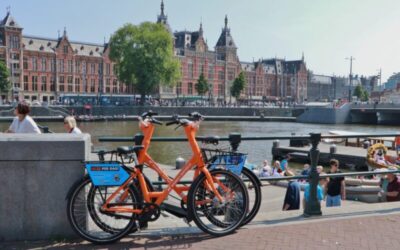
Why? The land where cycles reign supreme
How tough? Easy – flat, if often a bit local-crowded
Lazily pedalling betwixt 17th-century canals and gabled houses, the ting of bells in your ears, a lump of Gouda in your basket… the Amsterdam experience is centred around the bicycle. The Dutch capital has 512km of bike lanes, and around 70% of trips in the centre are made on two wheels. This does mean those lanes get busy, so novices should avoid rush hours and choose a guided tour to build confidence.
Standard tours visit sites such as the Anne Frank House and the Rijksmuseum. Alternatively, head out along the Amstel River to cycle amid windmill-dotted countryside.
Need to know: Certain e-scooters are permitted to use bike lanes.
Also try: Utrecht. One of Holland’s oldest cities, Utrecht also has excellent bike infrastructure and canals, plus a lively student vibe.
Wine country: Chile
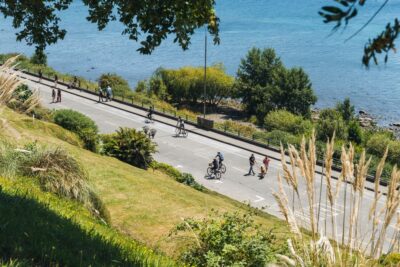
Why? It’s delicious!
How tough? Easy–moderate – depending on how much you drink…
It’s important to stay well-watered on a cycling trip, which isn’t a problem in the Colchagua Valley. This is Chile’s premier wine-growing region, where the billowing slopes are scored with merlot and malbec grapes, and where family-run vineyards offer tastings.
Slow-paced pedalling is the order of the day, so you can inch down the valley, taking in high Andes views while tackling gentler terrain, and allowing plenty of time for wine stops and characterful hacienda stays.
Cycling infrastructure is growing across Chile. The city of Santiago boasts extensive networks of urban bike paths as well as routes out into the surrounding environs. Other cities including La Serena, Concepción, Talca, Viña del Mar-Reñaca and Puerto Montt have also invested in bikeability. Destinations such as Valdivia, Temuco and Antofagasta have followed suit, allowing more people to consider the bicycle as an alternate form of travel around Chile.
Need to know: The Colchagua Valley is around a three-hour drive from Santiago.
Also try: Mendoza, Argentina. Hire a bike to vineyard-hop in the Maipú Valley.
Heart Route: Switzerland
Why? Alps made easy
How tough? Easy – with a full battery
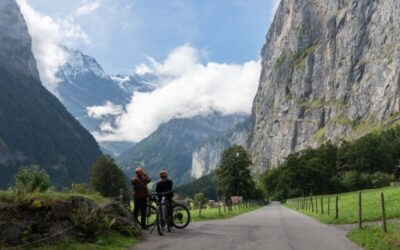
One glance at Switzerland’s astonishing snow peaks is enough to send any cyclist quaking into their panniers. But with the right equipment, it’s possible to ride across the country with ease. Mountainous Switzerland has embraced the e-bike with particular zeal. In fact, the first pedal-assist e-bike was patented here.
There’s also the Heart Route, a 710km trail from Lausanne to Rorschach designed with the e-biker in mind. What would be a moderately challenging meander through Alpine foothills on a regular machine (highpoint: 1,281m) magically becomes manageable with engine assistance. You can concentrate on the views – of Lake Thun, the Emmental valley, a succession of historic towns – rather than the next climb.
Need to know: The well-signed Heart Route (Route 99) breaks into 13 stages.
Also try: Ljubljana, Slovenia. Explore the pedestrianised city centre or head out into the Julian Alps
Southern Thailand
Why? Ride to the beach
How tough? Easy–moderate – flat, hot
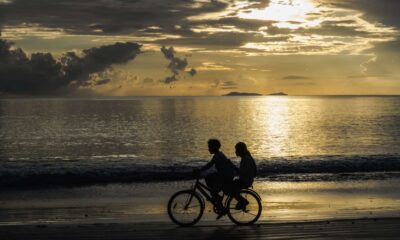
Knowing that Thailand’s famed white sands lie in wait is a good incentive to keep novices pedalling. Follow the east coast south of Bangkok, linking relatively flat backroads to reach the Gulf Islands – a joyous journey that most travellers bypass by plane or train. En route lie untouristy beaches and fishing villages, forests and plantations, and the limestone mountains of Khao Sam Roi Yot National Park. Road surfaces have also seen a major upgrade in recent years. Finishing in Chumphon, you can take a ferry to Ko Samui, Ko Tao or Ko Phangan for a well-deserved rest.
Need to know: Avoid going between September and December – the Gulf’s rainiest months.
Also try: Golden Triangle, Thailand. A loop from Chiang Rai will take you along the Mekong, via temples and plantations.
Jordan
Why? Ancient sites via manageable rides
How tough? Moderate – undulating
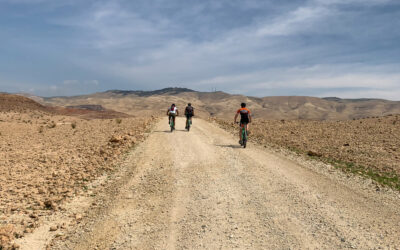
Fancy crossing a country by bike? Then Jordan has you covered. The Jordan Bike Trail is a 730km, mixed-surface bike route that crosses the entire length of the country. Starting from the North in Um Qais passing through rolling hills, olive groves, and farms the trail continues through historical and natural wonders. Pedal across the dramatic canyons of the Dead Sea region; through the remarkable landscapes of Dana, Petra, and Wadi Rum before taking a well-deserved dip in the Red Sea in the Southern port of Aqaba,
Need to know: Avoid high summer – go March to May or September to November.
Also try: Morocco. Some tough terrain, but try the south – Atlas to Atlantic – for slightly less challenging but spectacular cycling.
Spain
Why? Admire some enduring engineering
How tough? Easy – it’s mostly nice and flat
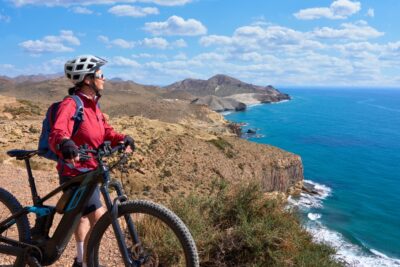
There are some testing rides in Spain, from the cols of the Pyrenees to the hairpins of the Sierra Nevada. Thankfully, there are also 7,600 km of lovely, level vías verde – disused railways converted into easy-to-navigate, traffic-free greenways. There are 135 routes countrywide, many still bearing reminders of their past, from defunct stations to valley-spanning bridges.
Try Andalucía’s 128km Olive Oil Greenway, which starts in Jaén – ‘Olive Oil Capital of the World’ – and crosses 19th-century viaducts as it cuts through endless groves. Or opt for the Bear Trail (36km one-way), which traces an old mining line into the mountains of Asturias. Spain’s vías verdes network continues to expand, offering one of Europe’s largest collections of traffic-free cycling routes.
Need to know: See Vias Verdes.
Also try: Mallorca. As well as the 29km Manacor-Artà Greenway, the Balearic isle has an abundance of quiet backroads.
Nicaragua, Costa Rica and Panama
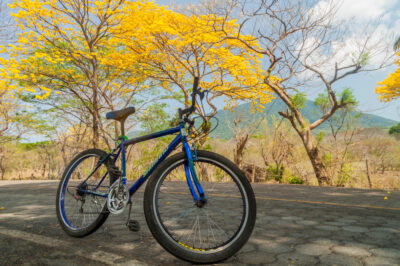
Why? A varied, invigorating ride
How tough? Moderate–challenging – but it’s not just the steep bits that make you sweaty
Admittedly, this region will take cycle softies out of their comfort zone – there are some stiff ascents, descents and perhaps a pothole or two. But with moderate fitness and a little pre-trip training, amateurs can cross three countries in two weeks for a real bucket-list bike ride. Join a guided tour – you’ll get full support and access to the all-important back-up bus.
The ride between Granada and Panama City is worth the effort, showcasing Central America’s highlights: steaming volcanoes, colonial cities, Pacific and Caribbean shores, and truly wild country where toucans and monkeys lurk by the road.
Need to know: Rise early to avoid the heat.
Also try: Yucatán, Mexico. There’s easy cycling between Mayan sites and cenotes (natural water-filled sinkholes) to cool off in.
4Rivers: South Korea
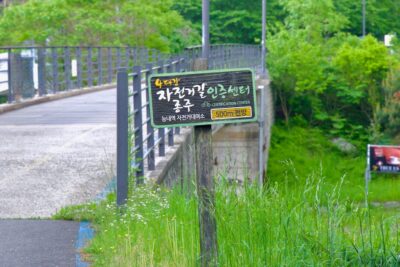
Why? Easy cycling, via Asia, old and new
How tough? Very easy – flat, great facilities
South Korea has developed one of the world’s most impressive long-distance cycling networks, centred on the 4 Rivers route linking Seoul and Busan. The 4Rivers cycle network comprises over 600km of waterway-following trails across the country, with enviable facilities, including toilets, water, free campgrounds and WiFi stops at regular intervals. Riders can even collect stamps in a certificate handbook at checkpoints en route and collect a certificate upon completion.
Ride right from Seoul to Busan, via bird-flocked wetlands, rice fields, small villages, hydroelectric dams and Lycra-ed locals blasting out K-pop. In 2015, a 242km East Coast path was added to the network.
Need to know: See Visit Korea.
Also try: Japan. The relatively flat 70km Shimanami Kaido cycle track spans the Seto Inland Sea, linking six islands.
Read next: 6 top European destinations best explored on two wheels


