
7 incredible coastal experiences to have in Malta
From its striking cliffs to underwater treasures, there are plenty of mesmerising experiences to have along Malta’s coastline…

Much of Malta’s coastline is dominated by limestone cliffs punctuated by bays and inlets. Such remarkable scenery helps explain the country’s enduring appeal. Explore on foot following delightful hiking trails that lead to historic watchtowers, centuries-old salt pans and isolated churches. Relax at pavement cafés on the quaysides of characterful harbours. Swim, snorkel or dive in warm, clear water. On land or on the water, there are a wide range of coastal experiences awaiting visitors.
1. Explore the Dingli Cliffs
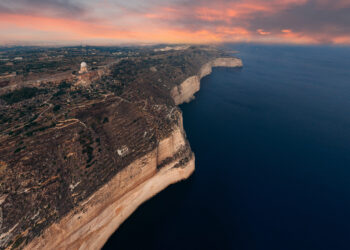
Standing 253 metres above sea level, Ta’ Dmejrek on the Dingli Cliffs is Malta’s highest point and the focus of one of the country’s most scenic hikes, particularly at sunset. This part of the coastline overlooks the tiny uninhabited island of Filfla, home to a sizeable colony of European storm petrels. Between gnarly limestone headlands, farmers have cut terraces into the stony slopes, inserting pockets of green into this bucolic scene. Walkers following the clifftop trail will pass St Mary Magdalene’s Chapel. It was built here in 1646 and is nicknamed il-Kappella tal-Irdum (the chapel on the cliffs). Mass is celebrated here annually on St Mary Magdalene’s feast day. Enter the stone structure through a simple doorway, above which sits a small circular window.
2. See the Xwenji Salt Pans in Gozo
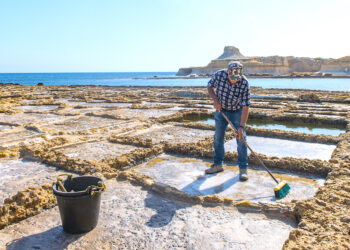
Salt has been produced in this corner of the Mediterranean since Phoenician times, while the Xwenji salt pans of northern Gozo date back at least 350 years. Here, seawater is pumped into a mosaic of irregularly-shaped pools. The process is weather-dependent: as the sun beats down and the wind blows, so the water evaporates enabling salt crystals to form. From late spring until the beginning of September, the harvest takes place at regular intervals – usually once a week if conditions are right. Following a traditional process that has barely changed for centuries, the salt is brushed into small heaps and spread out to dry for a day or so before being packaged up for sale. Visits are strictly by prior arrangement only but highly recommended.
3. Go wild swimming in Gozo’s Inland Sea
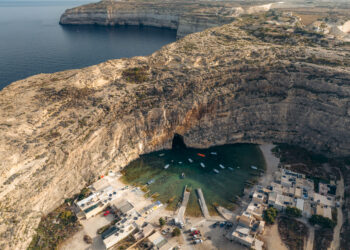
Gozo’s Inland Sea was most likely formed when the roof of a limestone cave collapsed. Today, it’s linked to the open sea by a narrow slit in the rock carved by wave action. This vertical fissure is rich in marine life, making it an enticing prospect for certified open-water divers. Small boats can also access the sheltered saltwater lagoon by squeezing through this natural tunnel. They tie up at the small jetty or haul up onto a pebbly beach in front of a row of fisherman’s huts. Protected from the sea beyond, the calm turquoise water is a treat for wild swimmers. Its exceptional clarity and shallow depth make it easy to spot fish darting about among the stones that line the bed of the lagoon.
4. Wander the fishing village of Marsaxlokk
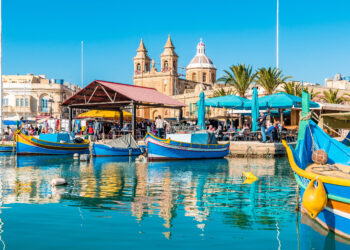
Traditional Maltese boats known as luzzus splash colour onto the water in Marsaxlokk’s photogenic harbour. Painted with blue, red and yellow stripes, they supply the town’s restaurants with swordfish, tuna and lampuki; others ferry day-trippers to the forts, salt pans, rocky cliffs and swimming coves beyond the harbour’s perimeter. Sandstone buildings flank the cobbled quayside; they boast wrought iron balconies, stone statues tucked into arched nooks and fish-shaped door knockers. Pavement cafés abound; their calico umbrellas shade people-watching tourists from the fierce Mediterranean sun. Beside them, market stalls sell linens, jars of beeswax, Gozitan sea salt and on Sundays, fish. A few steps inland, the Catholic church of Santwarju tal-Madonna ta’ Pompei presides over the scene, its twin towers a local landmark since the late 19th century.
5. Walk the Sanap Cliffs
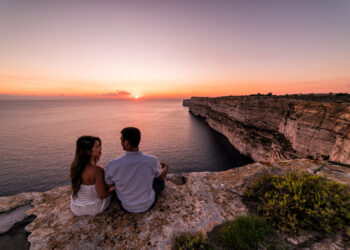
Walk Gozo’s breathtaking Sanap Cliffs, where sheer limestone walls line the island’s southern shore and drop down to the water’s edge. At the foot of the cliffs, joints and bedding planes have been eroded into wave-cut notches, caves and arches. Above, on the headlands, dry stone walls impede soil creep to make agriculture possible, while plants like wild thyme, golden samphire, bushy restharrow and germander flourish in natural hollows. A broad, paved path snakes along the clifftop, and it’s possible to follow the trail as far as Ta’ Ċenċ Cliffs. To the north, you’ll find Xlendi Tower, the oldest of Gozo’s surviving watchtowers, which was constructed in 1650 in response to threats from corsairs and slavers. Today, exquisite sunsets lure a more peaceful breed of visitors.
6. Enjoy a cruise around Gozo and Comino
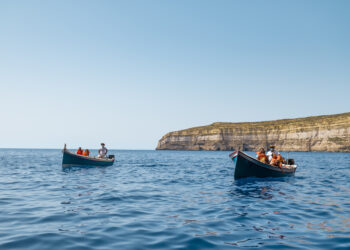
Malta’s striking coastline is best admired from the water and that’s especially true of the smaller islands of Gozo and Comino. Tours depart on catamarans, yachts, motor boats and colourful luzzus. Day-long cruises combining the two depart regularly throughout the summer tourist season from resorts such as Sliema and Buġibba. Typically, such boat trips combine scenic views with snorkelling and sightseeing stops. Highlights include Comino’s Blue Lagoon, Crystal Lagoon and Santa Maria sea caves. In addition, boats dock at Gozo’s Mġarr Harbour for a few hours of land-based sightseeing. To see Gozo from the sea, half-day cruises take in popular spots such as the Ta’ Ċenċ Cliffs, Fungus Rock at Dwejra Bay, the salt pans that flank Xwejni Bay and the golden sands of Ramla Beach.
7. Dive among Malta’s caves, reefs and wrecks
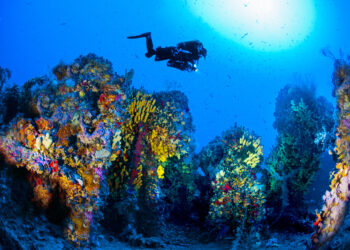
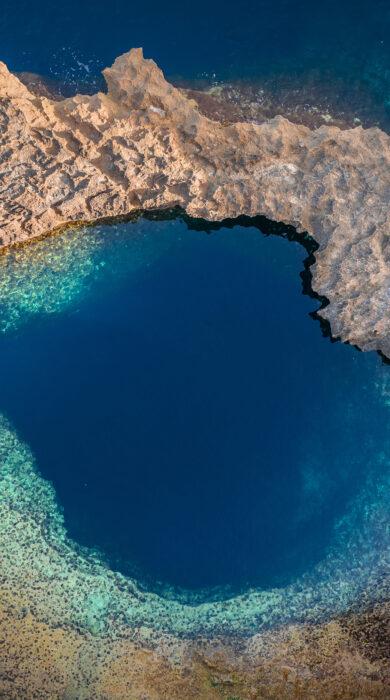
Malta isn’t short on dive sites, with an array of reef dives, wreck dives and cave dives found on the fringes of the archipelago. One of the best is Gozo’s Blue Hole, a limestone sinkhole with abundant corals and marine life such as lobster, octopus and parrotfish. Divers will also see what remains of the Azure Window, which famously collapsed in 2017. Another standout site is at Ċirkewwa at the northwestern tip of Malta, whose reef attracts moray eels, grouper and common dentex. Nearby, you’ll find two wrecks: the deliberately-sunk tug boat Rozi and the P29 patrol boat, a haven for stone bass and barracuda. Meanwhile, the Santa Maria dive site lies off the coast of Comino, a collection of at least ten underwater caves featuring swim throughs and underwater tunnels.


