

Just Back From: Timor-Leste
The distant charms of South-East Asia’s best-kept secret may be about to go mainstream, predicts our writer
For most people, Timor-Leste just a dot on the map. Its long history of colonisation, beginning with Portugal (1702–1975) and continuing with occupation by Indonesia up until the country’s independence in 2002,means that many still associate it with darker times. Even today, it remains one of the region’s best-kept secrets – barely 80,000 people visited these islands in 2023. But plenty has changed in Asia’s youngest nation since it fell out of the news cycles.
Much of the reason for Timor-Leste’s appeal is its location. Occupying the eastern half of Timor island (split in two with Indonesia’s West Timor), it lies deep within the Coral Triangle, a vast stretch of Pacific ocean that is a hotspot for biodiversity. Untouched by mass tourism, its island culture, thriving reefs and position on a marine migration superhighway offer a chance to see genuine natural wonders and explore a complex history little known outside this region.
For local people, tourist income offers the promise of significant change in a country that is still economically one of the poorest in Asia. And while a visit requires a bit of planning, direct flights from Bali, Singapore, Kuala Lumpur and Darwin (it’s only 600km off Australia’s northern coast) mean that Timor-Leste is not that hard to reach. Consequently, it’s only a matter of time before its popularity grows. I was keen to get there before it does.

Get your bearings
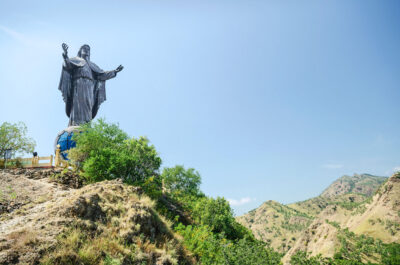
The first thing that struck me was how surprisingly easy it was to get around, once I got the hang of it. Decades of colonial neglect had left much of this fledgling nation’s infrastructure in tatters by the time it achieved independence. But hopping on one of the local minibuses (known as microlets) let me flit around the capital, Dili, with ease. There are no designated bus stops; you simply wave one down at the roadside. When you want to get off, tap a coin on the window or the metal handle under the roof to give a signal. I flagged down a microlet and headed towards Cristo Rei, a 27m-high Christ sculpture that is one of Timor-Leste’s most iconic land- marks.
Standing on the headland at Cape Fatucama, bathed in sunlight, it is a popular spot for locals and visitors. Having huffed and puffed up the hill’s stairs in the heat, I felt like shouting “Hallelujah!” when I made it to the top. From there I marvelled at the statue and the panoramic views of the bay below.
The following day, I hired a guide to take me to some areas outside the capital. Driving along the coast- line, I learnt more about the country’s history while soaking in its everyday working life: fishermen in small wooden boats, workers evaporating seawater to produce salt, and tiny shops selling fresh fruit. A visit to Ai Pelo Prison brought some of the brutalities of the Portuguese colonial era to light. Built in the late 19th century, political prisoners who were taken here didn’t survive long, and many were routinely tortured and given only seawater to drink. It was later used as a Japanese command post in the Second World War, and it is now open to visitors, with signs narrating the site’s troubled history as you wander the ruins.
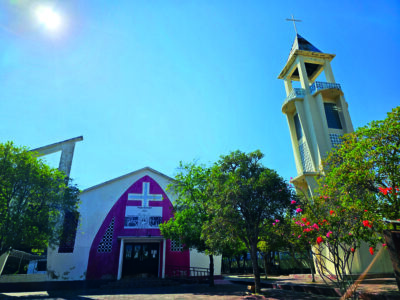
This wasn’t the only relic of Timor-Leste’s difficult past that I saw. Later, I visited the church in Liquiçá where a notorious massacre took place in 1999. Many pro-independence supporters who had sought refuge were killed there, and it offered an eye-opening glimpse into the violence that persisted under Indonesian occupation. These sites seemed all the more shocking for the beauty that surrounded them. A detour on the way back to the capital brought me to the hills behind Dili, offering sweeping views of the city and the sea. But it had been important to visit these historic sites; they helped me to understand just how far Timor-Leste had come over the last couple of decades.
Highlights
I wanted to experience daily life in Dili, so I headed to Taibesi Market, where you can find anything from clothes and shampoo to vegetables, spices, meat and live animals, along with a taste of the city’s rhythms. While most people here were working, I watched gleefully as the local children flew kites in the car park while men played cards outside their shops. To gain a more in-depth insight into Timor-Leste’s history, I visited the Timorese Resistance Archive & Museum in Dili. Except for a few days in 1975, the country has only experienced independence since 2002. Its museum contains a wealth of fascinating information and authentic artefacts, so be sure to allow time to explore it thoroughly.
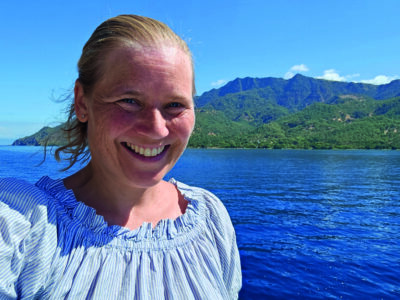
I also took the boat over to Atauro, a tiny island off the north coast of the mainland that I’d first spotted from the terrace of the Castaway Bar, a popular expat hangout in Dili. With only a few places to stay overnight on theisland, it’s a peaceful spot that lets you truly disconnect. The main activities for visitors there are diving or snorkelling, but I also recommend stopping by the market near the port for a lunch of grilled fish with coconut rice.
Must do
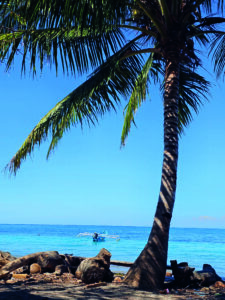
Head out on the water. The Ombai Wetar Strait, which runs north of the island, is a vital migration path for blue, sperm and fin whales, as well as orcas, mantas and whale sharks. Some species can be seen in these waters year-round, but the peak season for wildlife-watching boat tours is from October to December. For divers, the waters here are special year-round, thanks to the country’s location within the Coral Triangle – a vast area of the Western Pacific that is home to three-quarters of the world’s shallow-water coral species. I joined a trip from Atauro Island heading to a drop-off wall. Here, I found waters teeming with healthy reefs and fish of all shapes and colours. Even as I drifted with the current back to the boat, I found myself surrounded by a swarm of barracudas, making for one last magical encounter.
I sadly missed out on
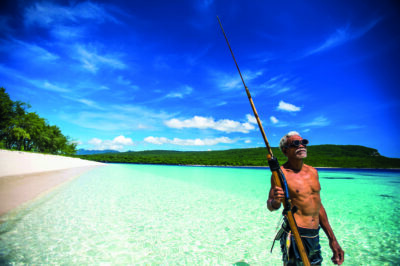
Jaco Island, at the eastern tip of Timor-Leste, is said to be a paradise with beautiful beaches and crystal-clear waters. The island is considered sacred, so overnight stays are not permitted; only day visits are allowed. Sadly, it was too far away for the time i had available. I aslso missed out on visiting Centro Nacional Chega, a museum in a former prison that once held political prisoners. Like many sites on the island, its closed on weekends, so remember to check opening hours before you head out…
Top tip
Enjoy delicious food while supporting a meaningful cause at Ema Pro Restaurant, located in the Sunset Inn Hotel. Both the restaurant and the hotel are part of a training facility that equips local people with skills for careers in the service industry. And for those who appreciate a good brew, sampling local coffee is a must. You can even visit one of the nearby coffe plantations, where you can enjoy a guided tour and a tasting that brings the region’s rich flavour to life.


