

Through local eyes: 4 places to meet Indigenous peoples in Costa Rica
Meeting the Indigenous peoples of Costa Rica not only allows you to support local communities, but it also opens up a world of unique experiences and a history few visitors see, as travel writer Ash Bhardwaj discovers…

During Costa Rica’s colonial era, the remoteness of the southern Talamanca Mountains sheltered the region’s Indigenous Bribri people. This helped them to preserve their culture, but it can still be challenging to reach the area today. The Yorkin River, which marks part of Costa Rica’s border with Panama, is the best highway through this terrain. I took a dugout canoe from a slipway in Bambú to reach Yorkin Indigenous Reserve. Racing upstream over rapids, we pulled in at a stone beach where two children played in the river, watched over by their father.
The jungle here teems with life, and the Bribri use that bounty for everything, ranging from camphor sap that repels mosquitoes to a plant that they chew for toothache.
Much of what I thought was jungle turned out to be the gardens of villagers, with plant species piled around each other and butterflies flitting between branches.
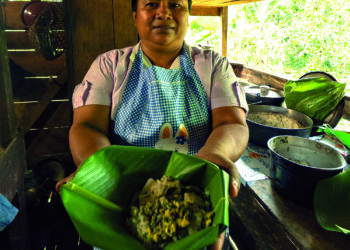
“We don’t farm monocultures,” said Albin, a guide who lives in the village, “because the plants evolved to work in harmony: the legumes put nitrogen into the soil and banana trees put down potassium, so we don’t need artificial products or fertilisers.”
As we walked towards the village, Albin plucked from a tree an orangeand- green fruit shaped like a ribbed rugby ball. It was about the length of my handspan.
“This is the cacao tree,” said Albin, tenderly touching the trunk. “Our mythology says that it was the most beautiful tree in paradise, and that it came to Earth as a gift.” He split the fruit in half to reveal white flesh and tightly packed seeds. “The flesh is sweet,” he said, “but the seeds need to be prepared.”
In a clearing of thatched houses balanced on stilts, we entered a white wooden hut that was lined with racks of reddish-brown seeds.
“We leave them to ferment for a week,” he said. “That’s when the chocolate flavour develops, thanks to enzymes and microorganisms. Then we dry them in the sun.”
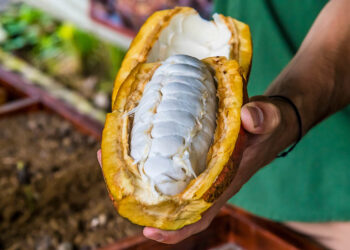
Albin toasted a handful on the stove, then rolled them with a stone and tossed them in a large pan. This separated the lighter shell from the toasted inner flesh, or ‘nibs’, which he poured into a hand grinder. As he turned the handle, thick paste oozed from the grinder and the deep, rich scent of dark chocolate filled the hut.
This was pure cacao butter, speckled with flecks of toasted nibs. The Bribri dry it and sell it to tourists, and it creates the best chocolate that I have ever eaten when added to condensed milk.
“It is strange,” Albin said. “Cacao was important to our ancestors; it is a sacred plant that made us strong, physically and spiritually. Now it’s one of the main reasons tourists come. They learn our story through the story of cacao, and their income helps to keep our culture and community alive.
“So, we look after the cacao tree because it looks after us.”
3 more places to meet Indigenous peoples in Costa Rica
Around 114,000 Indigenous people – of eight major ethnic groups – live in Costa Rica. Not all Indigenous communities want to receive tourists, so be respectful and only visit through verified operators.
1: The Kèköldi Indigenous Territory
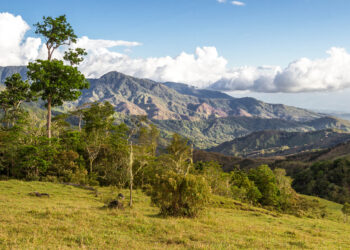
The Kèköldi are part of the Bribri, whose culture is rooted in ecosystem conservation. Their 4,865-hectare territory is at the base of the Talamanca Mountains. Visitors can enjoy a 2.5-hour hike through the jungle, which passes traditional cacao gardens. You will encounter mammals, reptiles and amphibians, then finish at an old ceremonial ground that is now home to a research centre; there you can contribute to a bird-monitoring programme. Last season, it counted over 3 million birds of 17 different species, including peregrine falcons and plumbeous kites.
2: Maleku Indigenous group
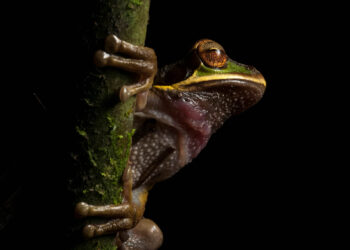
While the Maleku are Costa Rica’s smallest Indigenous group by population, they protect their culture through reforestation. The Maleku believe that forest animals are their relatives, and their plant-medicine is widely respected. Tourist revenue helps them to reclaim land around their territory, near La Fortuna in northern Costa Rica, and plant the trees that sustain this way of life.
The Maleku offer a tour that starts before sunset with an introduction to their culture and philosophy. It then continues with a night walk in the forest, allowing visitors to see the nocturnal wildlife that they have lived in harmony with for centuries.
3: Boruca Indigenous group
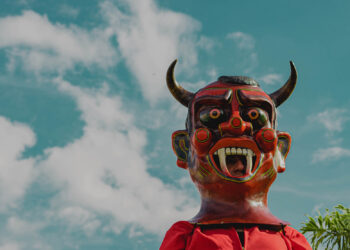
The Boruca live in a self-governed territory along the Panama border and are well-known for their craftwork. Their painted balsa-wood masks, decorated with woven cloth, are integral to the ‘Danza de los Diablitos’ ceremony, which celebrates their resistance to the Spanish Conquistadors. Imitation masks are sold across the country, but a group of Boruca women have fought to reclaim this heritage and make it part of the local economy. Stay in family homes to learn about Boruca art, their festivals and their fight for recognition as well as independence.


