


A decade after earthquakes reshaped Nepal’s cities, political upheaval shook up its capital once more. Now the nation is restoring not just its monuments but its confidence. Travelling from Himalayan heights to lowland jungles, we explore a country in the midst of remaking itself
Words & photographs George Kipouros

Nepal felt suspended in a moment of fraught stillness when I arrived. It was the kind that settles after a storm, before the world has had time to reckon with what was lost. A rare late monsoon had lingered with unusual persistence, flooding streets well into October, while the political upheaval of weeks earlier had shaken Kathmandu with an intensity many locals compared, without exaggeration, to the devastating earthquakes of 2015.
“It has been a difficult year,” my Transindus guide Abit told me as we drove away from the airport, the city unfolding in washed-clean shades of grey and gold. “People forget how fragile things are here, until everything moves again.”
The scars of protest were still visible on the drive into the city centre: charred ministries, blackened hotel façades, supermarket signs hanging at uneasy angles. And yet, life had already surged back into the gaps: tea sellers were out before dawn and monks collected alms along stone pavements slick with the remnants of rain. In café corners, conversations turned to the upcoming elections, where many of the young protesters who had toppled the government were now preparing to run for office themselves.
“This is our moment to reset,” Abit said. “We want something new.”
It felt fitting that Nepal was also marking the 75th anniversary of when it opened its borders to foreign visitors; it almost seemed as if the country was reopening once again. A decade on from the devastating earthquakes, the physical restoration of the Kathmandu Valley has been remarkable. Nearly all the UNESCO-listed monuments damaged in 2015 have been painstakingly repaired, including the great Durbar squares of the valley’s three principal cities, Kathmandu, Patan and Bhaktapur. But restoration here means more than returning things to how they were.
“We want to show the world, and one another, that Nepal can rebuild and honour its past,” Abit explained.
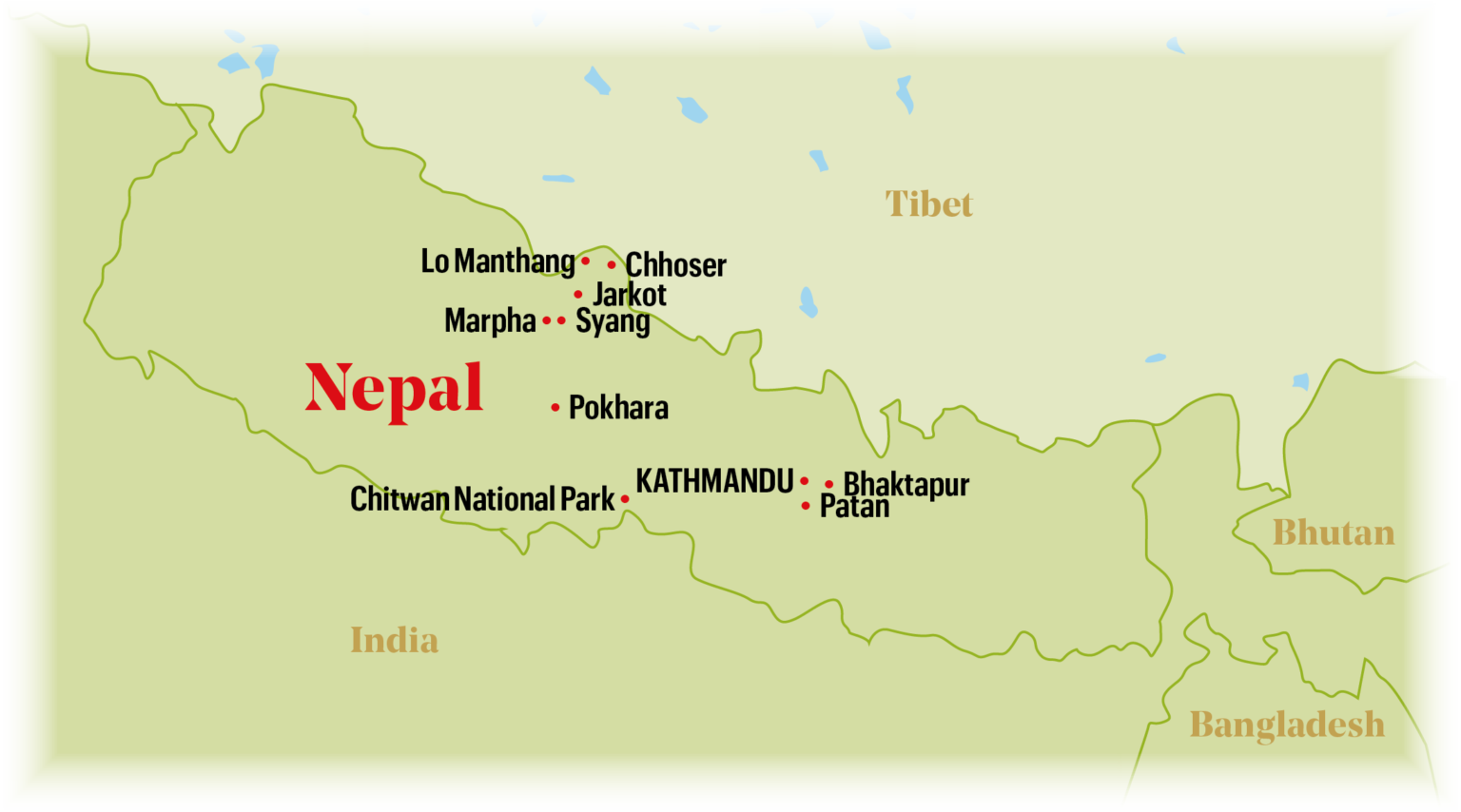
To understand Nepal, Abit told me that you need to think of it in layers. This country of 30 million people stretches across three distinct belts: the tropical lowlands of the Terai in the south, the hilly middle where the valleys of Kathmandu and Pokhara sit, and the Himalayan realm that towers above everything. Over the course of my two-week journey, I would travel across all three, tracing the country’s efforts to rebuild and restore its heritage while cautiously preparing for a more hopeful future.
The Rebuild
Abit was keen for me to begin my explorations in what he considered the cultural heart of the Kathmandu Valley, Bhaktapur. Arriving in the city, just as the traffic thinned and the noise softened, felt like stepping into another era. Red-brick courtyards opened onto a web of atmospheric temples and narrow alleyways dotted with clay pots laid out to dry in the sun.
Restoration work on a temple near Bhaktapur’s Durbar Square

“Bhaktapur is like the valley’s memory,” Abit said, describing its medieval-era historic centre as the largest and most intact in the region. It was also one of the clearest expressions of what rebuilding meant here.
The scale of the restoration is staggering. Bhaktapur had been among the places most devastated in 2015, with 129 monuments damaged and 67 collapsing entirely. Yet, standing in the grandeur of Durbar Square now, it was almost impossible to imagine such destruction. Aditya, a local Newar (the Indigenous people), whose family had lived in Bhaktapur for generations, met me near the Palace of Fifty-Five Windows.
“Only two buildings are still waiting for our love here in Bhaktapur,” he told me. “Everything else we rebuilt ourselves – and with no help from anyone or foreign money. No one believed we could do it, but look at it now.”
Aditya pointed out where woodcarvers had worked at cost, and where hundreds of volunteers had joined the effort. “We used the old methods,” he said. “Only local timber, only traditional joints, never any metal. The buildings know how to live this way.”
Nyatapola, the five-tiered pagoda rising above nearby Taumadhi Square, stood as living proof. Built with perfect balance during the Malla dynasty, it had survived the earthquake with barely a crack.
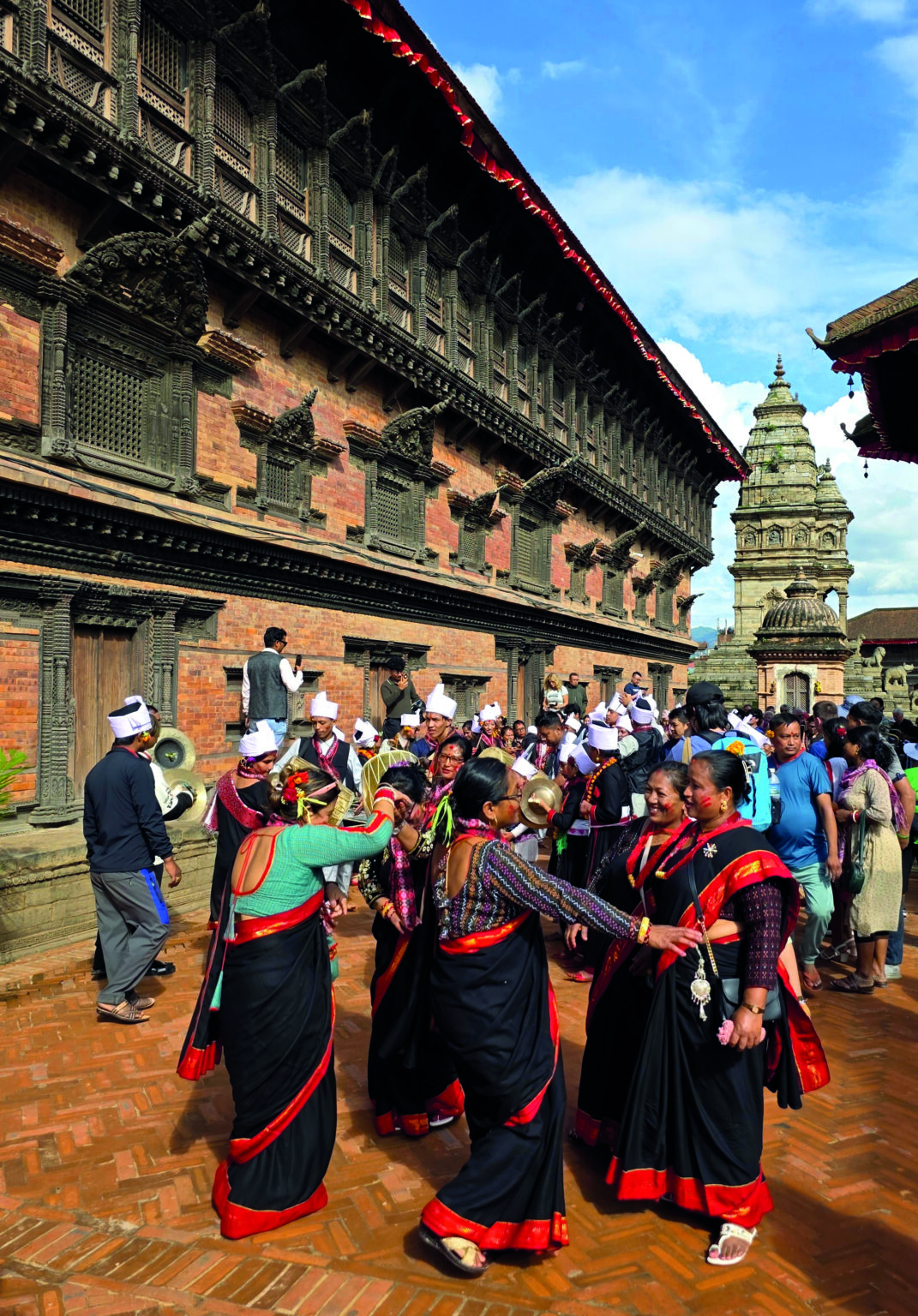
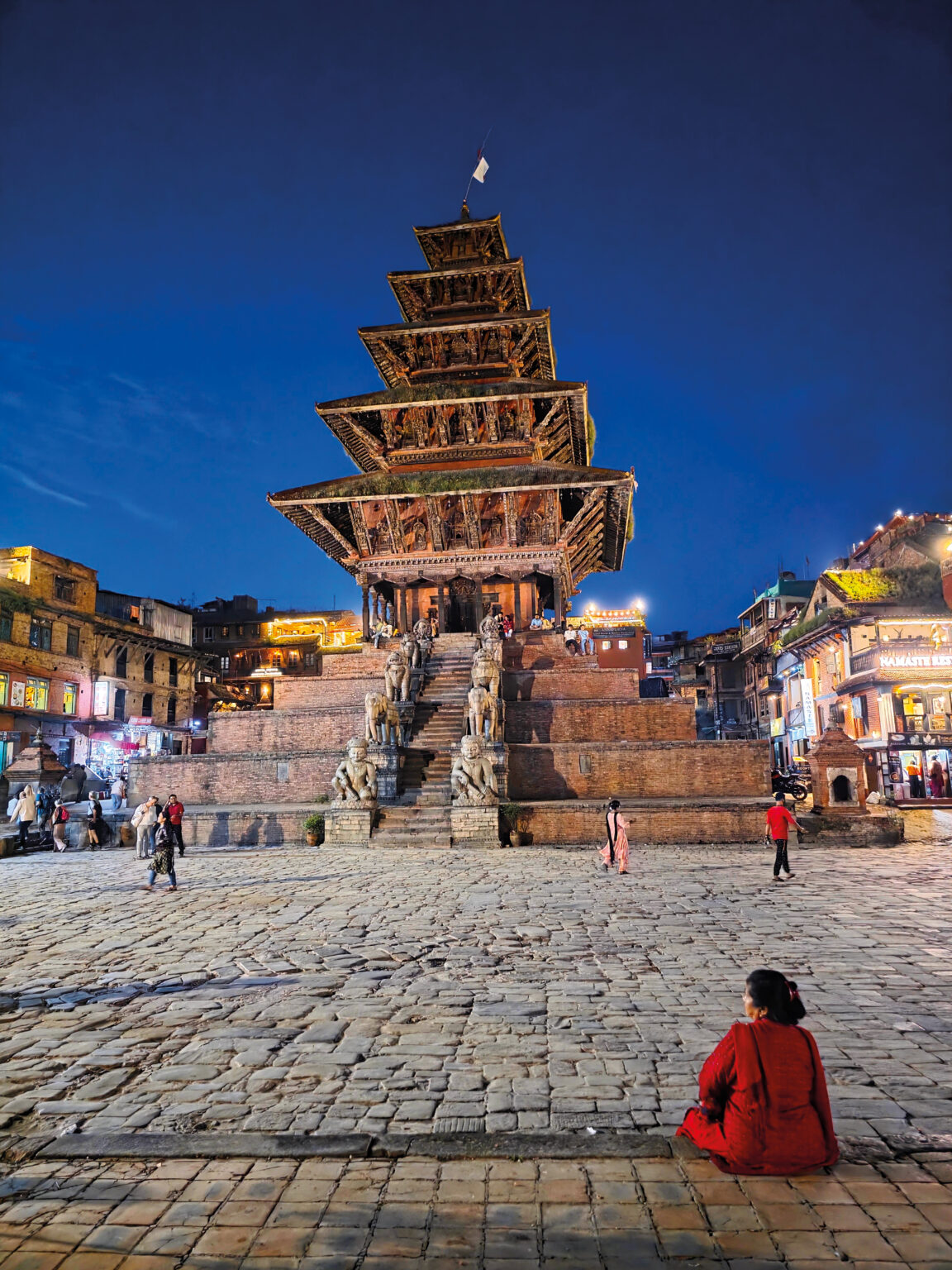
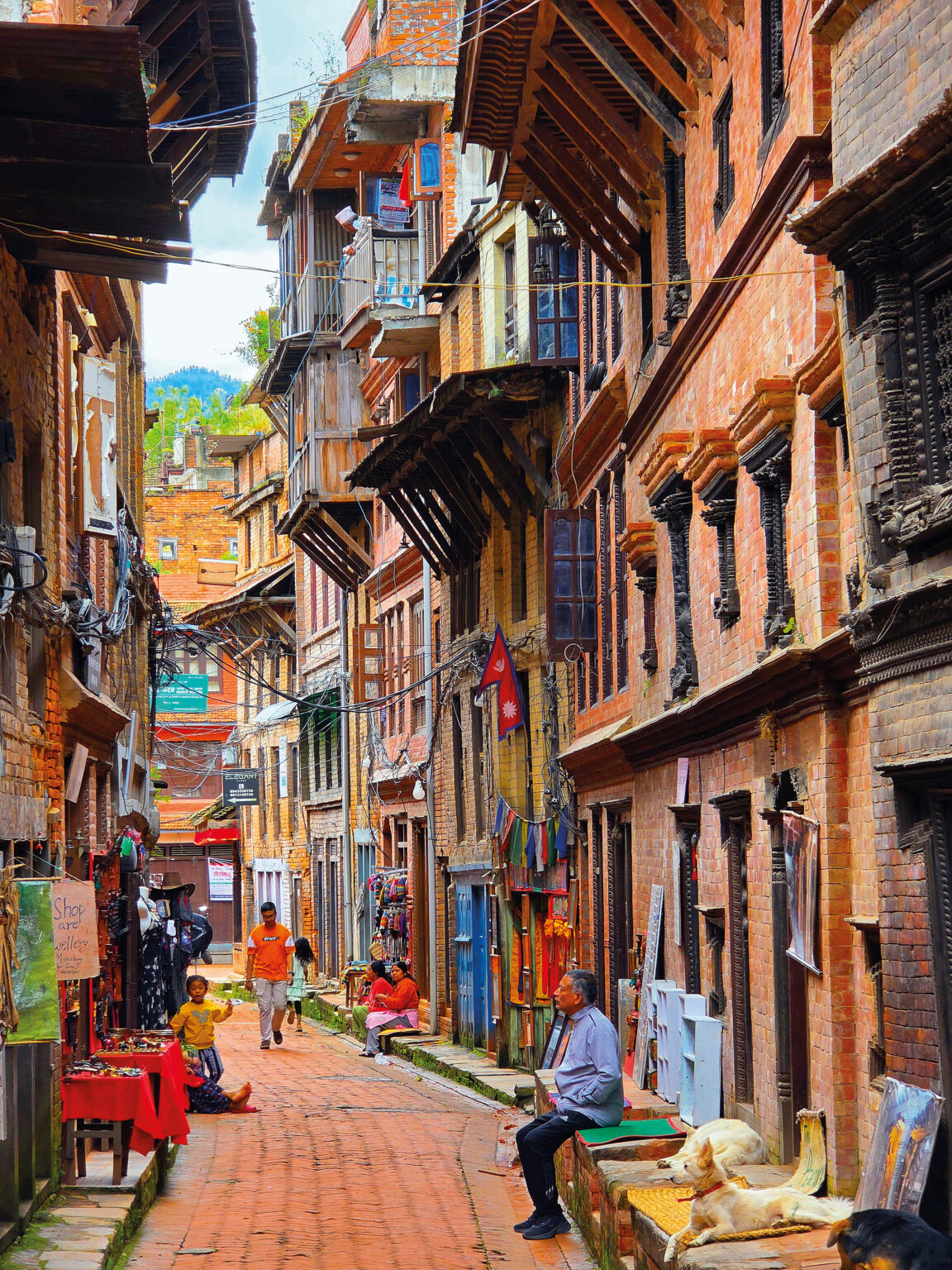
The intricately carved windows of the Palace of Fifty-Five Windows are a fine example of the craftsmanship seen across historic Bhaktapur; Nyatapola, the five-tiered pagoda, is the tallest monument in Bhaktapur; exploring the city’s alleys.
I would encounter more examples of this ancient, earthquake-resistant knowledge at Sikami Chhen, the home of local Newar carpenter Indrakaji Shilpakar. Three generations greeted me at the doorway.
“This house is older than us all,” he said, brushing a hand across a carved lintel. His home had emerged unscathed from the quake, a fact he attributed entirely to the intelligence of traditional Newari design. “When you build with respect,” he said, “the house protects you.” He claimed the buildings that collapsed had been weakened by patchwork restoration carried out in previous decades.
If Bhaktapur showed how traditional knowledge had endured, Patan revealed how it was being consciously preserved and adapted. Just a short drive away, and part of the Kathmandu Valley’s 3 million-strong urban population, the town offered a different lens on the region’s recovery.
I met Dr Rohit Ranjitkar of the Kathmandu Valley Preservation Trust in a sunlit courtyard off Patan Durbar Square. He had spent decades overseeing the restoration of 30 monuments here, work that began even before the earthquakes of 2015.
“These buildings are not relics; they are living beings. You repair them; you never replace them,” he said, leafing through before and after photographs from successive earthquakes, including a record-breaking disaster in 1934.
Patan Durbar Square was dense with pagoda-style temples. Dr Ranjitkar explained that the iconic form so often associated with East Asia had, in fact, originated here. In the 13th century, the Newar architect Araniko was invited to China by Kublai Khan. He carried the tradition of the tiered pagoda with him. “Nepal exported its imagination before it exported anything else,” Dr Ranjitkar said with a smile, “including our famous labourers.”
By late afternoon, I had returned to Kathmandu proper, with its familiar haze of dust and its frenetic energy. I was keen to catch sunset at the city’s – and perhaps the nation’s – most iconic landmark.
Boudha Stupa, one of Nepal’s most sacred sites, dates back to the fifth century and is believed to enshrine relics of the Buddha at its core. As evening fell, the great white dome began to glow as pilgrims circled its base in a soft, unbroken procession, fingers brushing prayer wheels beneath the four pairs of ever-watchful eyes that adorn the stupa.
“This was the first monument we restored after the quake,” Abit told me. “We needed to show people that the valley could heal.”
The following morning, I set out for the birthplace of Kathmandu itself: the revered Buddhist site of Swayambhu Mahachaitya, better known as the Monkey Temple. Local lore tells of priests who found a great lotus on this hilltop and decided that people should settle around it. The monkeys that still roam here are said to be divine guardians.
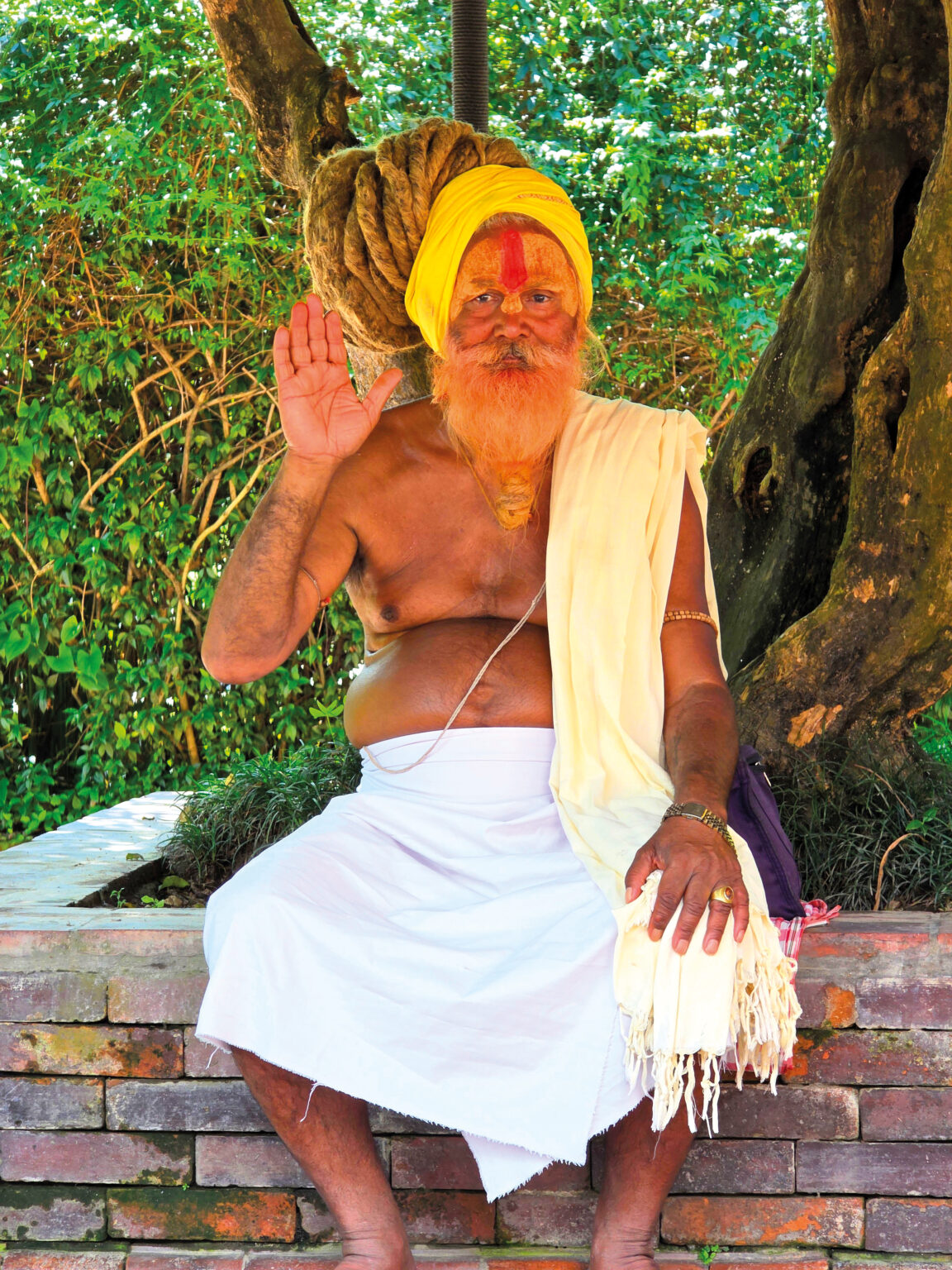
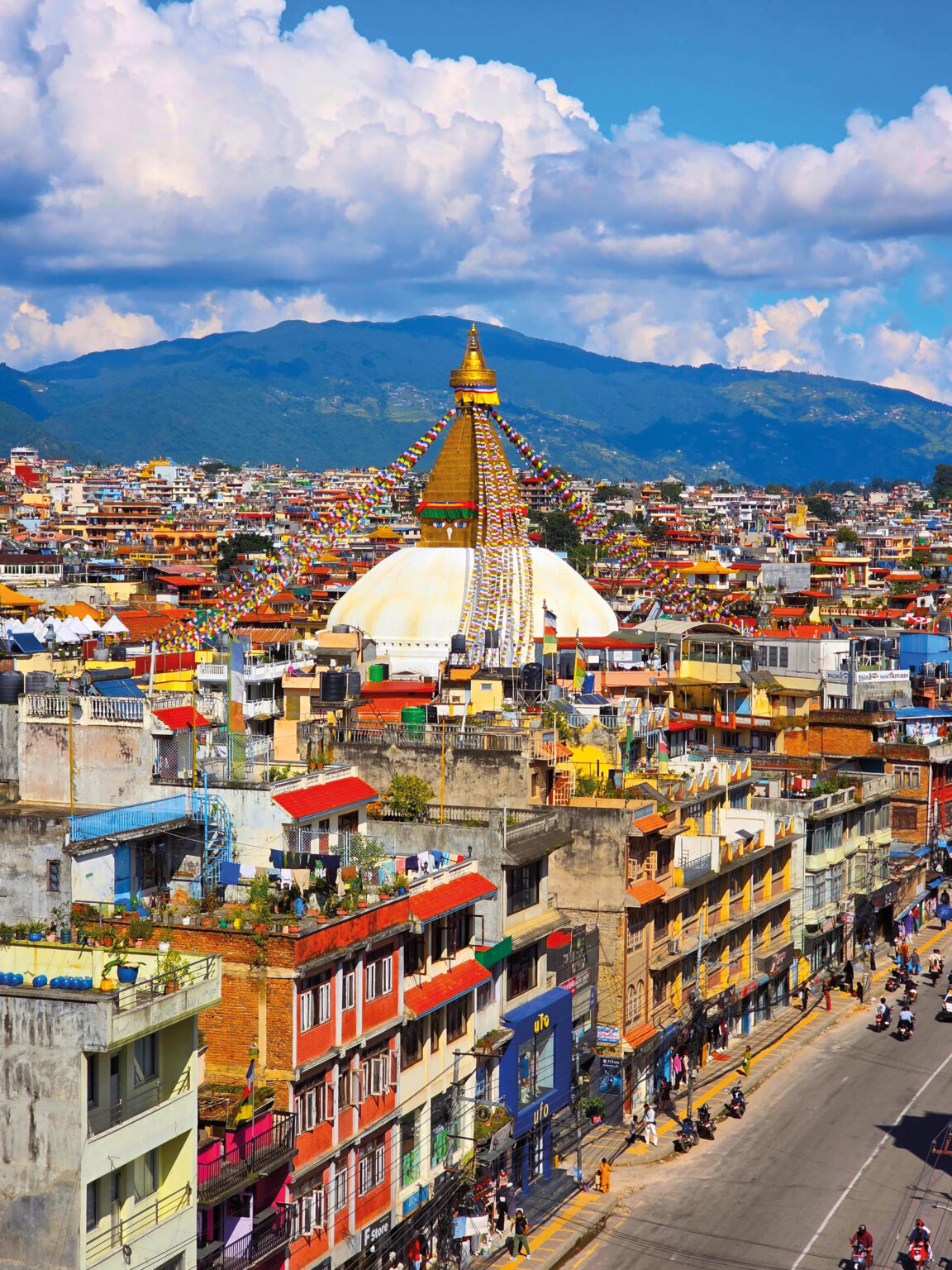
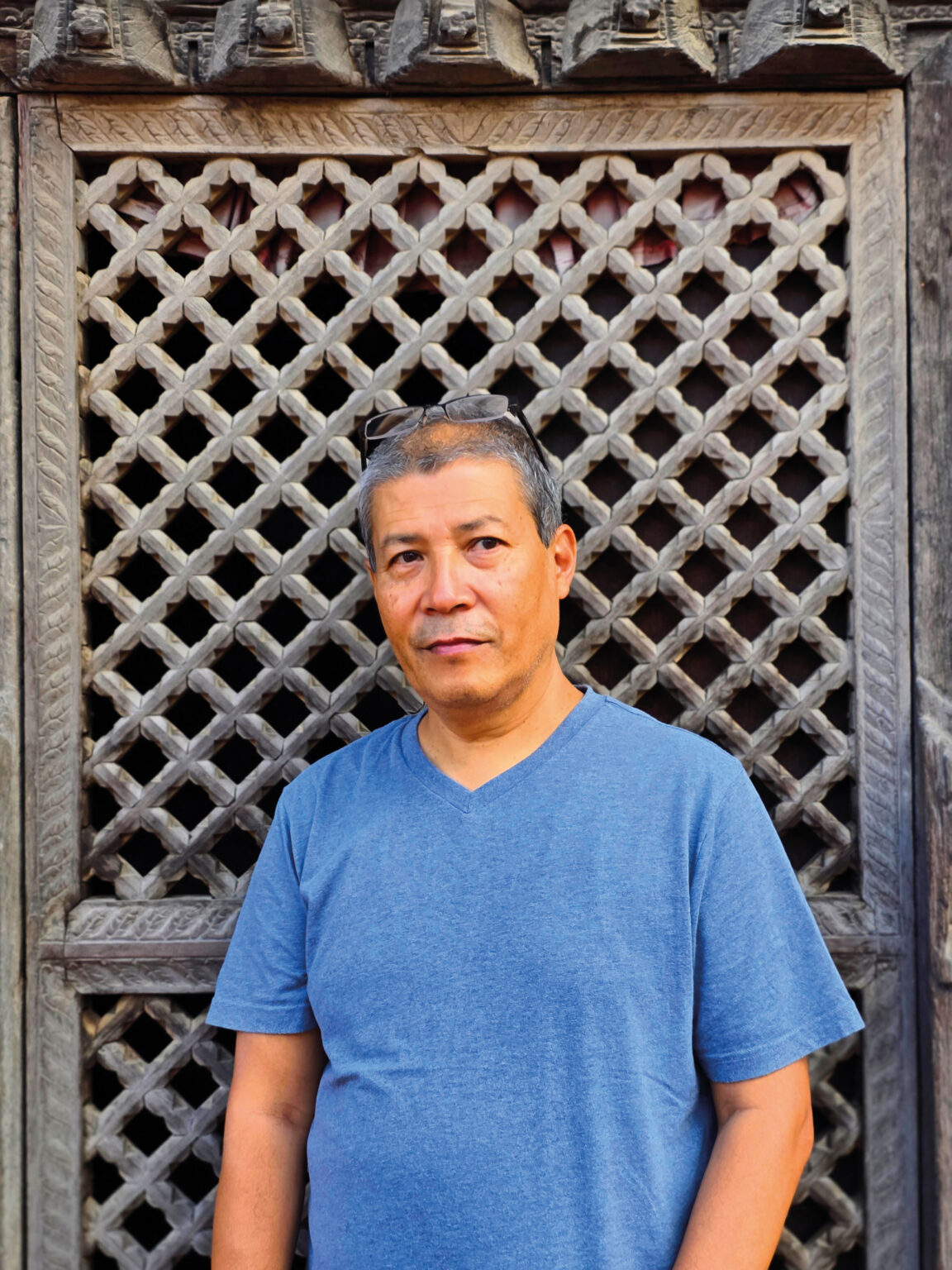
Thousands of Hindu pilgrims visit Nepal every year, many of them coming from India and heading to Kathmandu’s temples and stupas; the Boudha Stupa, one of Nepal’s most sacred sites, dates back to the fifth century and offers a serene contrast to the crowded cityscape that surrounds it; Dr Rohit Ranjitkar of the Kathmandu Valley Preservation Trust has spent decades overseeing restoration work on more than 30 monuments in Patan
Abit, who practises both Hinduism and Buddhism, paused to pray before explaining how the two faiths are woven together here. “This is where they live as one,” he said, noting that while around 80% of Nepal’s population is Hindu, Buddhism has an equally visible presence in Nepal.
From Swayambhu, my circuit of the city drew me back towards its historic core, and to Kathmandu’s Durbar Square itself. This was where Nepal’s royals had lived the longest, a compact yet monumental ensemble of Newari temples and palaces.
Several structures were badly damaged in 2015, including the nine-storey palace tower built in 1797, whose top five floors collapsed entirely. When the grounds fully reopened last summer, UNESCO deemed the restoration so precise that it was almost impossible to tell it had ever been destroyed.
Himalayan Grandeur
Leaving the valley and its remarkable restoration story behind, I set off towards the mountains, bound for the once-mythical region of Mustang.
Given Nepal’s appalling air safety record, the journey would be made by road. The condition of the country’s principal highway, connecting Kathmandu to Pokhara, was scarcely reassuring. Long stretches were broken, buckled or barely formed at all. It was a stark reflection of the country’s wider infrastructure challenges and a reminder of why younger generations were beginning to loudly ask difficult questions about the future.
The view from Sarangkot Mountain Lodge looks over to the Annapurnas, a Himalayan massif famous for its high peaks and circuit trek
As I headed westwards, the landscape gradually unfurled. Terraced hills rose and fell in layered bands, villages clinging to their contours, until Pokhara, often dubbed Nepal’s tourism capital, emerged in the evening light. Subtropical and unhurried, it lay beneath a darkened sky, its famous mountain backdrop still hidden from view. It was here, at dawn the following day, that Nepal would finally unveil the grandeur of the Himalaya to me.
From Sarangkot Mountain Lodge, the peaks revealed themselves in a slow, ceremonial dawn. First, Machhapuchhre, the almost-perfect pyramid known as Fishtail Mountain, caught the early light, its sharp, crystalline angles briefly glowing pink. Then the Annapurna range emerged, one summit at a time, until Annapurna I (8,091m), one of the ten highest peaks in the world, grew into its full splendour.
Below, Pokhara stirred awake. Hugely popular thanks to its cinematic setting, the town lacks architectural character and conventional sights beyond a strong mountaineering museum. Yet Pokhara is ultimately a place of departure. Beyond it lies Mustang, a remote region that has long captured the imagination of travellers, myself included.
The drive north carried me through successive layers of landscapes: waterfalls spilling from forested cliffs, suspension bridges swinging above whitewater, and then the vast, sculpted descent into the Kali Gandaki Gorge.
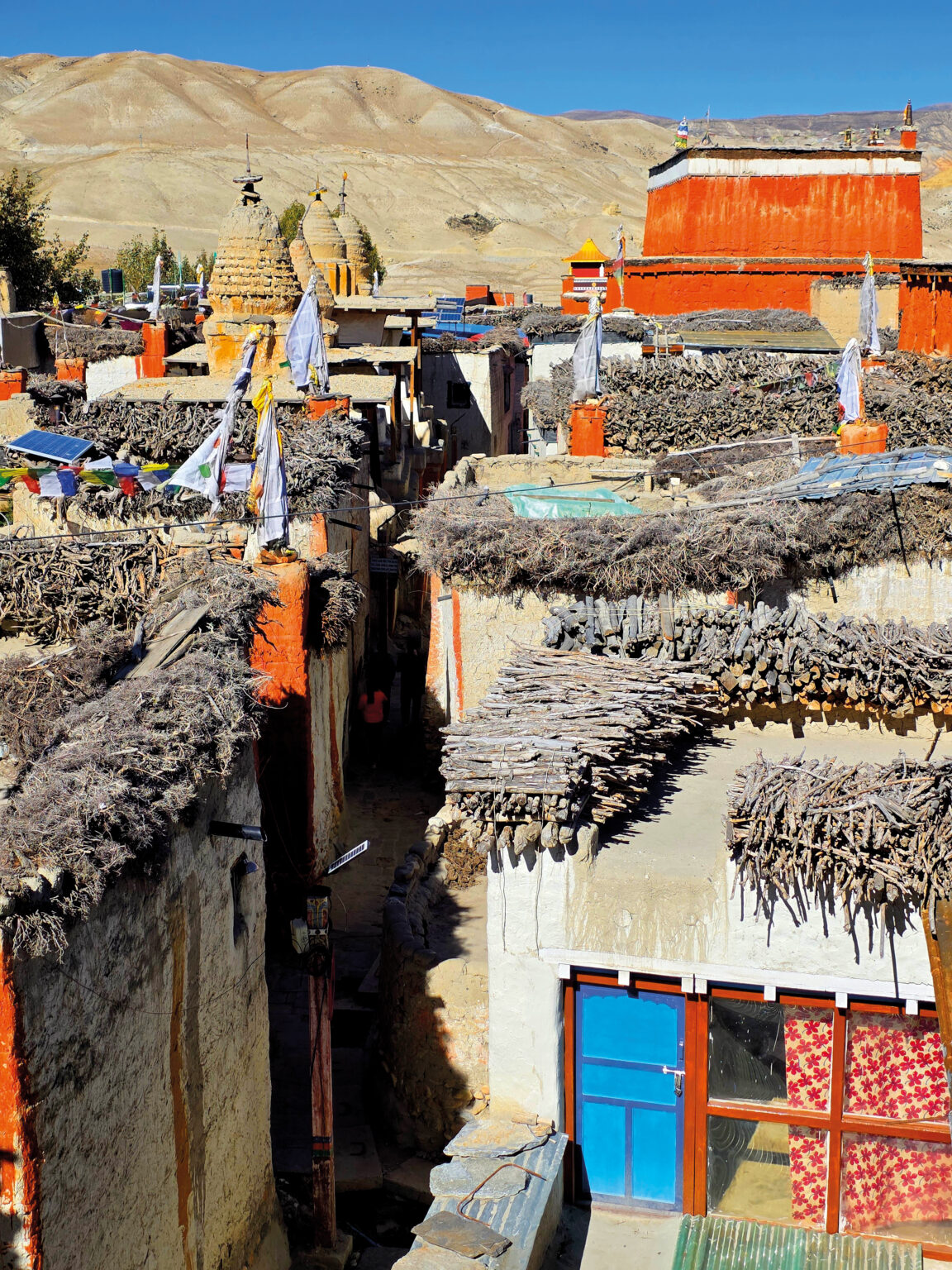
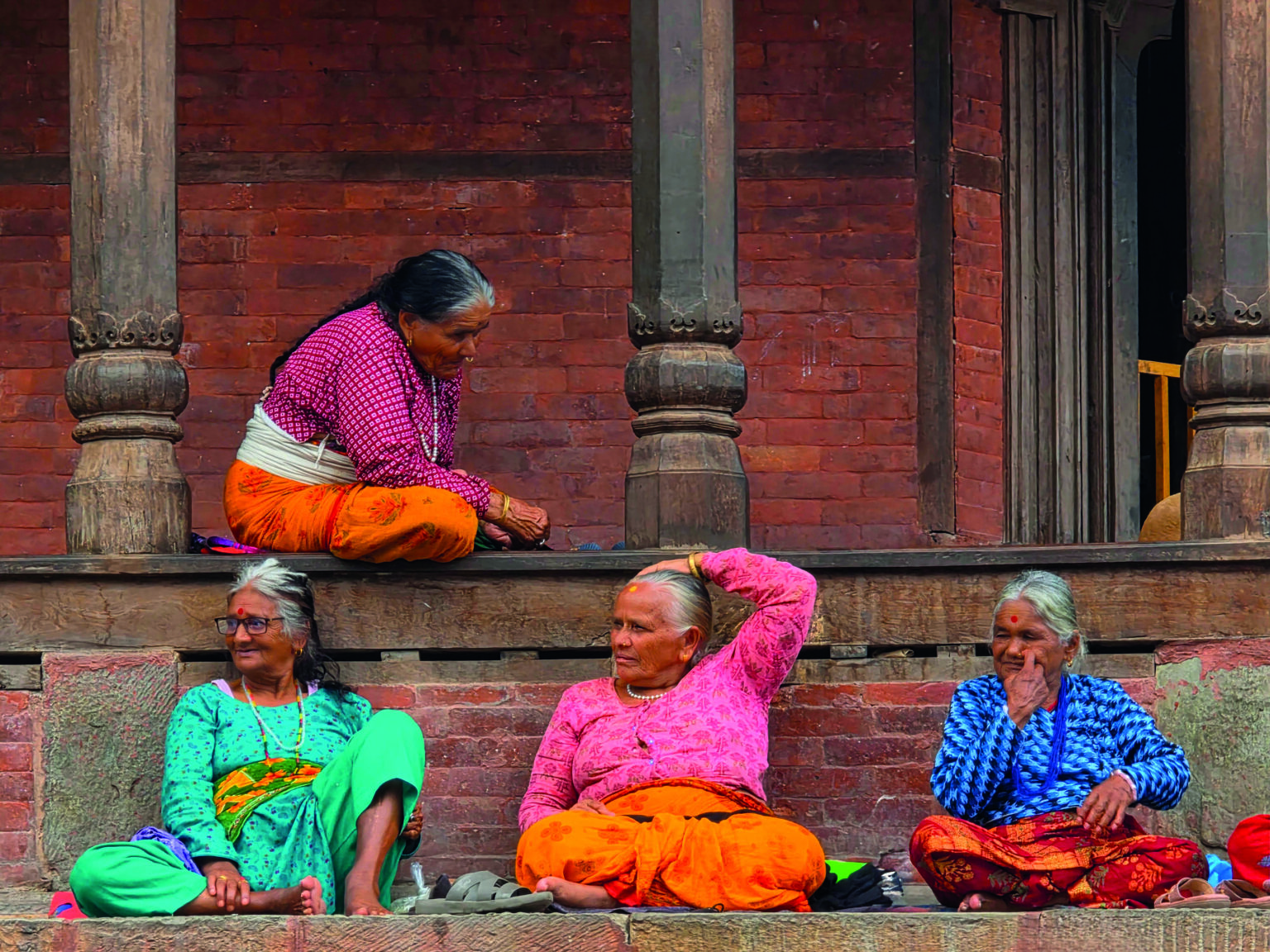
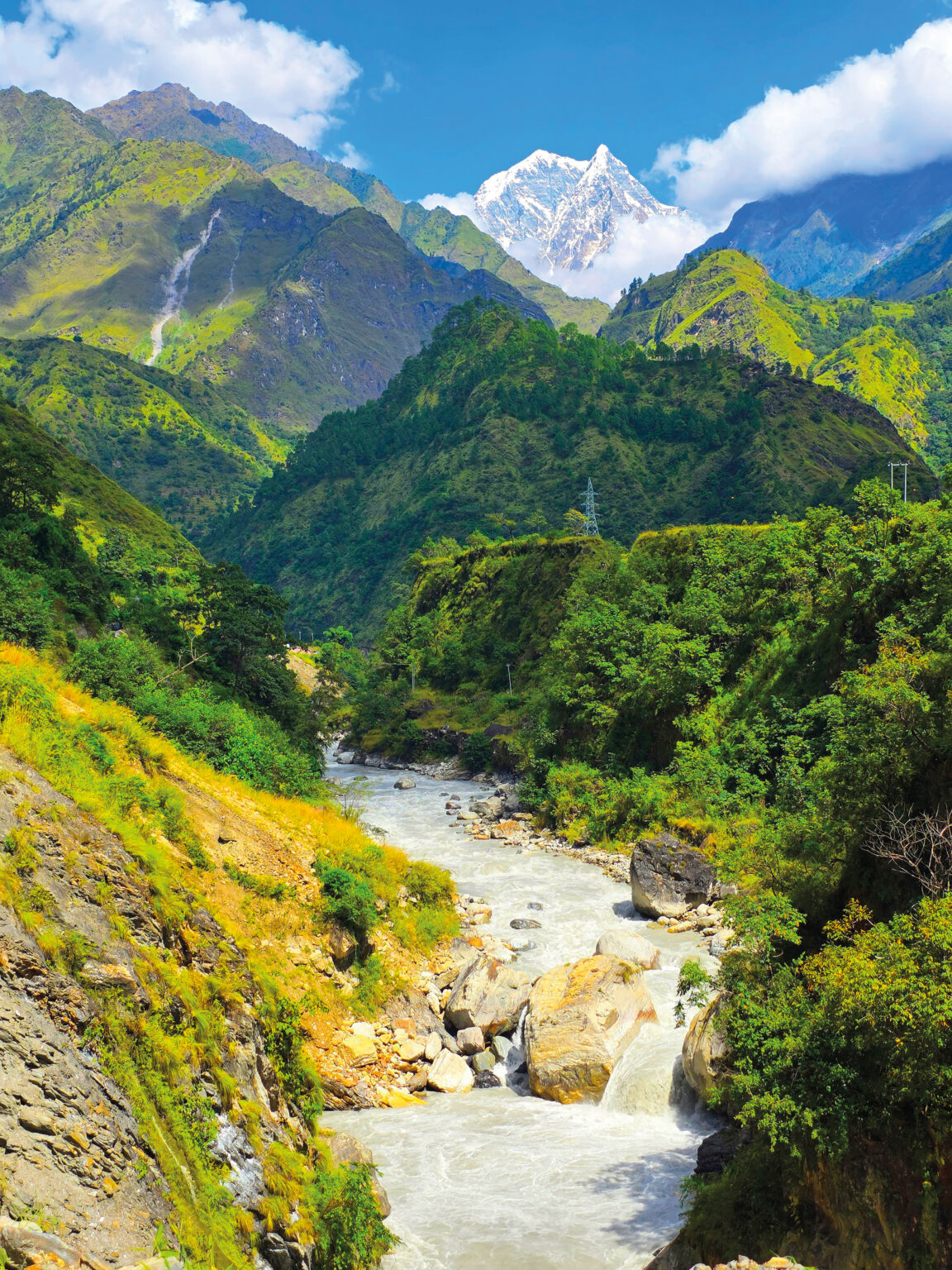
Large stacks of firewood have been piled atop the roofs of Lo Manthang; some local ladies take the weight off their feet in Kathmandu’s Durbar Square; Despite lying in the rain shadow of the Himalaya range, lush pockets speckle the arid Lower Mustang
“This is often called the deepest gorge in the world,” Saurav, my Mustang guide from the Shinta Mani lodge, explained. “On one side, you can see Annapurna; on the other, Dhaulagiri. The river is far below, and the difference is thousands of metres.”
As I continued north, the change was abrupt. The greenery thinned, then vanished, as dust replaced grass. The light grew sharper and more unforgiving. Jomsom, the principal settlement of Lower Mustang, appeared beneath the looming outline of Nilgiri North (7,061m).
I checked into one of Nepal’s newer world-class properties, Shinta Mani Mustang, before heading out to nearby Syang village, where the annual Dhekep Festival was underway. Masked dancers, dressed as Tibetan antelope gods, moved in carefully choreographed arcs, their steps landing in unison as drums echoed across the slopes. It reminded me of festivals I had witnessed in Tibet and Bhutan, yet there were hardly any Western visitors present here.
Nearby Marpha, a well-known village clustered around a monastery, was another matter entirely. When I arrived, it was already heaving with visitors, although mostly Nepali. Young TikTok performers rehearsed their moves for camera phones in narrow alleyways, while families packed into the teahouses.
“I cannot believe there are this many people here,” I admitted to Saurav. He laughed. “No road in Nepal is safe from a TikTok dance.”
The following morning brought a deeper immersion into Lower Mustang. A new local guide, Kushal, led me to Jharkot, a 16th-century monastery town perched above the valley. Inside the monastery, the frescoes, painted over 400 years ago, remained vivid in the shadows. Outside, many houses stood abandoned, their condition offering a visible counterpoint to the region’s still vibrant spiritual life.
“People want new homes,” Kushal explained. “These roofs leak during the rains, even with all the wood. More wood meant more wealth, because it protected you better.” Many buildings, he added, had also been badly affected by the earthquakes of 2015.
From Jharkot, Kushal and I continued to Muktinath Temple, perched at 3,700m, where the interwoven threads of Nepal’s two major religions came clearly into view. Although unmistakably Hindu, the temple was maintained by a Buddhist nun, and pilgrims from both traditions bathed beneath freezing arcs of holy water.
“This is Nepali Hinduism,” Kushal said. “It holds hands with Buddhism.”
After dinner at Shinta Mani Mustang, I joined a traditional sound-healing session with Bidhan, who used ‘singing’ metallic bowls to produce deep vibrations that seemed to settle somewhere beneath the sternum.
“Everyone hears something different,” he said. “You hear what you need.” Some listeners fell asleep almost immediately. Relaxed, I was ready for sleep myself, the low hum of the bowls still lingering as the night settled in. By morning, my focus had shifted outwards again.
The Forbidden Kingdom
Beyond Jomsom, the road rose steadily into the heart of the former kingdom of Upper Mustang, a five-hour drive north.
Upper Mustang began where the landscape changed abruptly. The scenery took on a scorched brilliance: a palette of red cliffs, pale dust and wind-carved canyons that looked more like the surface of another planet – perhaps Mars – than Nepal. This region only opened to non-Nepali visitors in 1994, and entry still requires the purchase of a hefty permit, a regulation that I felt certain would continue to preserve its isolation.
The four-storey, whitewashed palace of Lo Manthang is one of Upper Mustang’s unsung jewels
Lo Manthang, the old walled capital, appeared like a mirage, tucked between the mountains of the Tibetan plateau. I was welcomed by the biggest smile I had seen in a while, as Jamba, a lama and lifelong resident, walked me through the town’s alleys, holding the keys to its museums, monasteries and imposing palace in his hand.
“Only about a thousand people live here,” Jamba explained, “but many more come in the autumn now. Most are Nepali, curious about a place their grandparents whispered about.” We were less isolated than we looked; a shift had taken place in little more than a few decades. “For 500 years, nothing changed here. In the last 35 years, everything has changed. But gradual change is good; it helps us be better,” Jamba said, adding that nothing modern can be built inside the ancient walled town.
The town’s pièce de résistance, Thubchen Monastery, is a 15th-century architectural jewel that houses priceless frescoes, all restored over the last decade. “This is one of the most beautiful prayer halls in all the Himalayan world,” Jamba said, lowering his voice as we stepped inside. The colours glowed in the half-light, thousands of Buddhas staring at us from the ceilings.
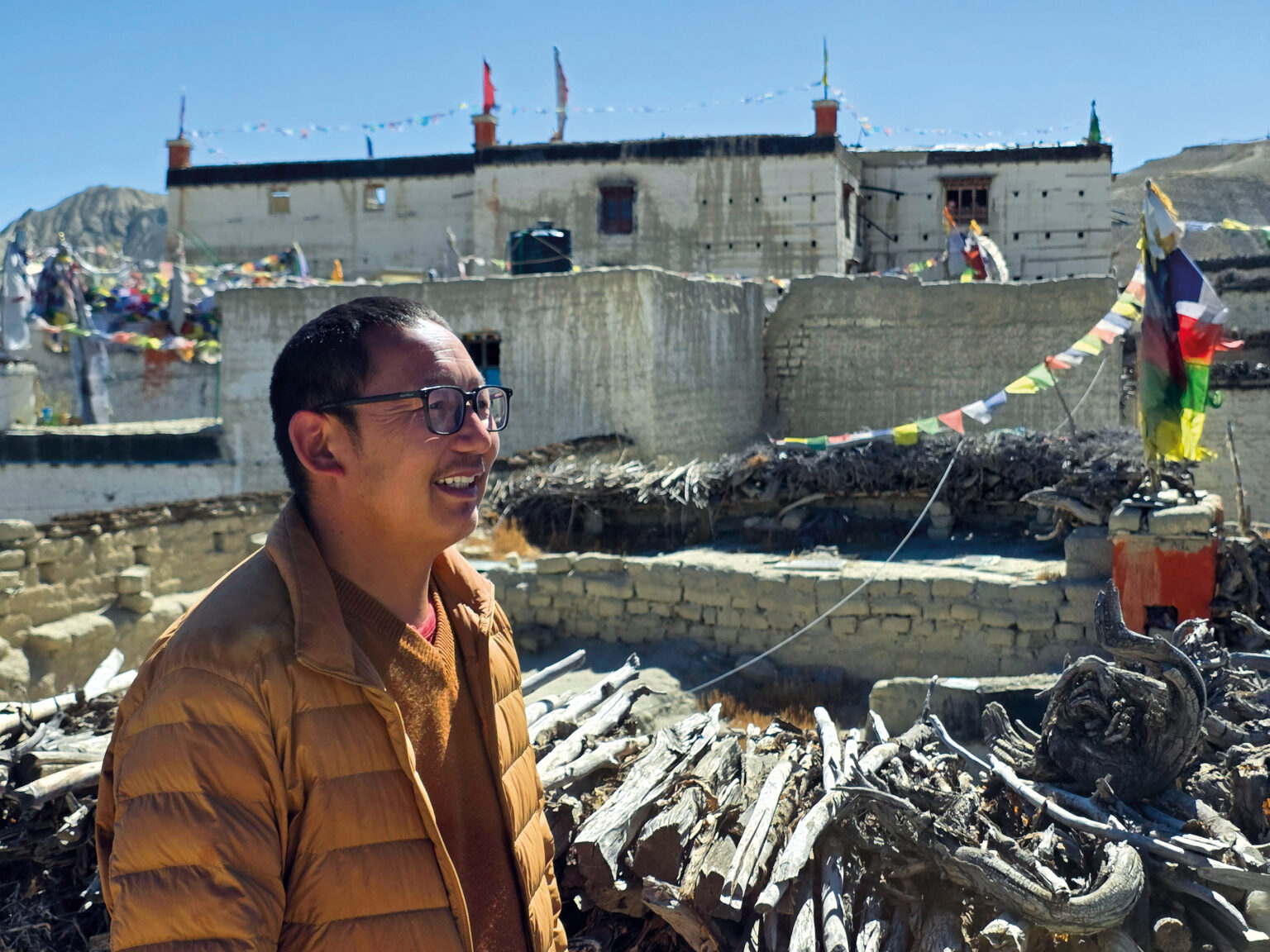
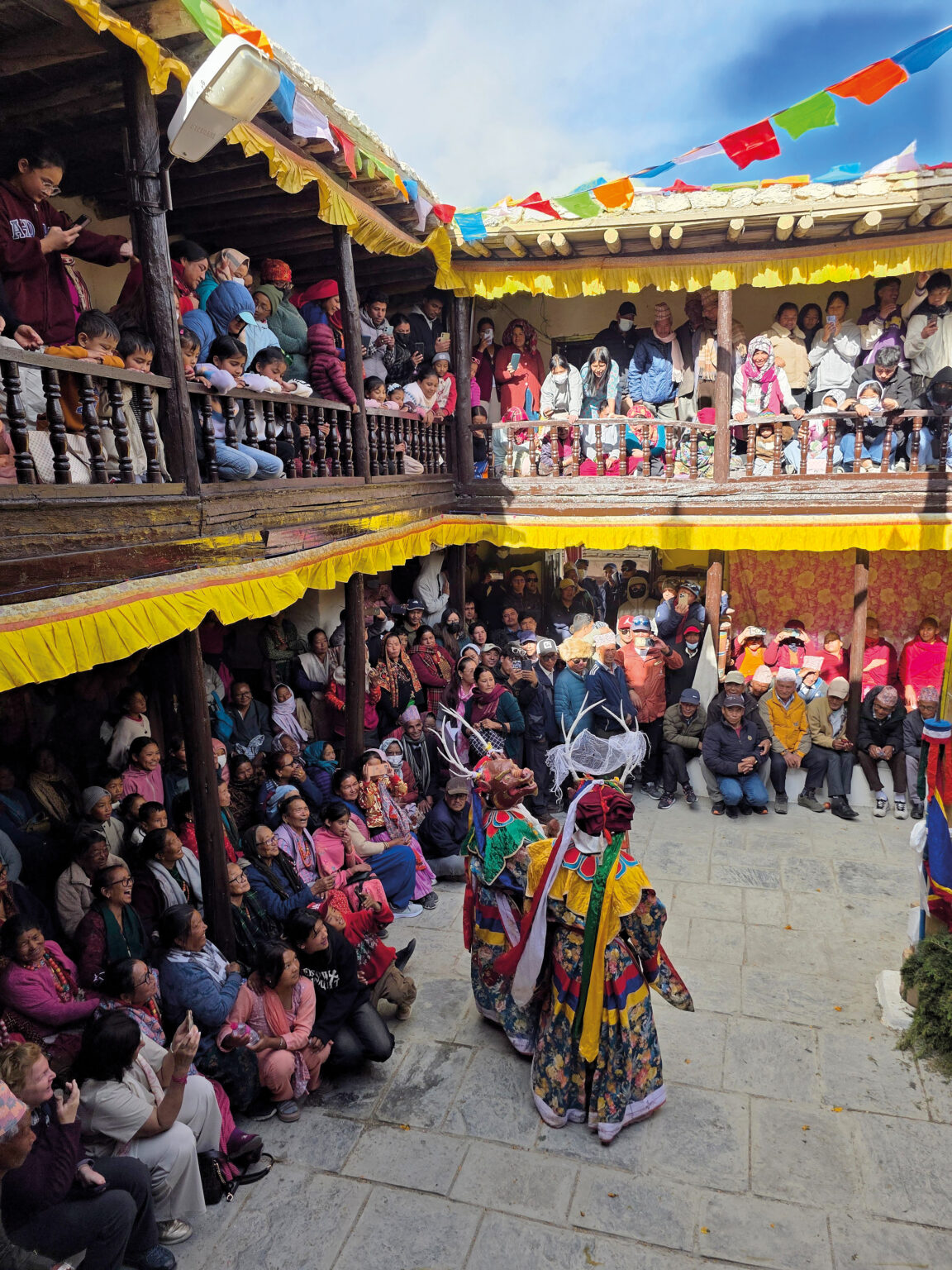
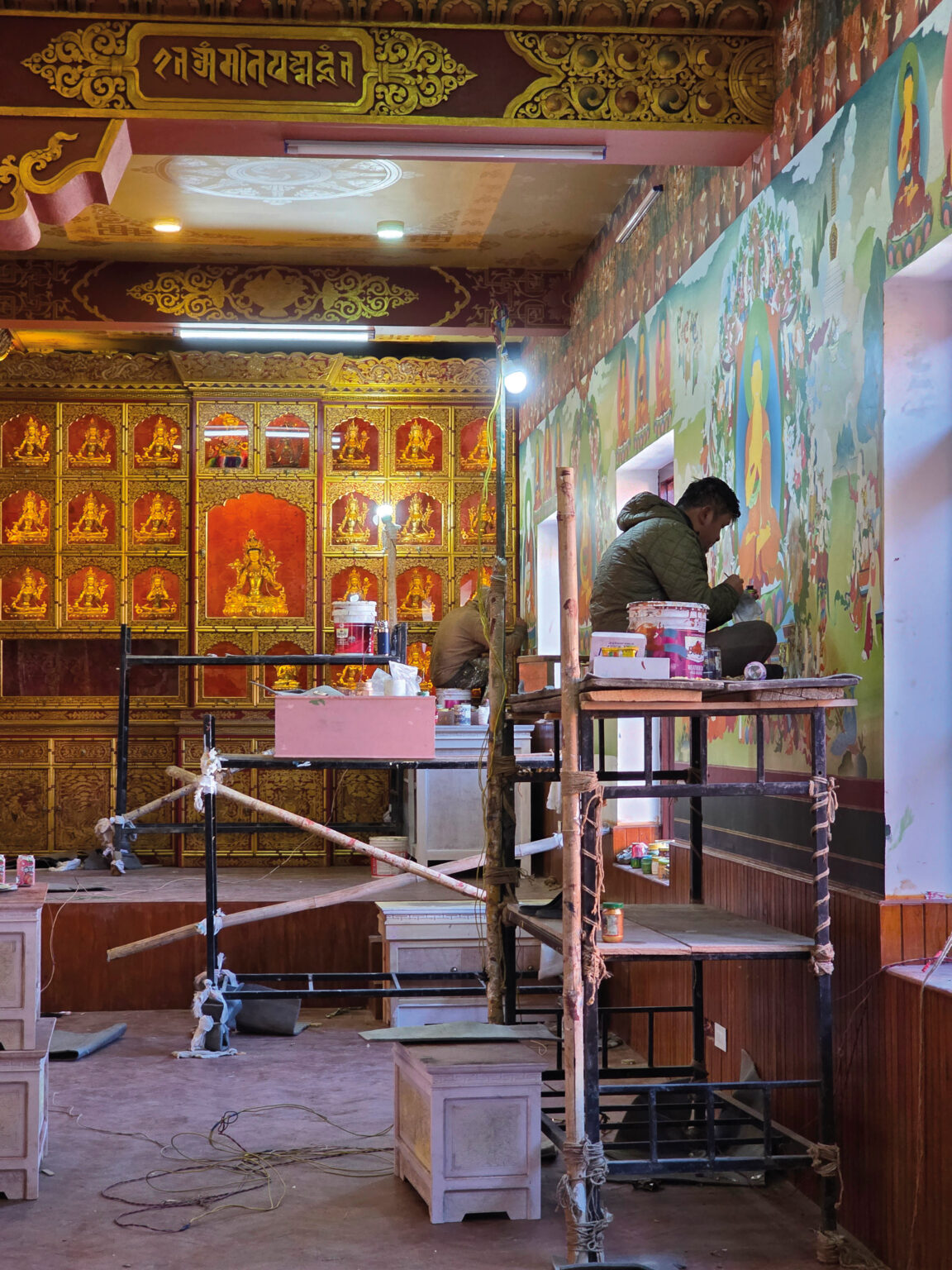
Lama Jamba, a lifelong resident of Lo Manthang, tells the story of a region that is no longer quite as isolated as it was a few decades ago; the village temple in Syang was where the annual Dhekep Festival took place; post-earthquake restoration work is being done across the Lo Manthang area
Keen to explore more of the Upper Mustang region, Jamba and I left Lo Manthang behind and drove further out to the Chhoser area, where caves carved into the sheer cliffs rose to dizzying levels.
“People lived in caves everywhere in Mustang,” Jamba explained. “Some did so until 100 years ago.” At Jhong Cave, stone spiralled upwards through rooms that once sheltered entire families.
Chhoser is also home to two of Upper Mustang’s most historic monasteries. Garphuk holds some of the region’s oldest murals, while nearby Nyphu, carved directly into the rock face, was restored with German funding in 2023 following damage from the quakes.
Leaving the high altitude of once-forbidden Upper Mustang behind, I was ready to find my breath again on the long drive down to Nepal’s southern lowlands.
Restoring Nature
Descending into the southern plains, the landscape felt a world away from the Himalayan plateau. The air grew warmer and heavier; the land was almost impossibly fertile. Chitwan National Park, Nepal’s first national park and one of its earliest UNESCO World Heritage sites, lay ahead in a dense, humid expanse of jungle in which greater one-horned rhinos roamed with prehistoric certainty. Here, the story was not shaped by the restoration of temples or palaces; the rebuilding that mattered here was ecological. Chitwan is now regarded as one of the most significant wildlife conservation success stories anywhere in the world.
The greater one-horned rhino is one of the world’s great conservation success stories, having been hunted almost to extinction in the 20th century. There are now more than 4,000 living in the foothills of the Himalaya in Nepal and India, with Chitwan National Park one of the best places in the world to see them in the wild
“We have nearly 700 [greater one-horned] rhinos,” my naturalist guide, Asbin, told me as we crossed the Rapti River, our wooden boat brushing against the thin reeds. As recently as the late 1960s, this figure was much starker, with fewer than 100 of these creatures left in Nepal, their numbers decimated by poaching and habitat loss. Today’s recovery is widely seen as proof of what sustained protection, political will and community involvement can achieve.
“It shows that if we Nepalis work hard and together,” Asbin said, “we can do anything. Even bring a species back from the edge.”
Walking safaris are permitted here, an unusual freedom in a landscape alive with predators. As we followed the riverbank, a gharial crocodile lay motionless in the mud, its narrow snout resting at the water’s edge, while a marsh mugger, heavier and more territorial, lingered nearby. The path then led us beneath a dense canopy where red silk cotton trees rose towards narrow slivers of sky. The deep grooves cut into one tall trunk marked where a tiger had sharpened its claws. Everything hinted at danger, but it was another, altogether more gentle animal that defined Chitwan for me.
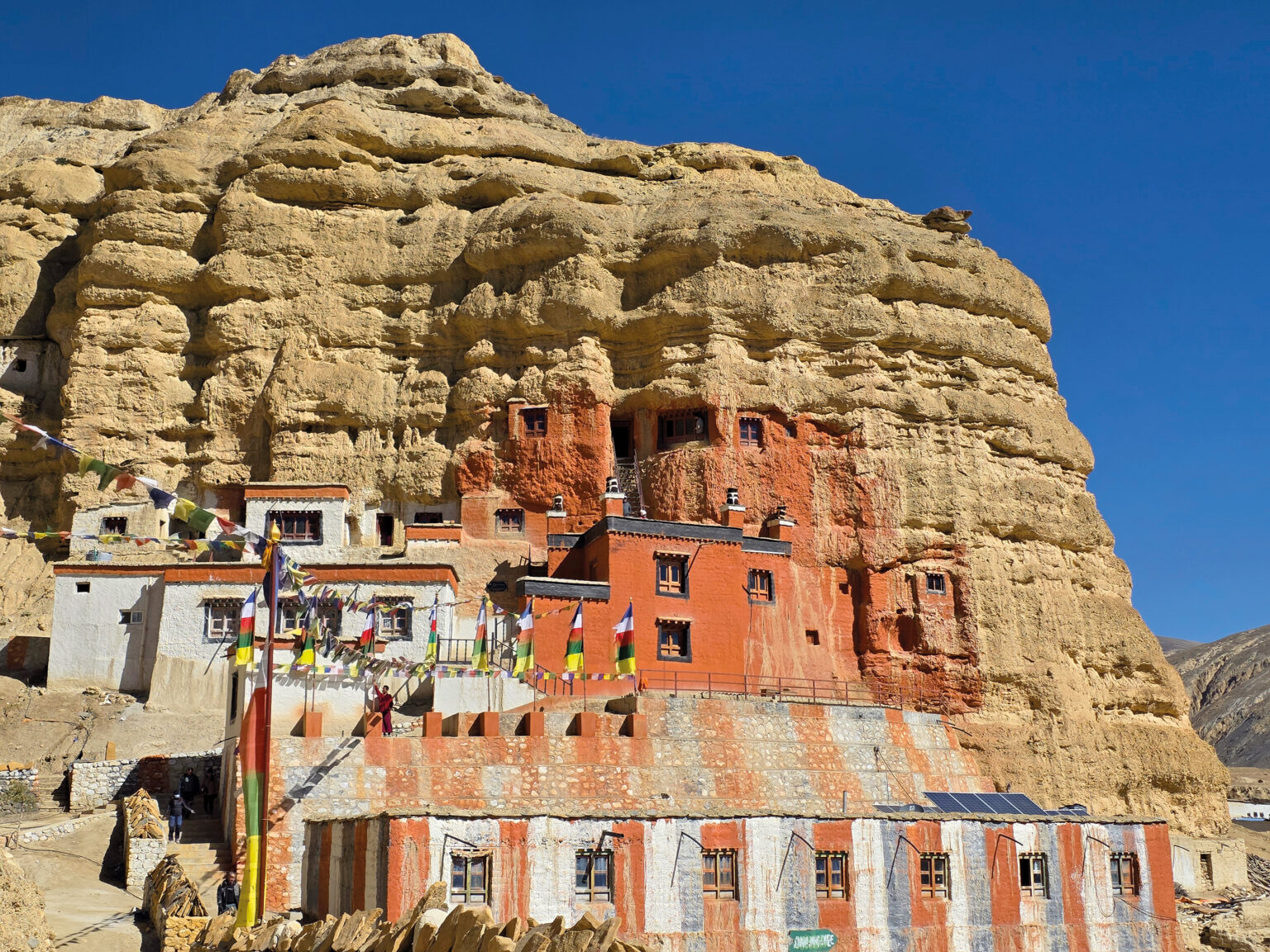
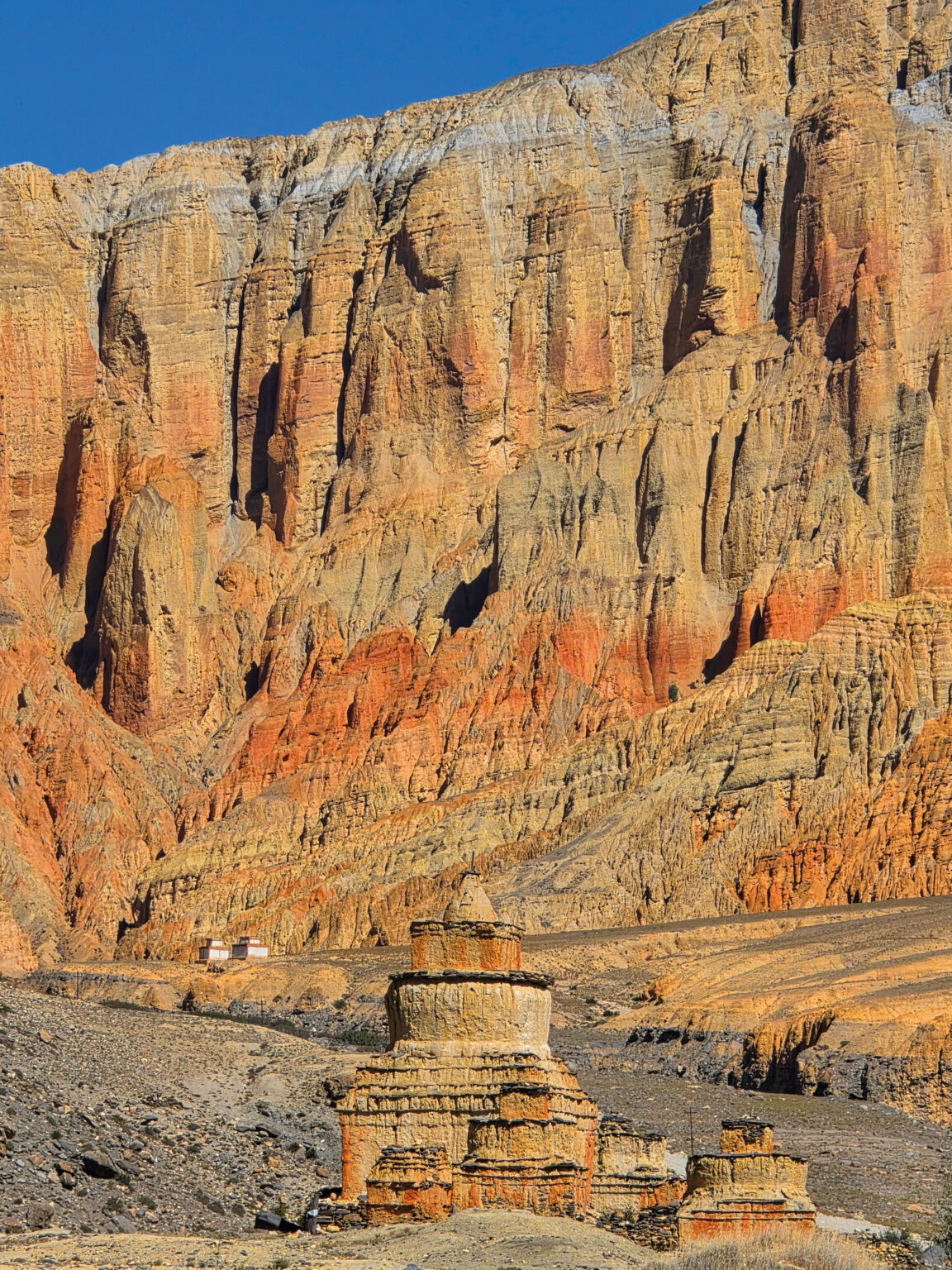
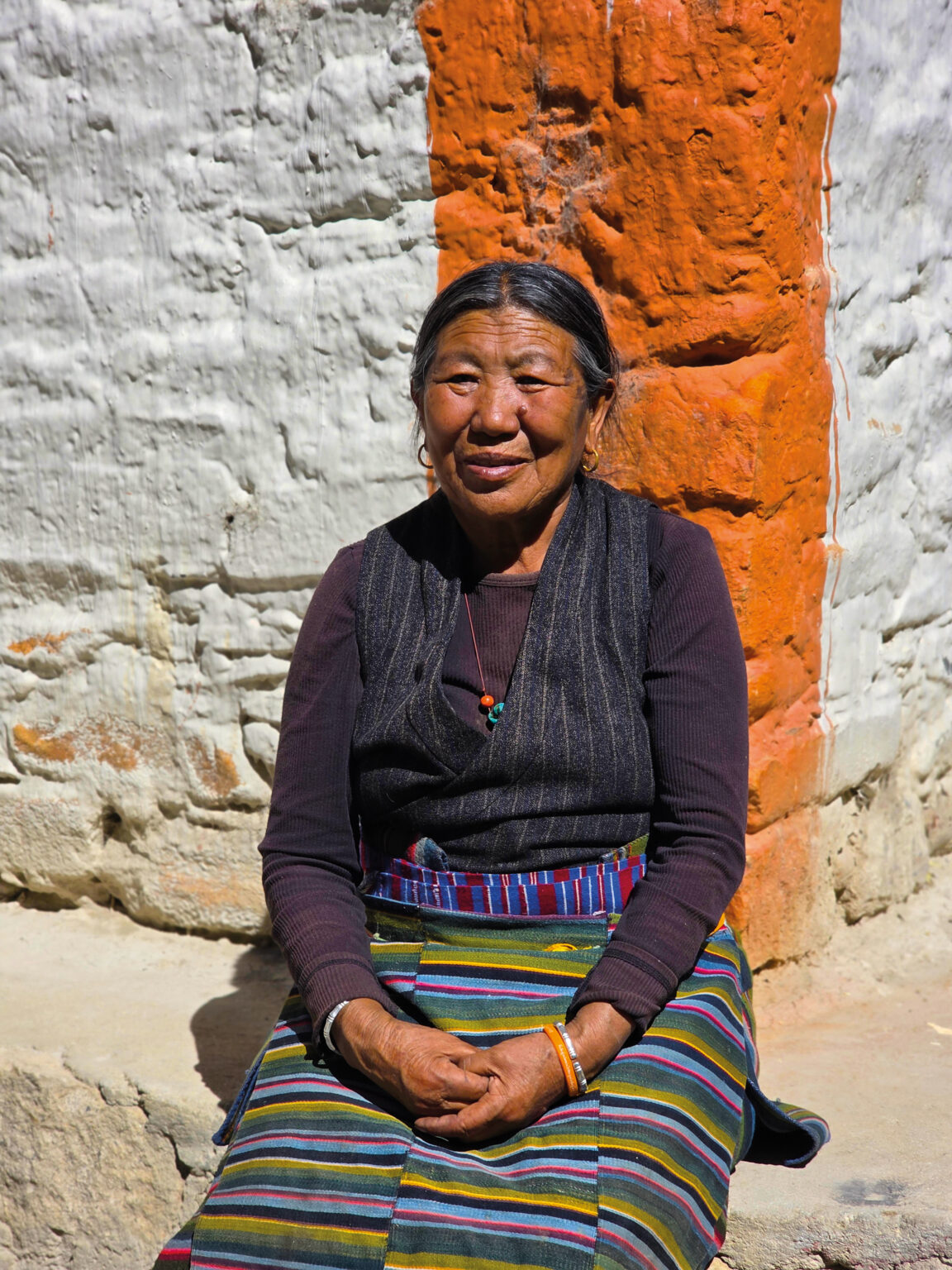
The ancient cliff-carved monastery of Nyphu digs into the rockface in Chhoser, and has been carefully restored following the damage caused by the earthquake in 2015; the iron-rich red cliffs near Dhakmar village in Upper Mustang look almost rusted ; a local woman dressed in the traditional wear of Lo Manthang;
While we encountered half a dozen rhinos, the undisputed stars of the park – including the tender sight of a female and her calf wading through a shallow pool, the water rising around their armour-plated hides – Asbin seemed at his most animated when a sloth bear shambled across a clearing.
“These are so rare to see here,” he exclaimed. It all felt a world away from the thin air and barren landscapes of Mustang.
On my final morning in Nepal, I watched Himalayan peaks reappear on the horizon as I was driven towards Kathmandu. Annapurna rose beyond the rice fields, its mountains seeming to almost float in the morning haze. It felt like I’d come full circle. Nepal had greeted me with turbulence and uncertainty, yet everywhere I travelled, I saw people rebuilding with determination and perseverance.
In the Kathmandu Valley’s Newari workshops, among the monasteries of Mustang, and in the rhino-rich lowlands of the south, I encountered a kaleidoscopic country simultaneously restoring what it had lost and reshaping what it wanted to become.
Both Hinduism and Buddhism speak of samsara, the cycle of death and rebirth that shapes daily life. Hinduism understands this as the rebirth of an eternal soul, while Buddhism describes it as continuity without a fixed self, like a flame passed from one candle to another. Different ideas, yet the same acceptance that endings are rarely absolute.
That understanding seemed to lie just beneath the surface of everyday life in Nepal. Earthquakes may have fractured temples and homes here, yet these have risen again, often stronger. Old rituals continued alongside new routines, and everywhere I went, I saw how Nepal carried its changes and its losses forward as part of its journey. With the Himalayan peaks still gleaming on the horizon, it was easy to see why the idea of samsara had such deep roots here.

When to go
For clear skies and the best conditions, autumn (Oct– Nov) is your best bet. Spring (Mar–Apr) is also excellent, with warmer days and good visibility. Monsoon season runs from June to September, bringing with it heavy rain and disruption to road travel.
Where to stay
The Dwarika’s Hotel in Kathmandu is a heritage luxury property that is the benchmark address in the city.
Sarangkot Mountain Lodge is set high above Pokhara and offers classic sunrise views over the Annapurnas.
Shinta Mani Mustang is a world-class property with an all-inclusive concept.
Meghauli Serai, A Taj Safari, Chitwan National Park is a high-end safari lodge with great service that lies on the edge of the national park.
Tour operators
The author travelled with award-winning specialist tour operator TransIndus who offer a Remote Kingdoms of Nepal trip


