
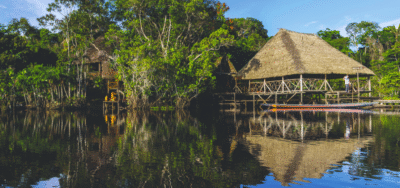
Sleeps in the Ecuadorian Amazon
An immersive stay in a rainforest lodge, exploring wildlife and meeting local communities offers a memorable, nature-immersed experience
What should tick the boxes for the perfect stay in Ecuador’s biodiversity- rich Amazon? To be immersed in rainforest, for sure so the howls of monkeys and electrifying birdsong can permeate the senses. It would also be hoped that in such a sensitive environment, accommodation is powered by alternative energy such as solar and that lodges are constructed from sustainable, natural materials. And that owners and staff will come from Indigenous communities who benefit from your stay and impart the knowledge and wisdom of their past generations. Happily, many lodges centred around Yasuní National Park and Cuyabeno Wildlife Reserve offer this, and importantly so, because they form a sustainable economic bulwark against regional pressures from oil exploration, intensive farming and timber exploitation.
Sani Lodge
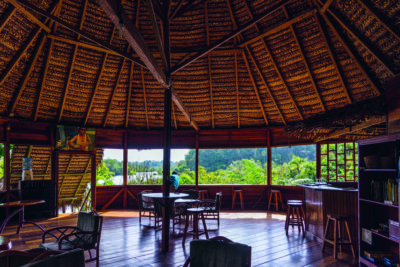
The backstory of Sani Lodge makes for an inspiring stay. In 2000, the Sani Isla Kichwa took a stance against oil exploration on their lands to create this ten-cabin lodge in a corridor between Yasuní National Park and Cuyabeno Wildlife Reserve. The lodge now protects 31,000 hectares, home to 2,274 flora species and 580 bird varieties. The rustic cabins are fashioned from locally sourced sustainable wood with thatched triangular roofs woven from toquilla leaves. Guides take visitors out walking on 20km of trails and the observation tower hugs a giant kapok tree, which is magnificent for birding – the keen-eyed might sight the curiously camouflaged potoo bird and occasional harpy eagles. Guests can buy fine handicrafts and try homemade chicha beer as part of the Sani Warmi project which enables women to enjoy greater financial independence.
Anakonda Amazon Cruises
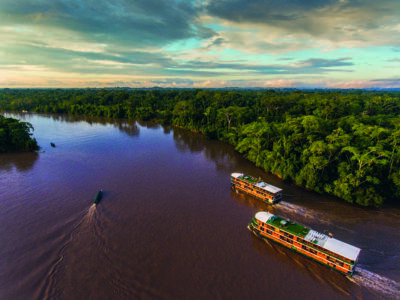
Absolutely the best way to explore Ecuador’s Amazon is by river. The award-winning Anakonda Amazon Cruises has not only pioneered riverboat trips down the Napo River, but works diligently on local conservation projects for freshwater turtles and pink river dolphins and it has also helped the Indigenous community to establish tourism projects. Its two cosy riverboats, the Anakonda and the Manatee, with bright air-conditioned cabins, possess the ambience of Mississippi steamers. From Coca, its slow cruises adjacent to Yasuní National Park head up the Napo to the Peruvian border. En route, expect visits to Kichwa communities who will guide guests to see the world’s smallest monkeys – pygmy marmosets, and to buy handicrafts. Motor launch excursions will seek pink river dolphins and caimans in lakes full of piranha.
Kapawi Lodge
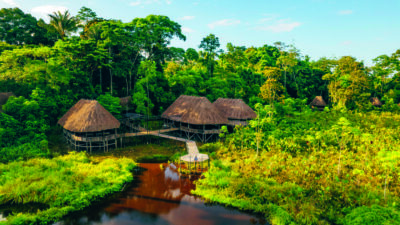
Days begin at around 4am for guests in the Achuar community with a guayusa ceremony around a lit hearth, to sip tea made from the ilex guayusa plant. Of all the experiences with Indigenous peoples in Ecuador’s Amazon, Kapawi Lodge emerges as the most complete cultural immersion. Its thatched scarab-shaped bungalows are found in a clearing amid 50,000 hectares of Achuar territory in a community ecotourism project owned and operated wholly by three neighbouring villages. It’s reached via a small aeroplane flight from the town of Shell to Ecuador’s far southeast border with Peru. Each day, visitors head out from the communal gathering hut, on canoes or hikes, perhaps sighting pink river dolphins, tapirs and capybara. You will experience how the Achuar live harmoniously with the rainforest and you’ll meet families to talk about their agriculture and use of medicinal plants. Guests get to try their cuisine, such as maitos – often fish and heart of palm which is wrapped and cooked in leaves.
Bamboo Lodge
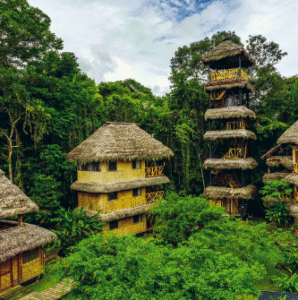
A journey into the remarkable Cuyabeno Wildlife Reserve touches the heart of biodiversity in the Ecuadorian Amazon. Snuggled within rainforest which boasts access to over 500 bird and 167 mammal species is a clearing alongside the Laguna Grande which is home to the immersed cabins of Bamboo Lodge. The lodge has rooms with penetrating rainforest views and a birdwatching observation tower resembling a pagoda. Its eco credentials feature treating all wastewater and running power from solar. Trips out include guided walks and canoe journeys through flooded igapo forest swamps, as well as a visit to a Siona Indigenous community to learn about their lifestyle. Their rainforest walk either side of dusk reveals how the fauna transitions during the crepuscular hours.
La Selva Eco-Lodge & Retreat
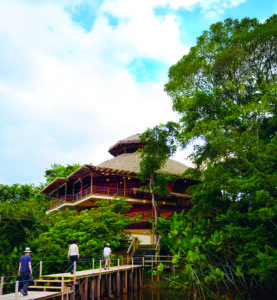
Accessed by canoe several hours from Coca up the Napo River, La Selva’s luxury staterooms are arranged around Lake Garzacocha’s shore in the Yasuní Biosphere Reserve. The ancient rainforest here is part of a global biodiversity hotspot and guests are encouraged to book packages to explore the stellar wildlife and interact with the surrounding Indigenous Pilchi community, who comprise 80% of the staff. The young men lead nature walks around hiking trails and on lake canoes, while Pilchi women host cultural events and produce handicrafts for guests to purchase. This money supports their school and conservation. On the lake during canoe adventures, expect caimans and giant river otters, while the 38m-high canopy tower can yield sightings of feeding capuchins and squirrel monkeys.
Sacha Lodge
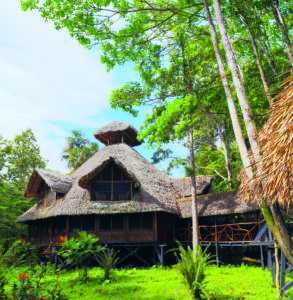
This beautiful and remote lodge on the shores of the black water Lake Pilchicocha is two hours upriver from Coca. The vision of a Swiss investor in 1992, the lodge has over the years accumulated degraded land surrounding its luxury cabins and created a flourishing reserve spanning 2,000 hectares. The tall windows of the cabins allow an intimate connection for inspecting the surrounding rainforest, while verandas are replete with hammocks. Diners in the lake-facing restaurant can look out for sloths in the nearby canopy. The lodge generates employment for 60 local families. Of its natural highlights, it is a birding hotspot with 587 recorded species such as toucans and hummingbirds. Pygmy marmosets are often seen, thanks to conservation work from overseas research projects. A 275m treetop canopy walkway along a suspended bridge proves a fine altitude for eye-level simian encounters.
Cuyabeno Lodge
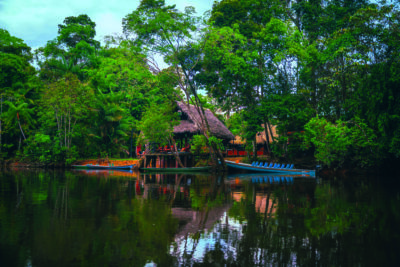
If you’re brave enough, despite the presence of anaconda and caiman around the water’s edge, one of Cuyabeno Lodge’s activities is a lagoon swim. This cosy lodge pioneered ecotourism inside Cuyabeno Wildlife Reserve in 1988 and it perches on raised ground above the flooded Laguna Grande shoreline. Guests arrive to simple wood and thatched huts by motorised canoes, which have been fitted with quiet electric motors to optimise wildlife sightings. The whole lodge is powered by solar electricity. All the day’s hours would be required to fit in myriad activities: hiking in the terra firma rainforest spotting monkeys and exotic birdlife; night walks to seek owls and garish frogs; fishing for piranhas (another reason to think twice about swimming) and visits to a local Indigenous community to learn to make the Cuyabeno staple – yuca-flour casabe flatbreads.
Napo Wildlife Centre
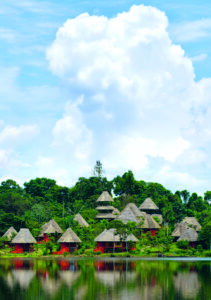
This Kichwa Añangu community’s lodge is gloriously located within the richly biodiverse Yasuní National Park rainforest, where over 600 bird species have been recorded plus ever-elusive jaguars. It’s a micro-adventure just reaching it. Take a fast-boat for 2.5 hours down the Napo River, and then a quiet canoe paddle with Añangu guides on a backwater tributary creek to the lodge. It has comfortable small thatched cabins plus more luxurious suites with polished teak floors, all built around a tall observation tower with a topiary-looking roof. Napo is best known for two clay licks, which attract five different parrot species plus macaws. Canoe rides and rainforest walks deliver sightings of elusive golden tamarin monkeys and giant otters. The community’s women’s association has created the Kuri Muyu centre where they sell brightly decorative handicrafts.


