
The world’s top coral conservation projects
Initiatives around the world are helping protect reefs hit by climate change and other threats…
Climate change is threatening the world’s coral reefs like never before. Prolonged ocean heatwaves and acidification of the sea have scientists predicting that we could lose 70% to 90% of the world’s tropical coral reefs by 2050.
Steps are being taken to reverse this trend. Not just on an international and governmental level, but also by small, (sea) grassroots organisations, doing their bit to protect their local reefs and give them a chance to flourish.
These are the projects we think are really making a difference. And deserve recognition.
Reef projects in Grenada

Grenada Coral Reef Foundation
This charity works with Grenadian communities, providing education for budding marine biologists as well as establishing and maintaining coral nurseries, undertaking restoration work and research projects, and offering courses on reef restoration and the use of artificial reef technologies. Both locals and scuba-qualified tourists are welcome to volunteer.
More information: grenadacoralreef.org
Grenada Artificial Reef Project
Founded in 2013 by Grenada’s dive community, this project installs pyramid-shaped artificial reefs made from breezeblocks on barren patches of the sea floor, aiming to counter the impacts of climate change, storm damage and overfishing. Around 80 pyramids were in place last year, hosting 14 species of coral. Lying just off Grand Anse Beath, they’re easy to reach by snorkelling from the shore. Volunteers help out by counting species, cleaning and maintain the pyramids, and transplanting coral. Visitors – including children as young as 10 – can take part, either snorkelling or scuba-diving, with sessions typically running between May and December.
More information: grenadaartificialreef.com
Molinere Underwater Sculpture Park

An internationally renowned exemplar of both art and conservation, the recently expanded Molinere Underwater Sculpture Park now features some 100 works scattered over an 800-square-metre swathe of the Caribbean seabed. Created by artist Jason deCaires Taylor in 2006, two years after Hurricane Ivan devastated the area, the park was augmented last year with the addition of around 30 new figures. Travellers can admire these pieces by scuba-diving among them, snorkelling above them or gazing down from a glass-bottomed boat. Gradually colonised by corals, the figures also draw divers and snorkellers away from fragile natural reefs nearby. A second submarine sculpture park is planned for the nearby island of Carriacou.
Reef conservation in North Queensland

The Forever Reef Project in north-east Australia is the world’s first living coral biobank, collecting a specimen of each of the planet’s coral species for a ‘coral ark’ that can be used to repopulate reefs in the future – an insurance policy in the face of rising ocean temperatures and coral bleaching events. So far, 179 of the Great Barrier Reef’s 415 hard coral species have been collected.
Locally owned tour operator Dreamtime Dive & Snorkel offers Reef Recovery Days on which science-minded travellers help marine biologists attach coral fragments to Reef Stars, aiding regeneration. Cultural guides are on hand to give insights into the region’s 60,000 years of traditional ecological reef management.
Citizens of the Great Barrier Reef recruits armchair scientists across the world to identify corals in tens of thousands of images, informing the work of scientists and reef managers.
More information: foreverreef.org; dreamtimedive.com; greatreefcensus.org
The Red Sea, Saudi Arabia
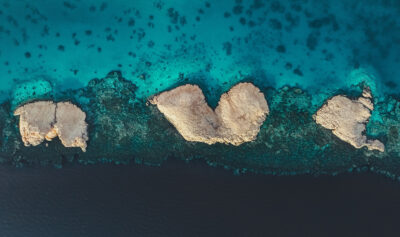
As part of the wider The Red Sea project, AI is being employed in the preservation and protection of one of the world’s largest coral reef systems. Using AI robotics, scientists are monitoring more than 300 coral sites – and analysing them 92% faster than would otherwise be possible. The discovery of new corals able to survive rising sea temperatures is paving the way for preservation and restoration locally, as well as in other regions around the globe.
Central Caribbean Marine Institute, Cayman Islands

The long-established Central Caribbean Marine Institute (CCMI) studies the reef system of Little Cayman to learn how corals can rebound from and become more resilient to stress. This research is possible because this reef remains relatively healthy, thanks to the island’s small human population, the absence of commercial fishing, and successful conservation efforts and government initiatives protecting key reef species such as Nassau grouper and the wider ecosystem. CCMI is working to improve coral restoration techniques; better understand how depth, heat and disease affect coral reef resilience; and use DNA testing to identify the most resilient corals. Visitors can tour the institute, and qualified divers are welcome to help with data collection such as counting and photographing coral.
You can discover more from the comfort of your own home, too – underwater talks by CCMI scientists are live-streamed on YouTube.
More information: reefresearch.org
Coral Gardeners, French Polynesia

Perfect for encouraging kids of all ages to engage with conservation, Coral Gardeners’ Adopt-A-Coral programme allows you to sponsor the rehabilitation of a fragment of a species of climate-resilient coral. After naming your baby coral, you’ll receive a digital card and real-time email updates on its progress in the nursery before it’s transplanted out on a reef.
Since its 2017 launch on Mo’orea, near Tahiti, more than 100,000 coral specimens have been planted on 11 reefs – 69,890 in 2023 alone – with a 82% survival rate. Also in 2023, Coral Gardeners opened its first international branch in Fiji, employing five Fijian gardeners – and has already planted more than 11,000 corals. Importantly, local tribal leaders have given their permission and blessing to the project.
More information: coralgardeners.org
Sunlife Coral Restoration, Mauritius

Sunlife, a small group of five sustainably designed luxury resorts in Mauritius, has launched coral restoration projects at its Long Beach and La Pirogue properties, offering hands-on environmental education programming for kids and adults.
La Pirogue Marine Research Center uses a micro-fragmenting technique to encourage quicker growth of new coral in its land-based nursery for transplanting back onto the reef. The results show corals healing 25 to 40 times faster than they would naturally on the reef and more than 2,000 fragments have been replanted since 2020. Guests can also learn about coral and other marine life, and contribute to the reef through Sunlife’s ‘adopt a coral’ initiative.
More information: yoursunlife.com
Other initiatives that deserve recognition
Chemical Sunscreen Bans, various, worldwide
Many sunscreens contain ingredients such as oxybenzone and octinoxate that are toxic to the corals, plants and fish we love to admire on snorkelling forays. Unfortunately, ‘reef safe’ labelling isn’t regulated, so it’s critical to read the ingredients list before buying your sunscreen. The sale (and, in some cases, use) of sunscreens containing such chemicals has been banned in destinations including Palau, Hawaii, Aruba, Bonaire, the US Virgin Islands and ecotourism reserves in Mexico. To choose reef-safe sunscreens, look for non-nano mineral-based products containing zinc oxide and titanium dioxide – they’re good for sensitive skin, too.
Embratur, Brazil
Not all sustainability efforts made by the tourism industry are visible to the public – so we want to showcase a policy introduced by Embratur, the national tourism board of Brazil, that we’d love to see embraced more widely – giving non-material gifts at international events. Instead of a swag bag containing, say, a pen, notepad or flash drive, visitors to Brazil’s trade-show booths are given certificates declaring the recipient a ‘coral reef tutor’, sponsoring the regrowth of a broken piece of coral. Fragments of reef are nurtured before being replanted onto the barrier reef on the Brazilian coast, part of a partnership with a local start-up, authorities, fisherfolk and their families. By the end of 2024, it’s anticipated that 800 corals will have been transplanted back into the reef off Porto de Galinhas, 60km south of Recife.