
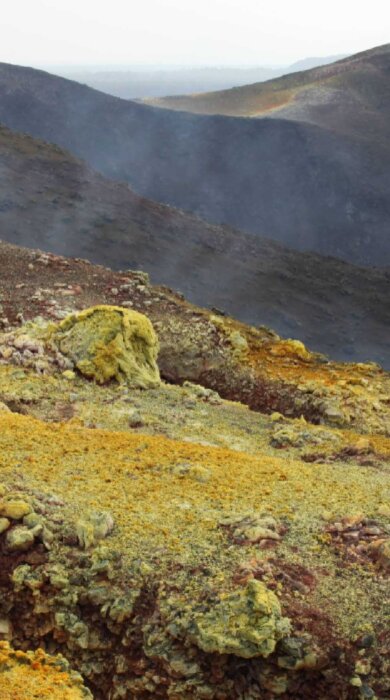
Visiting Virunga National Park, DR Congo
Vast and varied Virunga National Park is often off-limits due to conflict in the Democratic Republic of Congo. But Martin Fletcher discovers that when it is open, some of Africa’s most magical moments are
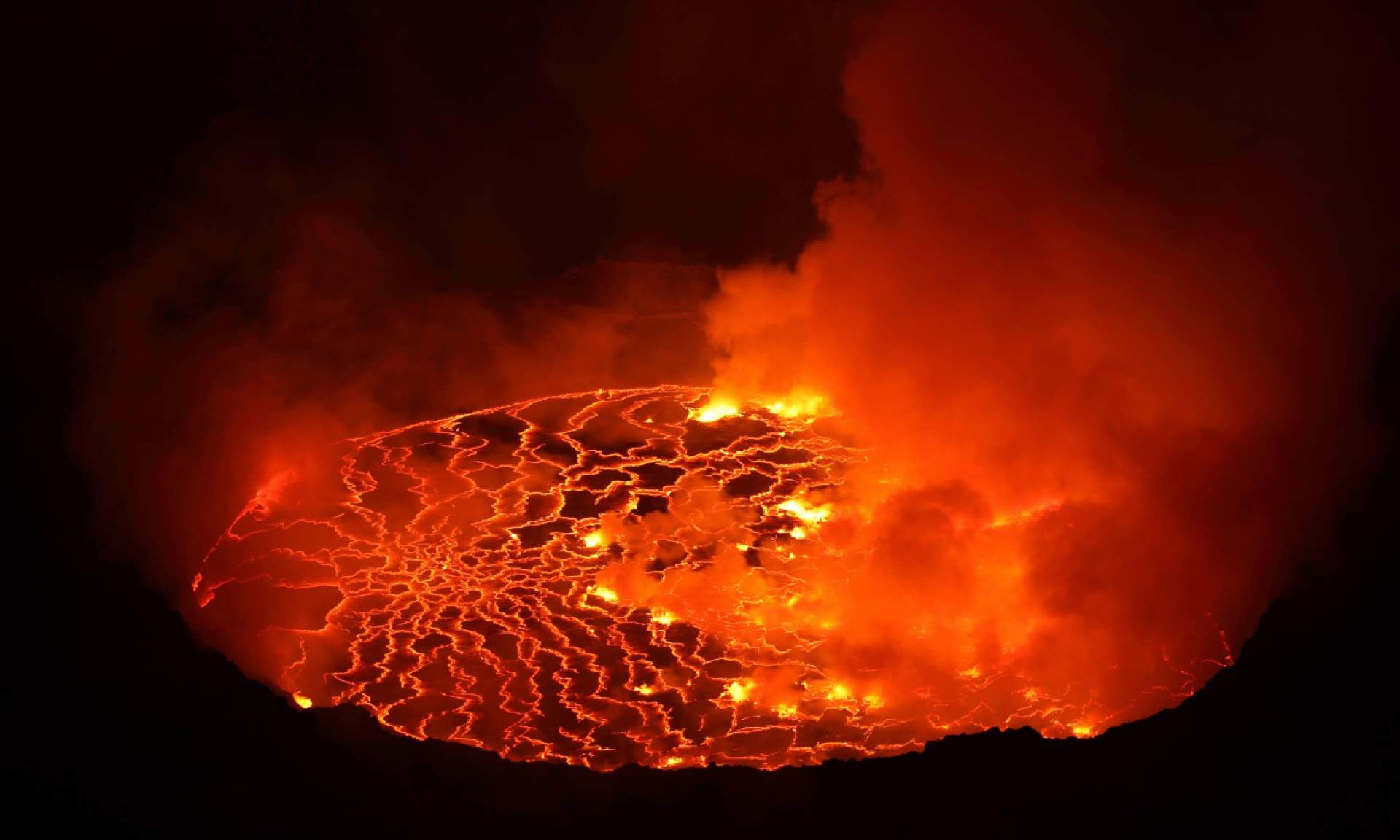
We dropped down on our knees and gingerly peered over. Sheer walls plunged down into a swirling white void of mist and vapours. We could hear a roar like the sea from somewhere far below. We could feel warm air rising. We could smell sulphur, and see columns of steam escaping from fissures in the walls. But of the world’s biggest lava lake in the crater’s base we could see absolutely nothing.
We were the first travellers to tackle Nyiragongo for at least two years, and we were bitterly disappointed. But what we did not know at that moment was that within a few hours we would be spectacularly rewarded for our efforts.
Only for the brave

Quite a ride
To reach Virunga I flew overnight from London to Nairobi where I met Mikey Carr-Hartley, a professional guide who plans to take small groups to Virunga and wanted to scout it out. Together we took a connecting flight to Kigali, capital of Rwanda, and then a three-hour taxi ride to the Congolese border town of Goma. We passed the mountains where Dian Fossey, author of Gorillas in the Mist, worked with the greatest of the great apes for 18 years until she was murdered there in 1985. You can see mountain gorillas in Rwanda, too, but you’ll be part of a larger, regimented party and the animals are much less wild.
Crossing the border was a shock. In a hundred metres we went from the fi rst world to the third. We were met by a Virunga Land Rover and the armed rangers who, for the duration of our visit, accompanied us everywhere we went.
We drove through Goma, which is full of UN troops and NGOs, and northwards up a ribbon of rutted mud and rock and lava that was once a fine paved road. Volcanic peaks with forested flanks and shrouded summits rose to the left and right of us. People tilled fertile fields of beans, maize and potatoes. The sides of the road were lined with rudimentary wooden shacks.
The road itself was a river of humanity – colourfully dressed women carrying impossible loads on their heads, ragged children playing soccer with balls made from rolled-up plastic bags. Men pushed extraordinary wooden contraptions called chukudus; these beasts of burden, unique to this part of eastern Congo, resemble giant children’s scooters or something out of a Flintstones cartoon. Their long running boards are attached at the front to tall upright shafts topped with handlebars like bulls’ horns. Their wheels are made from thin slices of tree trunk with strips of old tyre wrapped round their edges. They are used to transport huge bundles of timber or bamboo, great bags of cement or charcoal, scarcely credible loads of fruit or vegetables. Cheap and sturdy, chukudus are masterpieces of improvisation built to cope with conditions unlike those anywhere else in the world.
We saw army emplacements too, and a piece of heavy artillery abandoned by some militia, and the spot where Emmanuel de Merode, Virunga’s director, was ambushed and seriously injured by unknown gunmen in April. The British-educated Belgian has made many enemies since he was brought in to regenerate the park in 2008: the armed groups that still inhabit its northern and central sectors; the poachers who have killed thousands of its elephants and hippopotami; those who cut down its forests for charcoal; even a British company called Soco whose search for oil in Virunga he has fiercely opposed.
We eventually turned on to a dirt track that wound high up into the mountains and was almost impassable, even in a 4WD. For another excruciating hour we clung to the vehicle’s straps as it lurched from side to side, chased by barefooted children dressed in Oxfam cast-offs, past mud-and-bamboo huts with banana-leaf roofs. Finally, mercifully, we reached Virunga’s new Bukima tented camp. It was worth the journey.
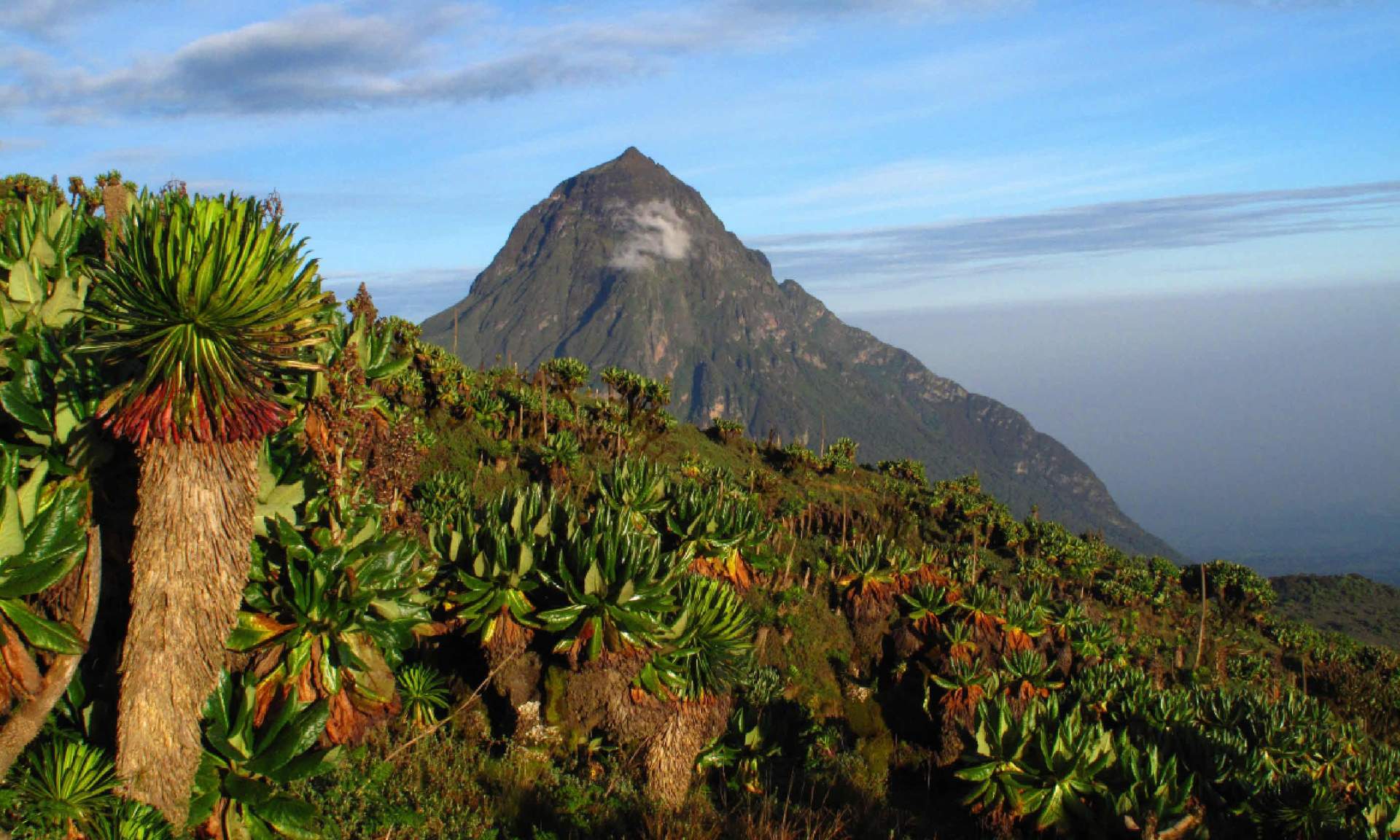
Bukima was hardly glamping, but the tents were clean, dry and comfortable, and enjoyed spectacular views across a green valley to no less than three mist-swathed volcanoes – Mikeno, which is extinct, and Nyiragongo and Nyamuragira, which emphatically are not. They have erupted more than 70 times since the 1880s, and clouds of white vapour billowed from their cones. As night fell we sat around a fire and drank fine Congolese beer – a legacy from the DRC’s days as a Belgian colony – ate a good if basic dinner, then fell asleep in this strange, exotic land.
The magic hour
Into the volcano
Make it happen
The author was a guest of The Safari Collection and Kenya Airways. The Safari Collection offers a three-night privately guided trip to Virunga NP, including transport from Kigali, accommodation, permits and meals, but not flights.
For further information on booking independently, contact Virunga’s tourism office.
There are no international flights to Goma, and flying from Kinshasa to Goma on domestic airlines is not advised. The best route is to fly overnight from London to Nairobi on Kenya Airways (8.5hrs) and catch a connecting flight to Kigali, Rwanda (1.5hrs).
Public transport in eastern DRC is not recommended. Rely on Virunga’s transport or a reputable taxi company.
Main image: Nyamuragira volcano (Shutterstock)


