
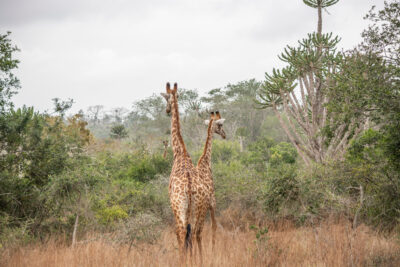
Wildlife encounters: Angola
Much of Angola’s wildlife was lost to civil war; now, thanks to years of dedicated conservation efforts, the country and its parks are on their way to becoming Africa’s newest safari star
On the African continent, Angola is second only to South Africa in terms of the diversity of its ecoregions. These span landscapes ranging from rainforest in the north to expansive deserts in the south. That Angola isn’t more widely recognised as one of southern Africa’s wildlife hotspots is largely down to one thing: civil war. But that ended over two decades ago, and the work being done in its parks to boost species decimated by conflict could make it Africa’s next safari hotpot.
Following nearly five centuries of Portuguese occupation, war erupted even before Angola’s independence from its colonial rulers was formalised in 1975, lasting until 2002. This had a devastating effect on the nation’s wildlife: rebel groups sought elephant ivory as a revenue source, while the collapse of routine trade led a desperate population to hunt game for food.
Even the national animal, the giant sable antelope, was targeted. This was feared extinct by the end of the war, but the discovery of a small number of surviving giant sable in Cangandala National Park in 2005, followed by another small population in Luando Strict Nature Reserve to its south – the only two sites in the world where this subspecies exists – has concentrated efforts to protect the animal.

Fast-forward two decades, and while the giant sable is still critically endangered, numbers now exceed the estimated threshold of viability (250) for any species to exist naturally. The years since the end of the war have seen the largescale translocation of species into Angola’s parks. Elephant, eland, wildebeest, zebra and ostrich were all released into Quiçama National Park (also known as Kissama) as part of a multi-nation endeavour called Operation Noah’s Ark, while the Angolan giraffe has recently been reintroduced into Iona National Park from a game farm in Namibia.
Wildlife restoration efforts have been further boosted by the inclusion of two Angolan national parks, Luengue- Luiana and Mavinga, within the Kavango Zambezi Transfrontier Conservation Area (KAZA), a cross-border protected area roughly twice the size of the UK. This provides protection to more than half of all Africa’s savannah elephants, a quarter of the continent’s African wild dog population and more than 650 species of bird (roughly two-thirds of Angola’s total), of which 524 are breeding species. With a growing number of visitors keen to see these parks, the future of Angola’s wildlife is looking rosier than it has for decades.
Cangandala National Park
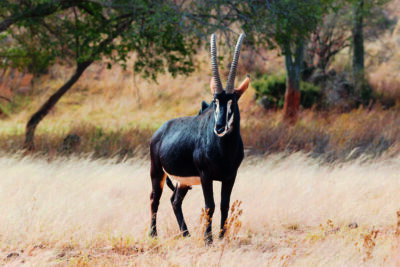
The open miombo woodland and seasonally swampy savannah of Cangandala’s gently undulating landscapes form Angola’s smallest, yet perhaps most important, national park. It was established in 1970 to preserve one of the last wild populations of giant sable in the world, and it has played an integral role in ensuring the survival of a species rarer even than the mountain gorillas of East Africa. The denser forest along the banks of the 600 sq km park’s rivers offers the best chance of wildlife sightings, particularly in the dry season (May–Oct) when fresh water is harder for animals to access. Alongside the giant sable, Cangandala is also home to duiker, bushbuck and more than 200 bird species.
Best for: Sightings of the critically endangered giant sable, known for its scimitar-shaped horns.
Quiçama National Park
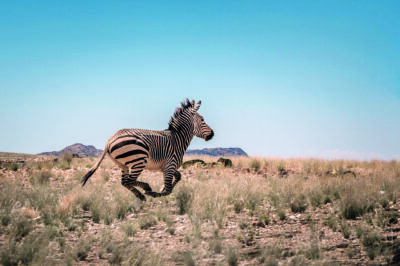
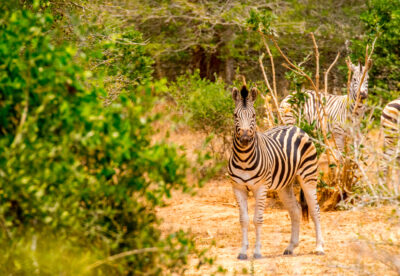
With a similar range of habitats to better-known safari destinations in Angola’s southern African neighbours, Quiçama (aka Kissama) is the star of the local safari scene. The Kwanza River, which forms the park’s northern boundary, provides lush vegetation year-round for elephant herds known to exceed 60 individuals. Take a boat trip along the river’s course and you may also encounter African manatees at the southern limit of their range. Much of the landscape blends thicket, centuries-old baobabs and cactus-like euphorbia as tall as a two-storey building, offering cover for the park’s herbivore species, including zebra and vast herds of eland.
Best for: Self-drive and guided game drives. These lack the crowds usually associated with southern Africa’s well-known national parks.
Iona National Park
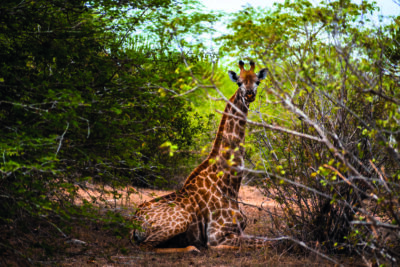
Once a thriving wildlife destination home to lions, black rhinos and desert-adapted elephants, the war took a heavy toll on Iona. However, its scrubland, gravel plains, low sand dunes and Atlantic beaches are undergoing a rebirth thanks to the conservation NGO African Parks, whose management plan has already seen the depleted park become home to more than two dozen translocated Angolan giraffes – the first time they have been seen here in decades. Studies are underway to assess the viability of reintroducing black rhino and lion too. Until that happens, there is plenty to see. The park’s desert coastal ecosystem harbours surviving populations of cheetah, oryx and springbok, alongside smaller marvels such as Namaqua sandgrouse.
Best for: Tracking wildlife in the desert landscapes of Angola’s south, which seamlessly bleed into Namibia’s Skeleton Coast National Park.
Where else?
Cabo Ledo
The Atlantic sands of Cabo Ledo beach are as popular with endangered loggerhead turtles as they are with holidaying Angolans. Female turtles haul themselves ashore to lay their eggs from June, with hatchlings starting to appear two months later. Their progress is monitored by local group Projecto Kitabanga.
Ilha do Cabo
The bars of Luanda’s 8km-long peninsula might not be an obvious starting point for wildlife encounters, but you can spot whales and dolphins from its Atlantic-facing shores. Humpbacks are best seen in the mating season (Jul–Oct), when cruises with Edyachts (edyachts.com) offer a chance of closer sightings.
Tundavala Gap
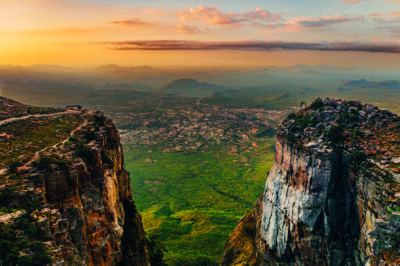
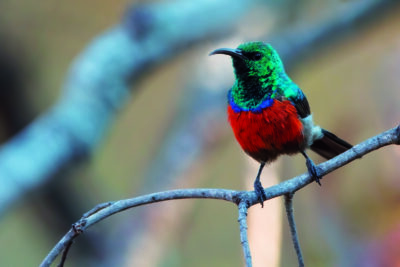
Hiking amid the sandstone cliffs, grasslands and Afromontane forests around Tundavala is particularly rewarding for birders. The area is a haven for endemic and restricted bird species, including the Angola cave chat, Ludwig’s double-collared sunbird and the Angola slaty flycatcher.
Maiombe National Park
Situated in Angola’s Cabinda Province, an exclave separated from the rest of the country by a sliver of the Democratic Republic of the Congo, Maiombe contains small populations of chimpanzee and western lowland gorilla species. Depending on the security situation, this area isn’t always easy to reach, so check before planning your visit.
Restoring Angola’s wildlife potential
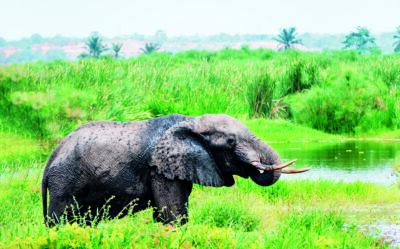
Prior to independence, Quiçama National Park was home to approximately 4,000 elephants, 450 lions and healthy populations of black rhino and leopard. The civil war all but wiped these out, alongside some of the largest concentrations of eland, forest buffalo and roan known to exist anywhere. The recovery of Angola’s wildlife has since been down to a committed handful of individuals. Coordinated by the Kissama Foundation, the early 2000s saw South Africa’s Madikwe and Botswana’s Tuli game reserves donate 200 savannah elephants, increasing the park’s population by a factor of almost six overnight. Both reserves were struggling with elephant overpopulation. Around 150 animals, including oryx, wildebeest and eland, were also shipped to Quiçama during what was known as Operation Noah’s Ark, one of the largest animal translocations in history.
Sadly, similar tactics couldn’t help the survival of Angola’s national animal. Residing exclusively in Angola, and boasting one of the largest horns of any antelope, with lengths of up to 1.65m, the giant sable was only formally described to science in 1916. By 2003, no living animal had been seen for two decades, and it was feared the species may already be extinct. A combination of camera trap imagery and DNA dung analysis provided the first proof of the animals’ continued existence in Cangandala National Park, leading to a renewed effort to protect them. A captive breeding programme means there are now around 350 animals, split between at least five herds. However, their future remains uncertain, as some females appear to have begun crossbreeding with the closely related roan.
Need to know
When to go
The best opportunities for wildlife viewing are during the dry season, or cacimbo, which lasts from May until September. Rain is all but unheard of, and temperatures are at their lowest, peaking at 29°C in Luanda. September, offers the clearest skies for photography.
Getting there & around
Multiple European airlines, including Lufthansa and Air France, fly from their respective bases to Luanda, where a new international airport has begun operation. TAAG has a good domestic network. If you’d prefer not to hire a car and driver, coach companies like Macon save the need to endure the informal blue-and-white candongueiros minibuses. Tour operators covering the country include NativeEye and Luanda-based Eco Tur.
Visa & currency
Visa
Most tourists, including UK nationals, no longer need a visa, with free 30-day permits available on arrival.
Currency
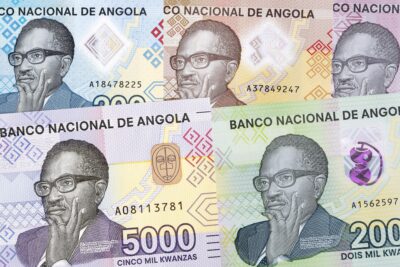
Angolan kwanza (AOA), currently AOA1,233 to the UK£. Credit and debit card use is limited. Bring US dollars or euros, which are easily exchanged in banks countrywide.
Further Information
Visit the tourist board for more details on travelling in Angola. The new edition of the Bradt Guide to Angola by Oscar Scafidi is out on July 2026.


