
Our guide to Lapland’s Big 5 of wildlife
As SVT’s Moose Migration Livestream goes viral once again, we thought it was time to share the animals you’ll encounter across Swedish and Finnish Lapland
The internet age has brought us many great things, but nothing quite gives us joy like a seemingly completely random livestream going viral.
In 2016, tens of thousands of Brits came together for #DrummondPuddleWatch. In 2021, the Utrecht fish doorbell launched, attracting 100,000 clicks in its first year – in 2024, that number soared to 2.7 million (the doorbell is live again right now, should you want to help fish pass through the Weerdsluis for yourself). And last year, baby pygmy hippo Moo Deng became so popular that the Khao Kheow Open Zoo in Thailand where she lives set up a 24/7 live stream for those desperate for content at all hours of the day.
The latest must-watch? SVT’s Moose Migration Livestream.
First launched in 2019, the livestream follows moose in northern Sweden as they make their annual migration from coastal forests to higher inland pastures.
SVT, the Swedish national public television broadcaster, has set up 32 cameras across the wilderness in the hopes of catching the moose as they cross snowy trails and swim rivers.
Last year, 87 moose were caught on camera crossing the Ångerman river, and the livestreams often catch footage of bears, reindeer and other wildlife.
Want to brush up on your wildlife before tuning in? Here’s our intro to Lapland’s very own Big 5.
Moose

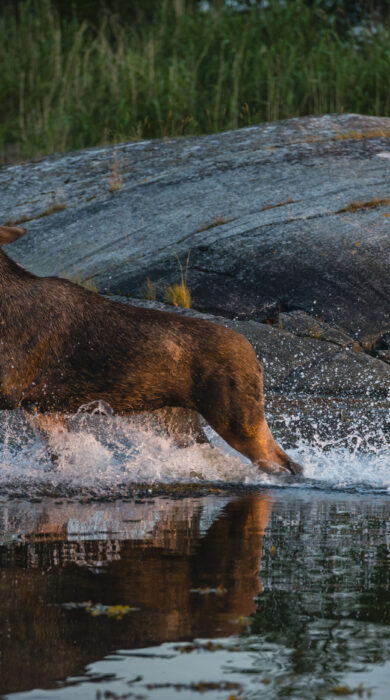
When it comes to talking about the Big 5, it seems right to start with the biggest (and the reason behind the livestream in the first place): The moose. If the deer genus can be equated to boxing subdivisions, then moose are the Oleksandr Usyk of the heavyweight division. With long pendulous faces and antlers resembling outstretched hands, these mega-herbivores can bulk up to 500-700kg.
Around 300,000 moose call Sweden their home, and if you want to see them IRL, you can book in for a moose safari with Hide & See. Founder Mikael Suorra is known as the ‘moose whisperer’ (although we’d say his moose calling is a bit too loud to be considered a whisper), and tours will take you through the forest around Harads in search of the gentle giants.
Brown bear
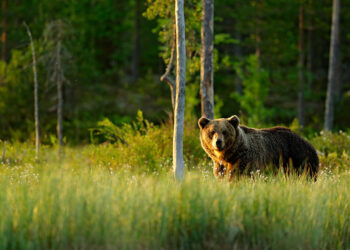
While there are more brown bears in Sweden than Finland – around 2,800 versus between 1,200 and 1,500 – it is the latter country that claims the mammal as its national animal. Brown bears can hibernate for up to seven months without food or water, and so between their spring emergence until early winter, male brown bears have much to do: staking territories, seeking females, and accruing weight for winter hibernation in underground dens. Shy and reclusive, they may stretch out to 275cm. Yet most remarkable is the ability of pregnant females to delay egg-fertilising in their own wombs to avoid birthing cubs underground if they’re not in suitable physical condition.
As bears tend to be more active during dusk or at night to avoid unwanted interaction with humans, the best place to see them for yourself is from a specially-built hide. In Sweden, Gävleborg County has the densest bear population, and you can book the country’s southernmost hide through Wild Sweden. In Finland, eastern Kainuu near the border is considered the best place to see bears, and you can book an experience through the Wild Taiga website. Alongside your bog standard, no-frills hides, you can even book a sauna hide.
Lynx
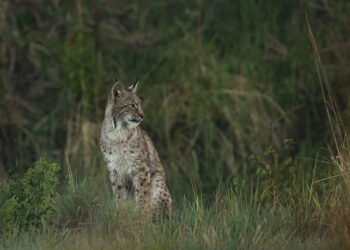
Slender and rarely seen, lynx are the hunters of the night, phantom felines with alert antennae-like ears, sensitive to intruders and the detection of quarry, such as roedeer. Little more than 25kg in weight, an estimated 1,250 individuals are thought to exist in Sweden’s Lapland region, with another 2,300 in Finland. March is an interesting time to track them. With good fortune you may spot their pawprints in the snowfall when they are active during mating season. A female lynx may raise up to four kittens.
Wolverine
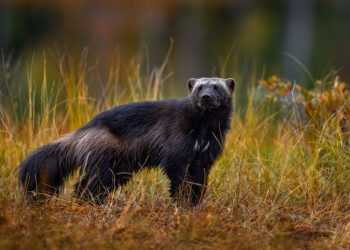
While the real-life wolverine may not be as big as the fictional Marvel character, pound-for-pound this feisty small mammal, a sort of otter on steroids, is one of the animal kingdom’s bruisers. The Northern hemisphere’s very own Tasmanian devil. Don’t look them in the eye or call them a large weasel, as they might take exception. After all, despite being little greater than 40cm high, they can take down a reindeer. Alternatively called ‘gluttons’, these prodigious predators may also scavenge carrion, yet nowadays number a disconcertingly low 600-700 individuals in Sweden, less in Finland. They’re very difficult to track as they roam far and wide.
Arctic fox
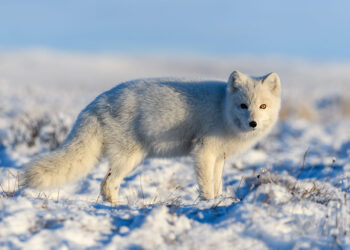
Foxes are not Lapland’s only animal to don ghostly-white coats for camouflage during winter – Arctic hares and ptarmigans possess this same changeling ability. Yet none wear them better. Picture the iconic wildlife photographs of these white-furred foxes, fine-boned like porcelain, and at home in the snowfall. Daintier than our common red fox, they shed their winter coats by summer for hues of greyish-brown or bluish-tinged fur as their restless hunts continue seeking small rodents as devoted monogamous couples. Sweden’s north-western mountains are a particular stronghold.


