
Exploring the 'least visited country in Europe'
Those who do venture to the Eastern European country will find restored monasteries, millennia-old wine culture and a revitalised capital
Words & Photographs George Kipouros
As we drove, seemingly without direction, through a succession of dimly lit tunnels nearly 100m below ground, I became increasingly convinced that we were lost.
“Don’t worry, we know this place inside out,” assured resident guide Slavik. So on we ploughed, navigating a labyrinth of passageways totalling some 120km beneath a small town in central Moldova, pursued by the unmistakable woodsy scent of alcohol.
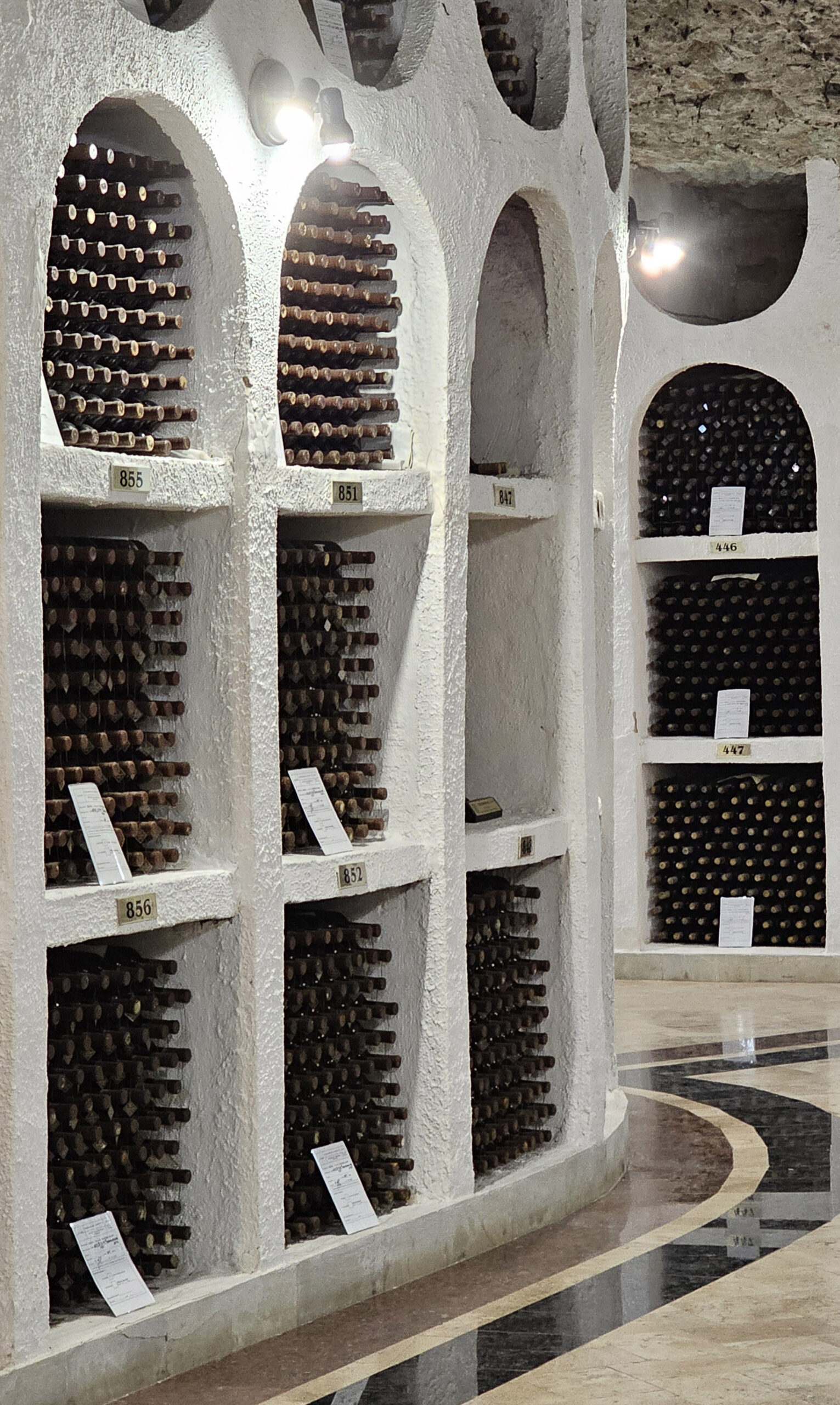
Reaching an intersection of sorts, I managed to catch a glimpse of a street sign written in Cyrillic: ‘Cabernet Street’. “Now you know what’s inside the casks all around us,” smiled Slavik. To the left and right of me were tens of thousands of barrels and bottles lining the tunnels of Cricova Winery, the second largest wine cellar in the world. This really was the underground city I’d been promised at the start of my tour.
As it happens, Moldova also boasts the largest underground wine cellar too, Slavik told me, though he was at great pains to highlight the uniqueness of Cricova, host of the national wine collection.
We were navigating tunnels dating back to the 16th century, when the site was a mine; the limestone extracted here was used for building Moldova’s capital, Chișinău, a mere 15km to the south. Its conversion into an underground wine emporium came much later, in 1952, when the Soviet Union was in charge here (1940–91).
Around 80km of the tunnels are now used for wine production and storage, while 40km are still actively mined for limestone. Inside, it was a bracing 12 degrees Celsius, a temperature that barely fluctuates year-round; it felt even cooler thanks to the high humidity of 85%.
Cricova Winery is government owned, which is perhaps not surprising given its history and size. What is more remarkable is that little Moldova (a country of barely 2.6 million people) is currently the 14th largest wine producer in the world.
“During the Soviet era, we produced even more, as it was all about quantity back then,” explained Slavik. He quickly reassured me that production today was “finally” focused once again on quality.
“ Around 80km of Cricova’s tunnels are used for wine production and storage”
The country has the silverware to back up such heady claims, with a Moldovan late-harvest traminer bagging ‘best wine’ at last year’s London Wine Competition. It’s just one award among many, I’m told. We concluded our visit with the obligatory 11am tasting, as Slavik enthused over the growth potential of Moldovan enotourism.
“We have just as much to offer as other famous wine regions, yet not many tourists think of visiting Moldova,” he said. The 80,000 visitors to Cricova last year might disagree, though many of those came from neighbouring Romania; few arrive from outside Eastern Europe. A map near the exit showed a further 200 wineries; about 30 are equipped with facilities to welcome visitors.
“But we have so much more in addition to great wines,” chimed in Natalia, the tour guide taking me around a country still very conscious that it is yet to win its fair share of tourists. “We are apparently the least visited country in Europe, but you will see how unfair this is!” she assured me while pointing out our next stops on the map.
Leaving Cricova’s tunnels and their chilly microclimate behind, I was eager to venture above ground and experience more of Moldova’s undiscovered sights and flavours.
The underground chapel at Cricova Winery
Curchi Monastery; Restoration works are still ongoing at this 18th century site
Beyond the vineyards
While Moldova has no mountains, the farming landscapes surrounding us were a kaleidoscope of vibrant colours. Visiting in early June, we drove past verdant fields brimming over with fruit and vegetables, all jostling for space with mile after mile of vineyards.
“Our soil is very fertile, and in terms of agriculture we’ve always been very rich,” confirmed Natalia, though even this wasn’t enough during the Soviet era, when chemicals were widely used to boost production. “There was serious degradation of the local environment, she told me. “It’s taken years to recover.”
It wasn’t just environmental degradation that the modern Moldovan state has had to endure. Natalia explained how our next stop had weathered its own misfortunes, and last served as a psychiatric hospital. It didn’t sound much like a typical visitor site, though the drive down a lane dotted with orchards was pleasant enough. It was then that the ornate, towering dome of Moldova’s tallest church came into view.
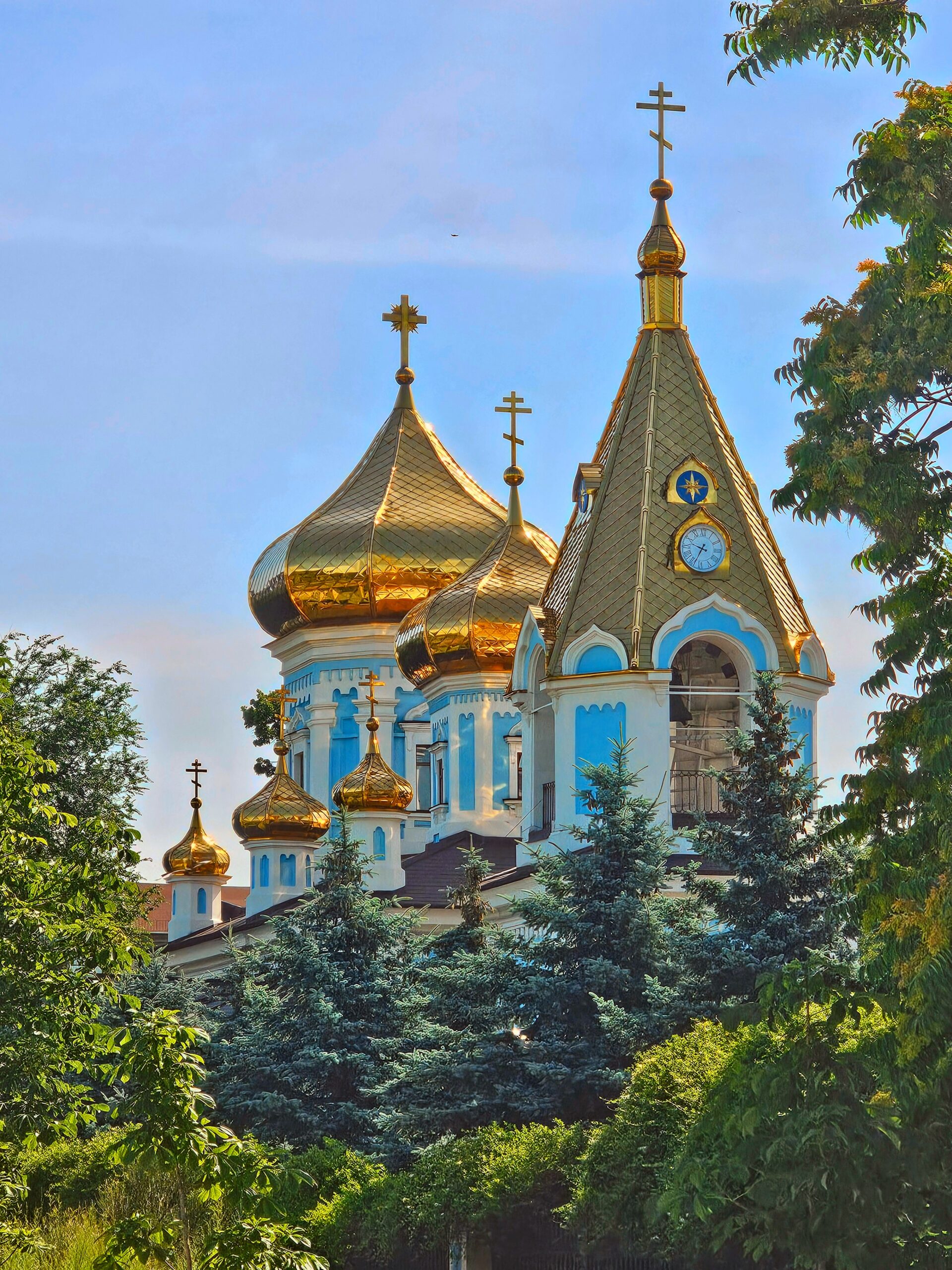
“Curchi is the most beautiful monastery in our country,” beamed Natalia as we walked towards a pond reflecting the complex’s 19th-century Baroque-style Naşterea Domnului Cathedral in its waters.
“It’s a miracle that it still stands,” she explained, and began narrating a story of creation and destruction repeated many times over the past three centuries.
“Not unlike the story of our country, the tale of Curchi is one of survival against all odds”
In just the last 100 years alone, Curchi was destroyed by fires during the Second World War, only to be restored shortly afterwards; then it became sadly neglected when the Soviets shut down the monastery and turned its grounds into a psychiatric hospital that operated until 1995. It wasn’t until ten years later that most of the site was reopened – although restoration work is still ongoing.
“Not unlike the story of our country, the tale of Curchi is one of survival and resurgence against all odds,” remarked Natalia stoically.
These days, monks are once again back in residence at the monastery, and pilgrims are arriving in healthy numbers.
“Visitors are helping us to raise funds for restoring our historic sites,” explained Natalia, highlighting one positive impact that a growth in tourism numbers might bring.
The food proved to be another unexpected highlight of my visit to Moldova, and none more so than my first lunch at a rural guest house, Casa din Lunca. This was one of the first agrotourism businesses to open in the region; now it’s part of a burgeoning scene of locals combining farming with traditional hospitality. In the face of limited hotel options, Moldovan guest houses offer a charming and rustic alternative.
“They are now sprouting like mushrooms,” chuckled Natalia as we toured the beautifully kept grounds, carefully avoiding the cockerel-in-chief and his army of chickens.
Casa din Lunca started out by offering a few rooms in the family home; they have since renovated a number of previously abandoned houses in the village to meet growing demand for stays in the area.
At lunch, we feasted on true farm-to-fork fare. Its simple flavours were focused on fresh fruit and vegetables, and I was transported back to childhood visits to my grandparents’ rural home in Northern Greece, especially when savouring sarmale, the Moldovan version of stuffed cabbage leaves.
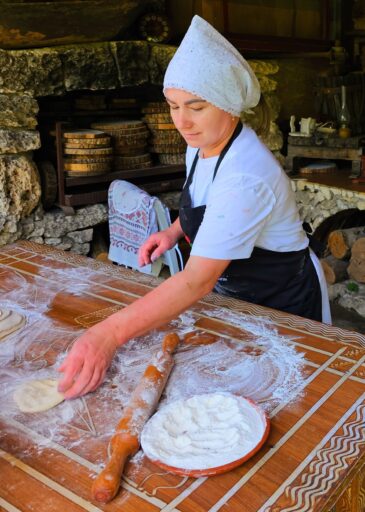
When expressing a liking for the local pie, plăcintă, the cook emerged from the kitchen and invited me for an impromptu lesson on making filo pastry. Her warmth and heartfelt hospitality I would encounter in different forms time and again throughout the country.


The interiors of Căpriana Monastery
A capital reborn
Having gotten a flavour of the countryside, it was time to explore capital Chișinău, home to nearly a third of all Moldovans in the nation.
It’s fair to say that Chișinău was not love at first sight. The arrival from the airport transports visitors back to the Soviet era, as a parade of identikit apartment towers and Brutalist edifices scrawls past the car window. But it has a good excuse. Some 70% of the city was destroyed during the Second World War, so I was surprised to discover a historical centre dotted with surviving architectural jewels, many now enveloped in well-manicured green spaces.
Sadly, quite a few of these 18th- and 19th-century marvels are still in dire need of attention, although aid funding from the EU and the US has helped to speed up their restoration over the last decade.
“There’s a small renaissance currently happening in Chișinău”
The city’s numerous Christian Orthodox places of worship were among the first to be brought back to life. Chișinău’s Neoclassical Nativity Cathedral lies at the heart of the city’s main square. It, too, was bombed during the Second World War, and it endured further hardship when the local Communists destroyed its belltower in the early 1960s. Today, it once again towers above the myriad restaurants and cafés that teem the city centre, giving it life and charm.
“There is a small renaissance happening in Chișinău,” said Natalia, who shared the success stories of restaurateurs and entrepreneurs that had recently returned to Moldova.
It’s a far cry from what the city would have looked like 30 years ago. In the early 1990s, the country was synonymous with poverty in Eastern Europe. As a result, around a million Moldovans left, emigrating to find work and a new life. Yet Natalia told me that they have increasingly started returning: “Some are feeling homesick, others are simply coming to try their luck.” It was a positive sign.
The city also recently welcomed tens of thousands of Ukrainian refugees escaping the Russian invasion. “Moldovans know what it means to be an immigrant, so we naturally opened our homes to people who needed them,” said Natalia with a tinge of pride.
A traditional village in Orheiul valley
Reviving the arts
It would not be fair to say that it was only the returning diaspora that is fuelling Moldova’s economic and cultural revival. Having left the city behind for the Moldovan countryside once more, I met Ecaterina Popescu, founder of Artă Rustică, a centre for weaving in a village almost deserted by Moldovans fleeing the economic hardships of the 1970s.
Passionate about the art of weaving, and equipped with plenty of family know-how, in 2003 she moved her collection of heirlooms to an abandoned kindergarten and set up a workshop.
“Our mission is to revive traditional weaving, but the ultimate goal is to contribute to restoring the Moldovan identity,” declared Ecaterina. In addition to showcasing historic collections, she also trains and employs many local women, who weave carpets and traditional costumes that they then sell.
“Involving the younger generation is key to our art’s future,” Ecaterina exclaimed, and we saw several children attempting to create their own masterworks in the courtyard.
Leaving Artă Rustică behind, we continued our cultural immersion with a visit to a trio of monasteries: Căpriana, Hâncu and Condrița – each reachable on a day trip from Chișinău.
Căpriana is one of Moldova’s oldest and most prominent monasteries, Hâncu is the country’s largest nunnery and Condrița boasts a beautifully flamboyant onion-domed church. At each entrance, a common pattern emerged, as my eye was immediately drawn to a collection of small kiosks filled with jars of local honey, jam, pickled vegetables and beautifully bottled wines.
“The monasteries sell some of the finest and purest products you can find,” explained Natalia. A bonus is that this is both a major source of income for the monks and also helps with funds for the restoration works.
Another common trait they share is that, much like Curchi, all three had ceased to operate as monasteries during the Soviet era. Hâncu was turned into a sanatorium, Căpriana became a children’s hospital and Condrița was a forestry school. Their return to working monastery life is a relatively recent development, but their time in the wilderness was not without consequence.
“While there was some functional use for all these buildings, it also meant that we lost priceless iconography and frescoes,” said Natalia. I left pondering some of the treasures that would be forever lost to time.
Hâncu has the finest gardens of any monastery in the country
The setting for DescOperă, held at the foot of Orheiul Vechi‘s limestone cliffs, is as breathtaking as the music
Back to the future
The final stop in my itinerary took me to the cultural and spiritual heart of Moldova. The site of Orheiul Vechi shines with the remnants of civilisations that once called this land home, from the ancient Thracians and the Golden Horde to the Ottomans and the Russians. This is all framed by an Eden-like valley of prelapsarian beauty, a limestone gorge carved over millennia and still dominated by the Răut river. Amid the charming villages and inviting hiking paths, a spiritual gem lies in the cliffs.
Following a brisk walk up, we entered into the hill itself, where the eerily mystical cave church of the Virgin Assumption awaited. This is the oldest still-functioning church in the country, and its unique setting, carved into the limestone, is well matched by the breathtaking views across the Orheiul valley.
I was lucky to meet resident cave monk Efimie, caretaker of the 15th-century church for the last 20 years. During the Soviet era he was an engineer, but he found his calling here.
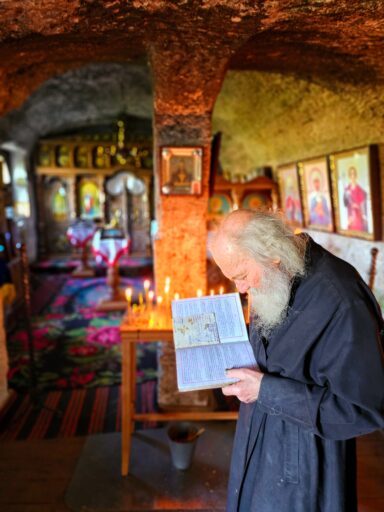
“This is a very special location; every pilgrim can feel it,” he smiled, then began reading a psalm for a long and satisfying life.
In the background, I could hear an unexpected kind of singing. Echoing from a short distance away was the sound of an opera singer performing an unidentifiable aria.
“You are very lucky to be visiting during the DescOperă festival,’ announced Natalia.
While opera is not a deeply rooted Moldovan tradition, I was surprised to discover that its local singers excelled in the genre. Over 200 artists had been lined up for the three-day event, and with the stage set in a seemingly impossible natural amphitheatre below the cliffs, the acoustics were incredibly powerful. Though they were arguably enhanced by the copious amounts of Moldovan wine that guests were plied with during the evening.
It was my final glimpse of a country once known as the poorest in Europe. Moldova has since shed itself of this mantle and is now looking towards the future with optimism. Surprises await travellers everywhere here, not least in its wine cellars and monasteries, but it’s the hospitality of the people that will win their hearts. All it needs now is visitors.
Chișinău’s Central Park fountain
Need to know
When to go
Year round, but we recommend avoiding the summer heat of July and August, and the piercing cold of winter (December to March).
Getting there & around
Nonstop return flights operate from London Luton to Chișinău with Wizzair (wizzair.com) and local airline Flyone (flyone.eu), and from Stansted with HiSky (hisky.aero). These take less than three hours and cost from £72.
Moldova is best explored with a tour guide and driver, as English is not yet widely spoken. Tour packages are very reasonably priced, and no visa is required for UK, EU or US citizens.
Carbon offset
A return flight from London to Chișinău produces 368kg of carbon per passenger. Wanderlust encourages you to offset your travel footprint through a reputable provider. For advice on how to find one, visit wanderlustmagazine.com/inspiration/sustainable-travel.
Where to stay
Moldova has lots of good local hotels and guesthouses, all well priced and with warm hospitality. However, international hotels and luxury options are very limited, even in Chișinău. For a full list, visit the excellent official website moldova.travel.
The author travelled with local support from ANTRIM Moldova.


