
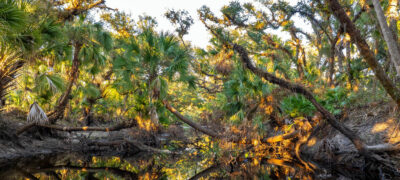
Five things you didn’t know about mangroves
From kayaking through tangled waterways to spotting rare wildlife, discover why mangroves are among the world’s most fascinating ecosystems
Mangroves can be found in warm, subtropical climates around the world, growing naturally as far north as Bermuda and as far south as Victoria, Australia.
Far more than tangled trees growing in saltwater, mangroves shelter incredible wildlife, defend coastlines from storms and are making an inspiring comeback after decades of decline.
In honour of World Mangrove Day 2026, here are five things you didn’t know about mangroves.
1. You can find mangroves in some of the world’s most spectacular destinations
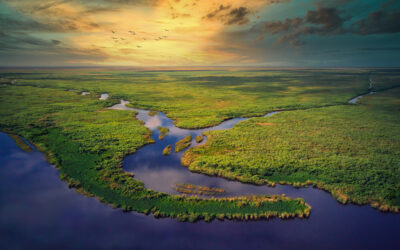
Whether you’re paddling through the Everglades in Florida, spotting wildlife in the Sundarbans of Bangladesh and India or island-hopping in Indonesia, chances are you’ll encounter mangrove forests. These remarkable coastal woodlands grow where land meets sea, thriving in the salty, tidal waters of tropical and subtropical coastlines.
Around 80 mangrove species exist worldwide. Southeast Asia is home to almost a third of the world’s mangroves, with Indonesia alone accounting for around a fifth of the global total.
2. Mangroves are biodiversity hotspots
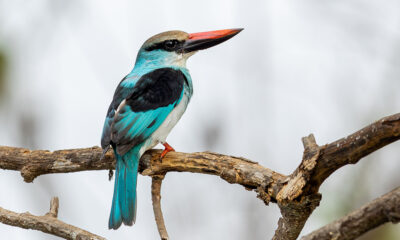
Gliding silently through a mangrove creek can be an incredible wildlife experience. Kingfishers dart overhead, monkeys leap through the canopy and, if you’re lucky, crocodiles or even Bengal tigers may appear at the water’s edge. For travellers hoping to spot elusive wildlife, mangrove forests are among the planet’s richest ecosystems. Their tangled roots and sheltered waterways provide habitat for everything from Bengal tigers, saltwater crocodiles and hawksbill turtles to proboscis monkeys, mangrove finches and the rare pygmy three-toed sloth.
Beneath the surface, the forests act as nurseries for fish, sharks, shrimps and crabs, while migratory birds rely on them as vital resting and feeding grounds during their long journeys. For birdwatchers, that makes mangrove forests perfect to visit during migration.
3. Mangroves are nature’s flood defences
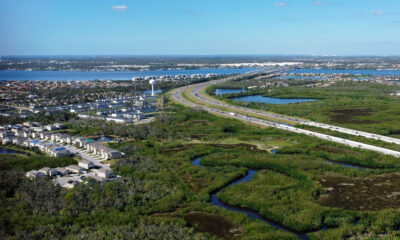
Wildlife may be mangroves’ standout feature, but their greatest contribution often goes unnoticed. These coastal forests act as living sea walls, with tangled root systems that absorb wave energy, reduce erosion and protect shorelines from storm surges. Just 100 metres of mangroves can cut wave energy by up to 66%, helping to shield coastal towns and villages from increasingly powerful storms. That protection has a remarkable value.
Worldwide, mangroves are estimated to prevent US$65 billion (£48bn) in flood damage every year and spare around 15 million people from annual flooding. As climate change brings rising seas and more extreme weather, they’re becoming one of the world’s most important natural defences.
4. Mangroves are making a comeback
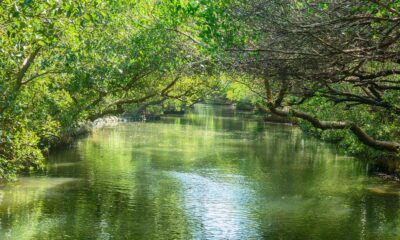
From the 1980s to 2010, over 12,000 sq km of mangroves, an area the size of Jamaica, were cleared or destroyed across Asia, Africa and the Americas, according to the Ocean Project.
Yet a study by Tulane University found that since 2010 the world has gained more mangroves than it has lost.
This has been driven by stronger legal protections of these vital ecosystems and an increased public awareness of their importance, particularly following the 2004 Indian Ocean tsunami. Thanks to this recovery, travellers have a better chance of encountering the remarkable wildlife that depends on mangroves, from Bengal tigers to pygmy three-toed sloths.
5. Mangroves help keep nearby oceans clean and clear
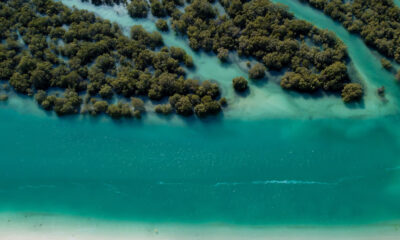
The crystal-clear waters that draw travellers to tropical coastlines often owe their clarity and health to nearby mangrove forests. Their intricate root systems trap mud, pollutants and sediment before they can drift out to sea, improving water quality for seagrass meadows and coral reefs, such as those in Belize, the Maldives and Raja Ampat. It’s an often-overlooked service that keeps coastal ecosystems healthy while helping to preserve the vibrant reefs and clear waters that make these destinations so memorable.
More information: The Mangrove Alliance
Read next: 9 extraordinary mangrove forests to visit for World Mangrove Day


